Western Sydney Airport Noise Abatement Procedure Overview

A Noise Abatement Procedure (NAP) is a procedure designed to reduce the impact of aircraft noise on the community. Theya re implemented by Air Traffic Control (ATC), airports or airport owners. They contain instructions for pilots and ATC for the runways, flight paths and procedures that should be followed, where safe, to minimise the impacts of aircraft noise on the community.

Airservices Australia has the following published NAP at Western Sydney Airport

Reporting is available for:

  • Preferred Runway Operations
  • Reciprocal Runway Operations (RRO) NAP

The first report for the above will be available as soon as practicable, in early December 2026.

The following NAPs are not able to be reported on by Airservices Australia as we do not have ready access to the required data:

  • Use of Noise Abatement Departure Procedures (NADPs)
  • Landing reverse thrust

It is important to note that NAPs are not mandatory; ATC and pilots apply the NAPs whenever possible.

The below overview provides monthly movement numbers, runway usage, and the types of aircraft operating at Western Sydney Airport. Note that the percentages shown at each end of the runway represent the proportion of arrivals or departures using that direction.

Western Sydney Airport Community Aviation Consultation Group (CACG)

Federally-leased airports (excluding Mt. Isa and Tennant Creek) have established Community Aviation Consultation Groups (CACGs), which provide an effective avenue for local community engagement on airport planning and operations, including aircraft noise. The Department for Infrastructure, Transport, Regional Development, Communications, Sports and The Arts provides guidelines for CACGs.

Non federally-leased airports may also choose to establish CACGs or community forums.

CACG membership depends on the characteristics of the airport and any local issues of community concern however, generally includes:

  • airport management
  • aircraft operators
  • community organisations or representatives
  • representatives from state, territory or local government bodies
  • local tourism and business groups.

Airservices does not formally belong to CACGs but is invited to attend to provide relevant information and assist in discussions. We engage with CACGs on flight path and airspace changes, as well as technical reviews, such as noise monitoring and noise abatement procedures.

Find out more information on the WSI Community Aviation Consultation Group (CACG).

What was that flight?

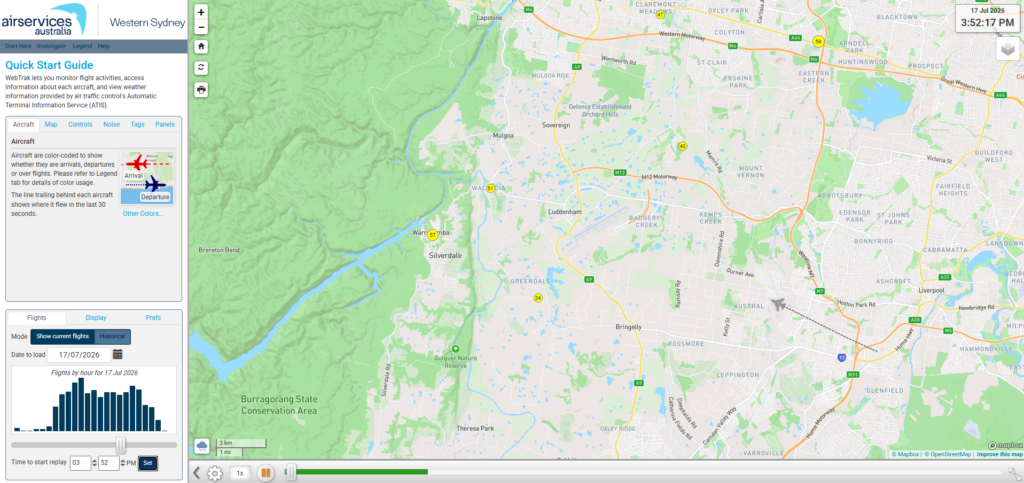
WebTrak is a tool that enables the community to see where aircraft fly and explore historical trends and patterns. WebTrak is provided by Ideagen.

WebTrak uses information from air traffic control radars to display aircraft movements. The flight search and display function allows you to view aircraft flight activity over metropolitan areas. You can also:

  • locate your street address and have your home appear on the map
  • see noise levels of individual aircraft
  • view information about aircraft type, height, origin and destination
  • display an aircraft’s flight path and point of closest approach to your home
  • zoom in and out down to street level.

Note that there is a slight delay on the display of flights.

You can view Webtrak for your region here.

Or, find out more information about WebTrak and how to use it

Western Sydney Area FAQs

Why is there no curfew for WSI?

WSI has always been planned and approved to operate on a 24/7 curfew-free basis. Operating without a curfew will boost the airport’s ability to create more jobs in Western Sydney and meet the demand for aviation services in the region. Curfews are outside the remit of Airservices Australia, and are legislated by the Federal Parliament. The Australian Government has reaffirmed its commitment not to impose any additional operating constraints on airports, such as curfews or movement caps, where they currently do not exist (Aviation White Paper 2024). For more information, visit: airservicesaustralia.com/about-us/about-our-operations/airport-curfews

Changes to Sydney Airport Curfew

  • It has been legislated since 1995 that the standing exemptions to the 11pm to 6am curfew at Sydney Airport would cease once the Minister gazettes a date on which WSI is available for night flights.
  • Minister Catherine King has given advance notice that 1 November 2026 will be this gazettal date for WSI.
  • This will cease all flights landing or departing from Sydney Airport between 11pm and 6am from 1 November 2026 unless they are for emergencies or have been granted an exceptional circumstances dispensation by the Department of Infrastructure, Transport, Regional Development, Communications, Sport and the Arts.

Noise Insulation Program

The Department of Infrastructure, Transport, Regional Development, Communications, Sport and the Arts is responsible for the Noise Insulation Program and are leading the engagement with landowners. To find out more visit: wsinoiseinsulation.gov.au or email wsinoiseinsulation@infrastructure.gov.au

Will the flight paths change in the future? 

As part of standard practice, Airservices Australia conducts a Post Implementation Review (PIR) following the introduction of significant airspace changes. A PIR for WSI  will be undertaken within two years of airport operations to confirm alignment with planned practices and identify opportunities for further noise mitigation or operational improvements. This includes ongoing operational monitoring to ensure safety and efficiency. The review will also incorporate feedback from a range of stakeholders, including aviation operators, the Department of Defence, CASA, the WSI Community Aviation Consultation Group (CACG), and local communities.

Are the flight paths different for freight and passenger planes? 

No. In general, the same flight paths will be used for both freight and passenger aircraft. Some routes may be designated for non-jet aircraft (e.g. regional turboprops). However, most aircraft operations will share the same flight path network. 

What was the flight paths development process? 

The Department for Infrastructure, Transport, Regional Development, Communications, Sport and The Arts (the department) is responsible for the Environmental Impact Statement (EIS) for the preliminary flight paths and airspace changes for WSI.   

The department released the draft EIS on 24 October 2023 for public consultation and conducted extensive community and stakeholder engagement on the draft EIS. More details on the scope of the consultation can be found in Chapter 9 Community and Stakeholder Engagement of the EIS. 

The Minister for Infrastructure, Transport, Regional Development and Local Government, The Hon. Catherine King MP, released the final EIS on 7 October 2024

Minister King authorised the flight paths as presented in the EIS for implementation on 4 June 2025. 

With the authorisation, Airservices completed detailed design and implementation of these flight paths supported by comprehensive community and stakeholder engagement. The flight paths and airspace changes came into effect on 9 July 2026. 

Freight operations at WSI – when does it start and what can I expect? 

WSI opened for freight operations on 26 July 2026. Freight operations refer to aircraft carrying goods only and do not include passenger aircraft carrying cargo. Flights are operating both during the day and at night, with frequencies likely to vary between weekdays and weekends. The airport operator and airlines are responsible for determining flight schedules.

Passenger operations – when does it start and what can I expect? 

Passenger services at WSI will commence on 25 October 2026, including both domestic and international flights. Airlines and the airport will determine flight schedules. Please refer to the airlines’ websites for schedules and flight information. 

How many flights can I expect in the first year? 

According to the EIS, in the first year of operations an estimate of 33,000 aircraft movements is expected. This is equivalent to around 90 flights per day or four per hour. This number is expected to increase over time as more airlines begin operating at WSI. 

Airservices has no oversight of flight schedules and is not able to influence airlines to schedule flights for any particular time or frequency. 

Which other flight paths changed and how? 

The Sydney Basin manages the highest volume of air traffic in the country. For safety reasons, the introduction of WSI’s flight paths has required some minor adjustment to airspace across the Sydney region. These modifications are essential to seamlessly integrate WSI’s flight paths with the wider network and were the subject of extensive environmental assessment and community engagement.

Some community members may notice some of the changes, but overall they are not expected to be significantly different from current conditions.

The changes also do not alter the current Long Term Operating Plan (LTOP) at Sydney Airport.

How many aircraft fly near me?

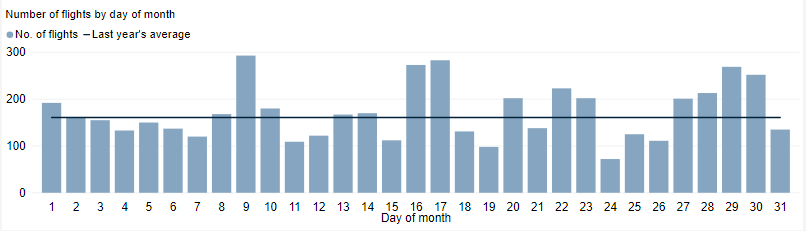
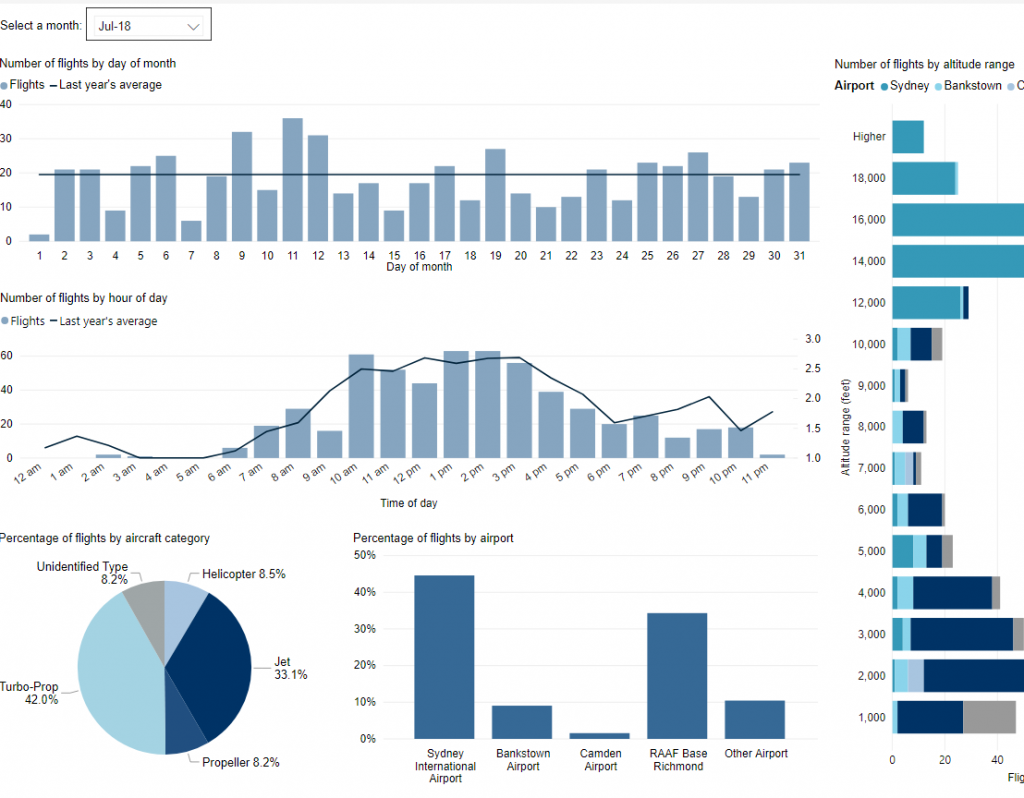
This tool shows the number of flights each day over your area in the selected month compared to the average for last year.  The bottom axis shows the day of the month. Use the drop-down menu to change the selected month to see how movements have varied. Hover over each day to see flight numbers.

*Please note due to technical issues between 19 June and 22 June 2024, flight data may not be accurately displayed. Our supplier is working to resolve the issue. We apologise for any inconvenience this may cause.

How frequent are flights in my area?

There are a number of factors that influence the frequency of flights.

Firstly, the number and frequency of flights will vary on a daily, weekly and yearly basis due to differences in airline schedules. The airlines schedule flights in response to consumer demand. This is particularly the case around Christmas, Easter, school holidays and Lunar New Year.

Secondly, the runway in use at any given time will also vary, largely due to the wind conditions. Each runway has its own set of flight paths, and each flight path will affect different areas. As the runway in use changes, the flight paths change, and so too do the areas affected by aircraft movements.

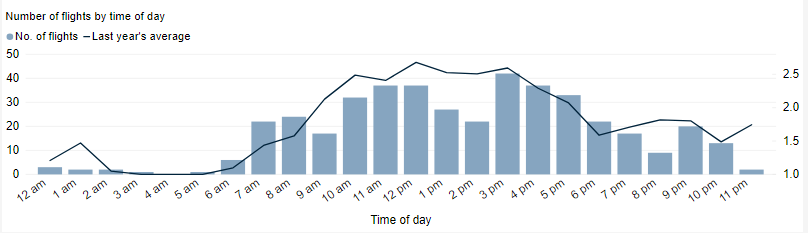
This chart shows the total number of flights each hour over the month, compared to the average for last year. Change the selected month to see how it has varied.

*Please note due to technical issues between 19 June and 22 June 2024, flight data may not be accurately displayed. Our supplier is working to resolve the issue. We apologise for any inconvenience this may cause.

Western Sydney Airport Runway

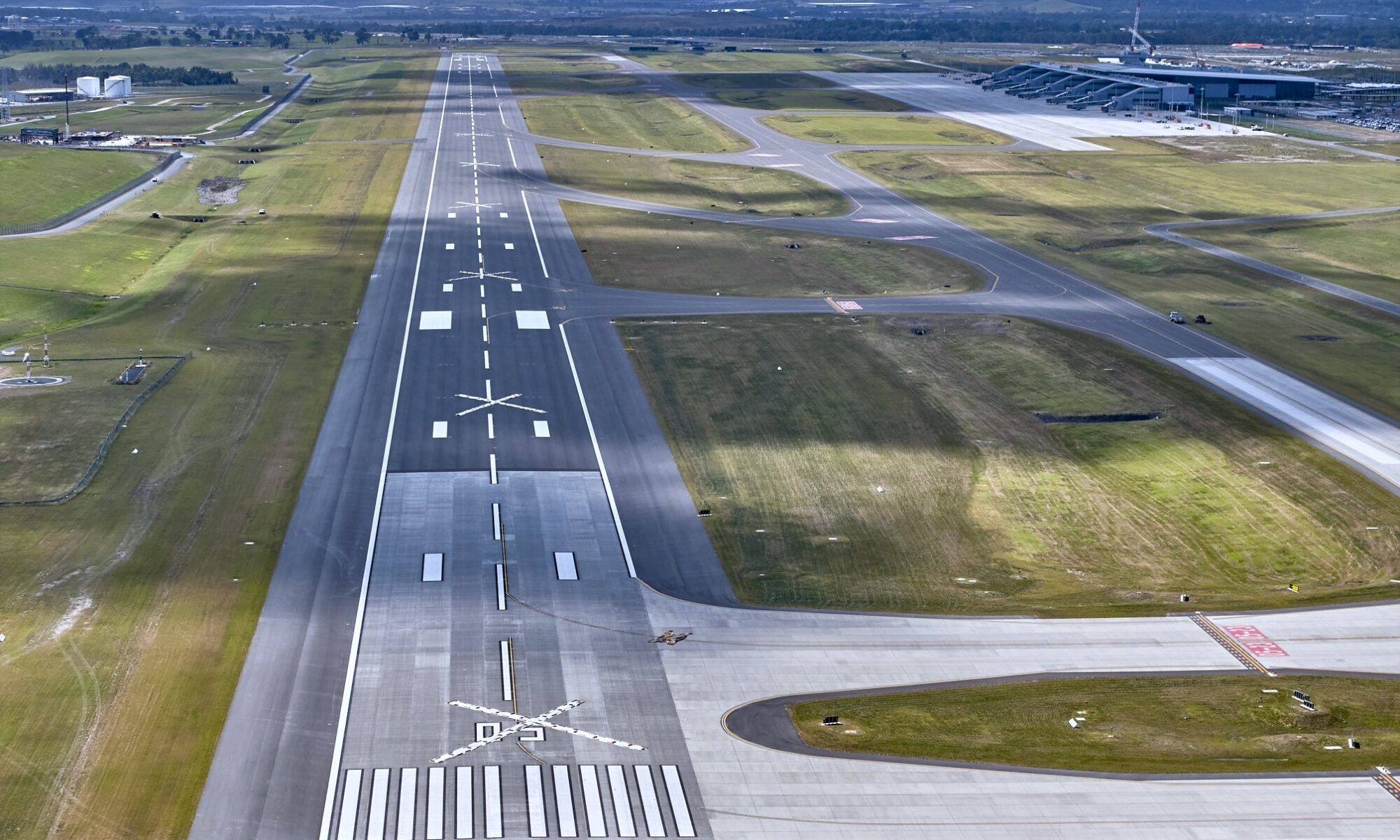
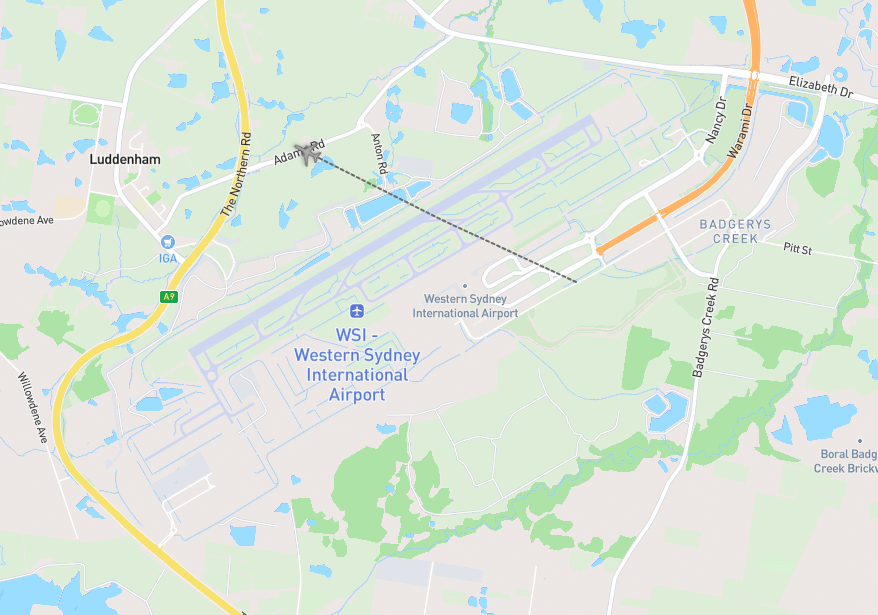
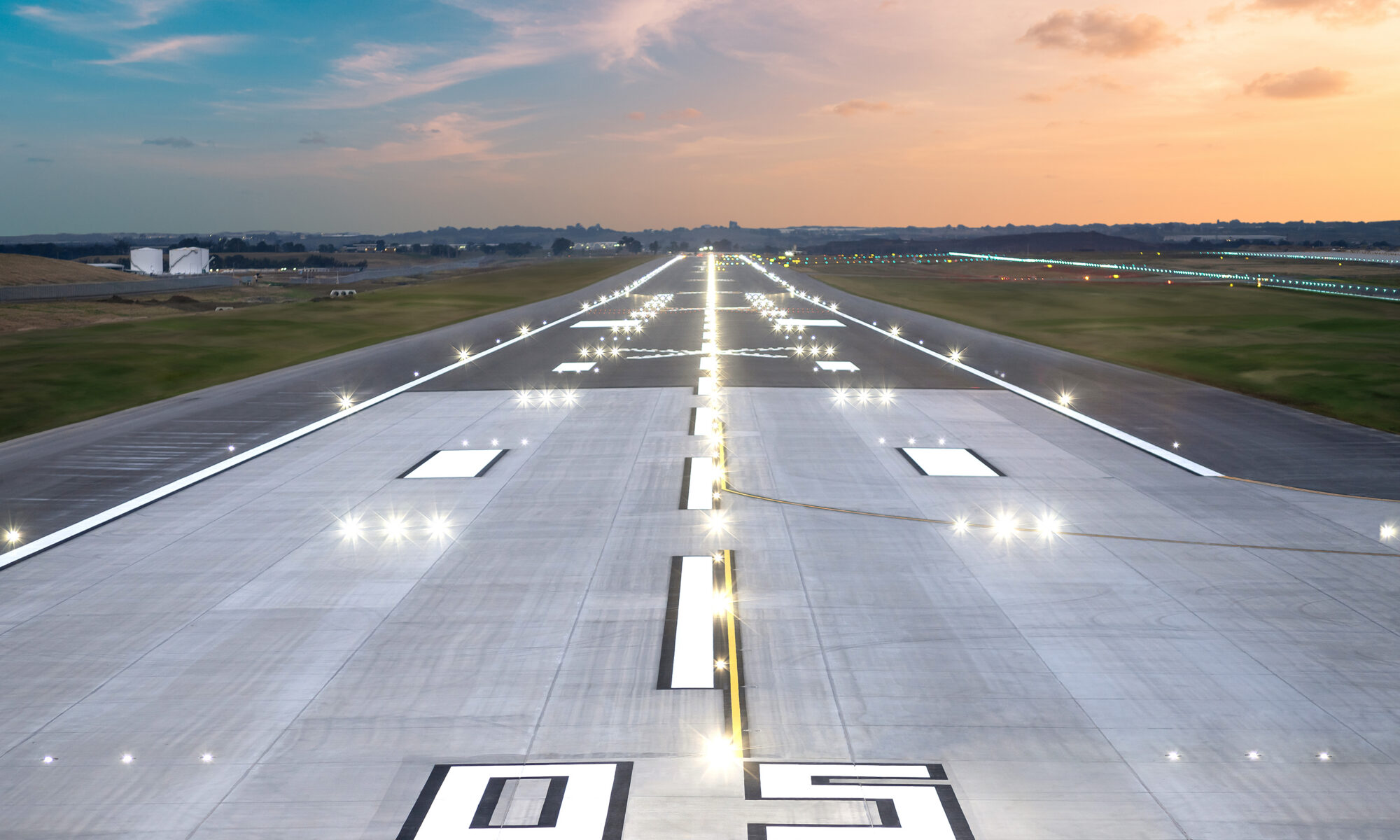
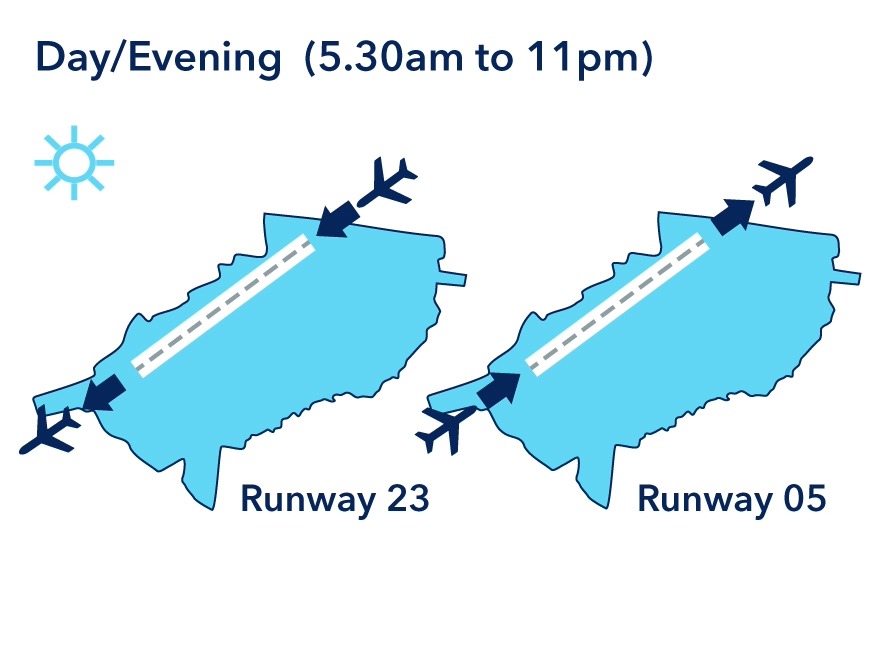
Western Sydney Airport has a one runway, oriented north-east/south-west. The runway is referred to as:

  • Runway 05 when aircraft depart to the north-east/arrive from south-west, or
  • Runway 23 when aircraft depart to the south-west/arrive from the north-east.  

There are 5 different modes that the runway can be used in. Generally, aircraft land and take-off into the wind. Therefore, the prevailing wind conditions influence which runway direction is being used at any time during the day and evening.

During the daytime period (5:30am-11pm), there are two runway modes available:

  • Runway 23 (day)
  • Runway 05 (day)

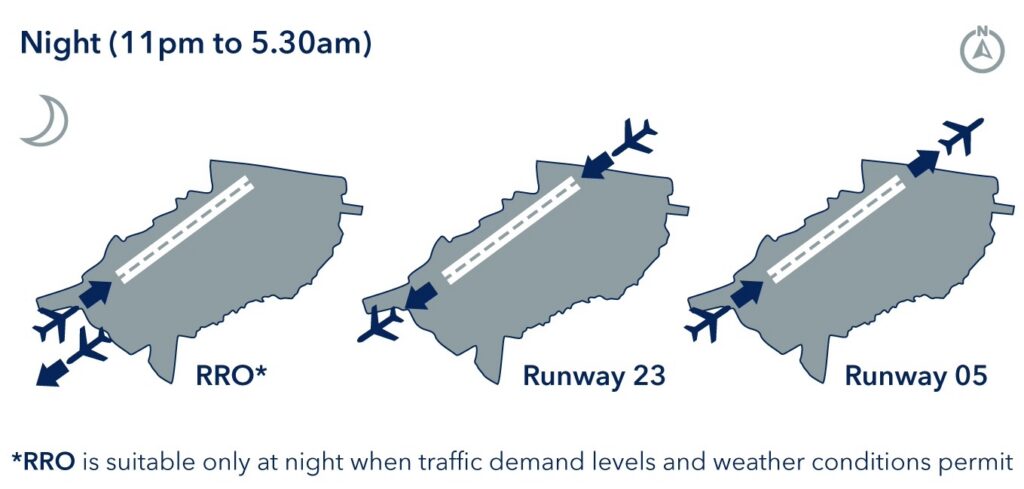
During the overnight period (11pm to 5:30am), there are three runway modes available:

  • Reciprocal Runway Operations (RRO)
  • Runway 23 (night)
  • Runway 05 (night)

RRO is only available overnight and can only be used when very specific weather and traffic conditions are met. More information about RRO can be found in the factsheet here.

Runway modes at Western Sydney Airport

Watch the runway mode explainer video below for more information about how runway modes operate at Western Sydney Airport

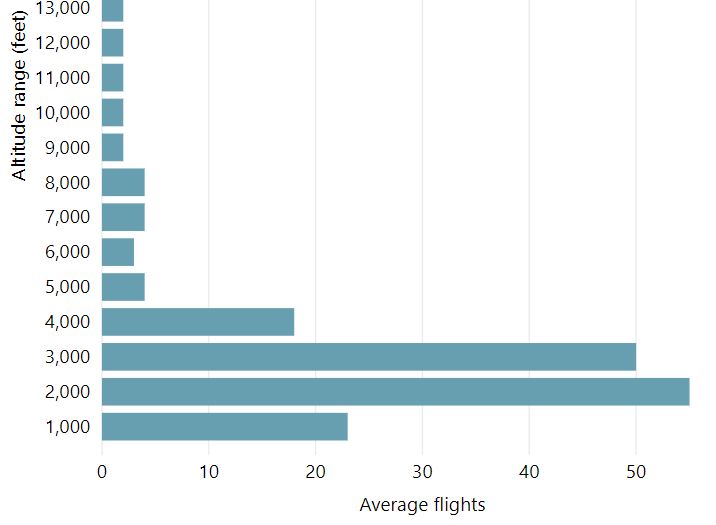
How high are aircraft near me?

The altitudes of aircraft over your area can vary according to:

  • the airport the flight is coming from or going to
  • whether the aircraft is arriving, departing or in level flight
  • the specific requirements of the flight path
  • the need for air traffic control to maintain vertical separation between aircraft.

Find out more on our What are the rules about altitudes? page.

*Please note due to technical issues between 19 June and 22 June 2024, flight data may not be accurately displayed. Our supplier is working to resolve the issue. We apologise for any inconvenience this may cause.

Explore detailed data for your area

Use this interactive tool to explore detailed data for your suburb in the month of your choice.

This report is best viewed in full screen mode.

*Please note due to technical issues between 19 June and 22 June 2024, flight data may not be accurately displayed. Our supplier is working to resolve the issue. We apologise for any inconvenience this may cause.

Western Sydney Airport noise abatement

Noise Abatement Procedures

Every major airport has Noise Abatement Procedures (NAPs), which are procedures designed to reduce the impact of aircraft noise on the community. There are some limitations to the use of NAPs and they may not be used if they generate delay and congestion, as this can cause noise and emission impacts. Air traffic control or pilots may not be able to use them in certain situations, for example weather conditions or operational requirements. 

The main Noise Abatement Procedures currently in use at Western Sydney Airport are:

Preferred runways

Air traffic control nominates the runway for use to ensure safety and operational requirements are met, depending on the weather conditions. If weather conditions do not favour a specific runway, the ‘preferred’ runway is used, the preferred runways for the day time and overnight period, are outlined below

  • During the day period (5:30am to 11pm), providing wind and traffic management safety requirements permit, Runway 23 is the preferred runway
  • During the overnight period (11pm to 5:30am), providing wind and traffic management safety requirements permit, Reciprocal Runway Operations (RRO) is the preferred runway. RRO is only available overnight and can only be used when very specific weather and traffic conditions are met. More information about RRO can be found in the factsheet here. If RRO cannot be used, Runway 23 is the next preferred runway.

Noise Abatement Procedure (NAP) for Reciprocal Runway Operations (RRO)

RRO is the preferred runway mode between 11pm and 5.30am with an aim to provide the best noise minimisation outcomes for the surrounding communities.

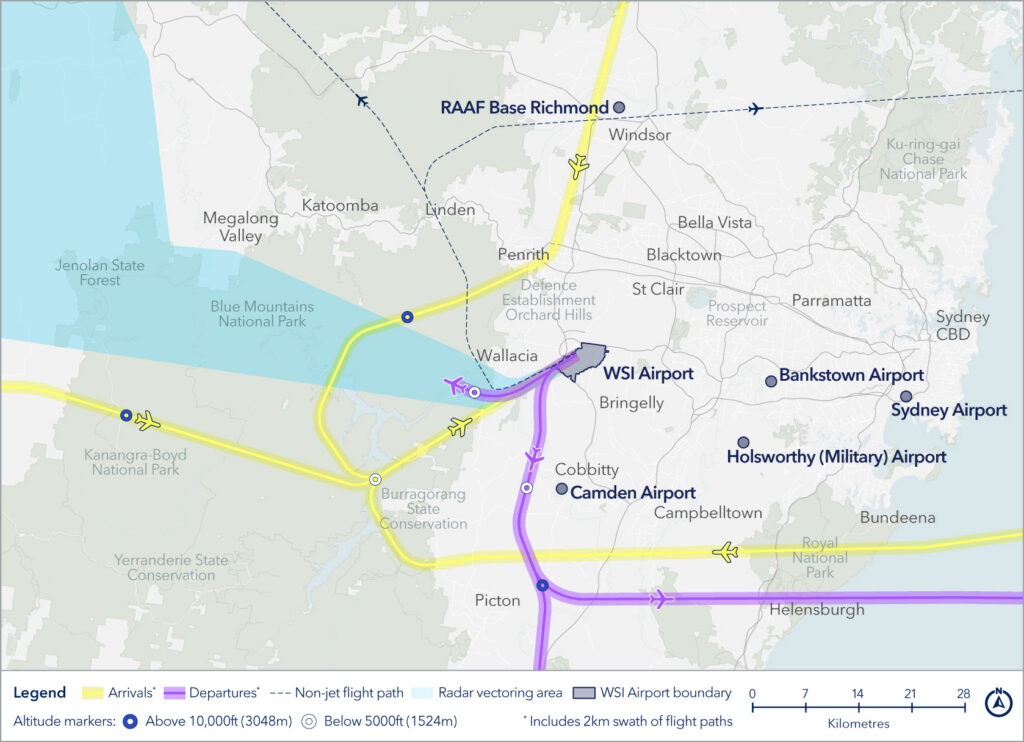
A NAP for RRO has been developed to further minimise these impacts by tactically directing aircraft off the designated flight paths and around communities when lower traffic volumes allow. Aircraft departing to the north or west will continue straight for approximately 5 nautical miles (9.3km) rather than immediately turning. From this point, ATC will tactically direct aircraft to remain south of the Great Western Highway avoiding communities until they join the published flight path over the National Park west of Katoomba (see image below).

The availability of RRO is dependent on suitable weather conditions, the location of arriving traffic to enable clear airspace and when air traffic volumes are low enough to permit safe operations. The number of movements per hour under RRO will decrease over time as the airport’s traffic volume grows.

Noise Abatement Departure Procedures (NADPs)

When applied by pilots NADPs can reduce the noise impact during departure. The noise reduction outcome depends on the type of aircraft, engine type, thrust required, and the height at which thrust is reduced.

At Australia’s major airports, NADPs are generally required over residential areas to reduce aircraft overflight noise in the first 20km of flight. More information about NADPs at WSI can be found in the Noise Abatement Procedures factsheet.

Community feedback identified a preference for NADP2, which reduces noise over areas more distant from the runway end by prioritising increasing forward speed after take-off. Thrust is reduced at 800ft, and flaps are retracted between 800ft and 3000ft to slow down the climb, keeping aircraft lower closer to the airport. At 3000ft the aircraft will accelerate and increase its angle to gain height, so they can rapidly gain altitude to be higher over communities further from the airport. As a result, pilots will be asked to prioritise NADP2 where possible.

Noise preferential flight paths (daytime vs. overnight)

Noise preferential flight paths are used to direct aircraft away from residential areas, where possible. This includes the use of different flight paths between 11pm and 5.30am, when additional airspace flexibility is available because of the curfew at Sydney Kingsford Smith Airport.