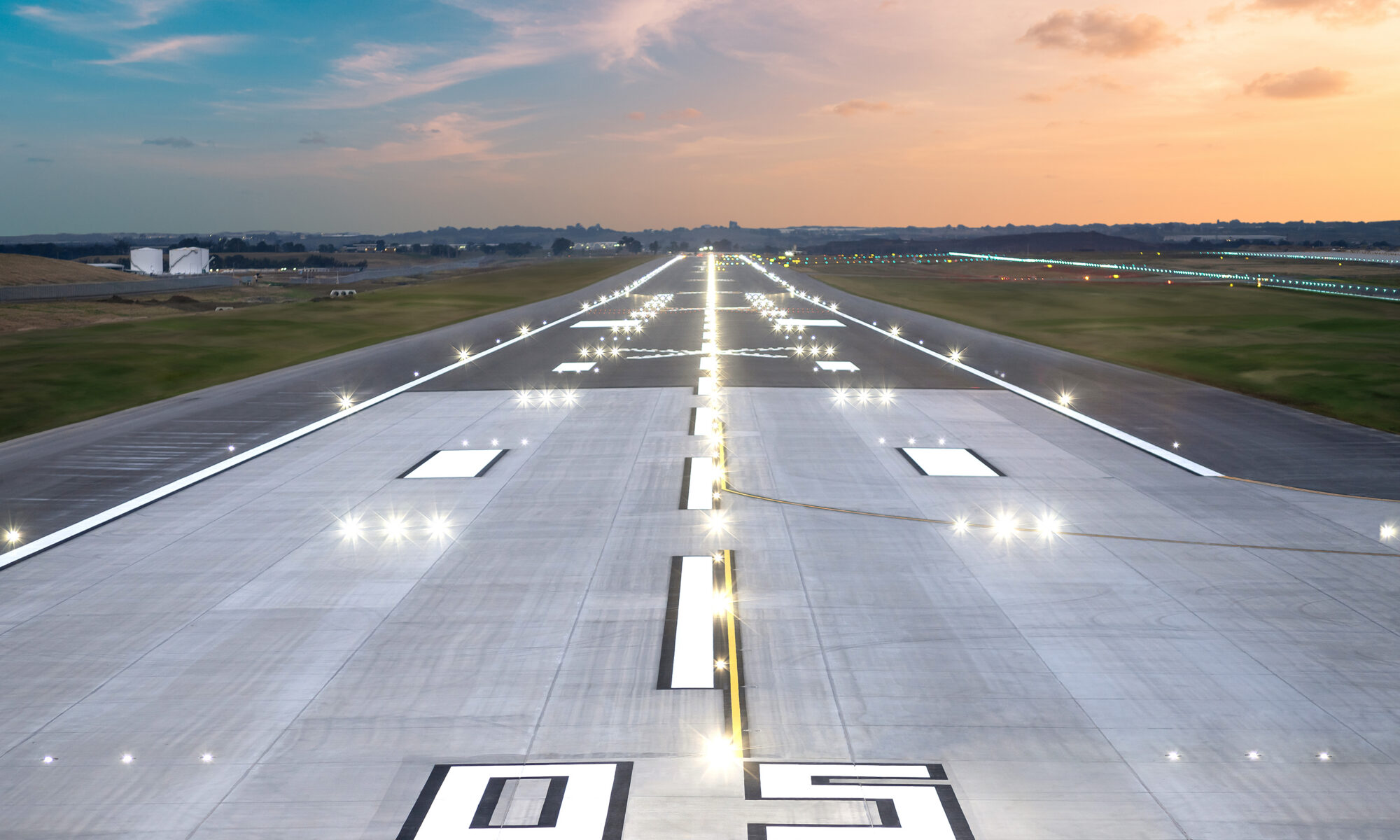
Western Sydney Airport Runway

Western Sydney Airport has a one runway, oriented north-east/south-west. The runway is referred to as:

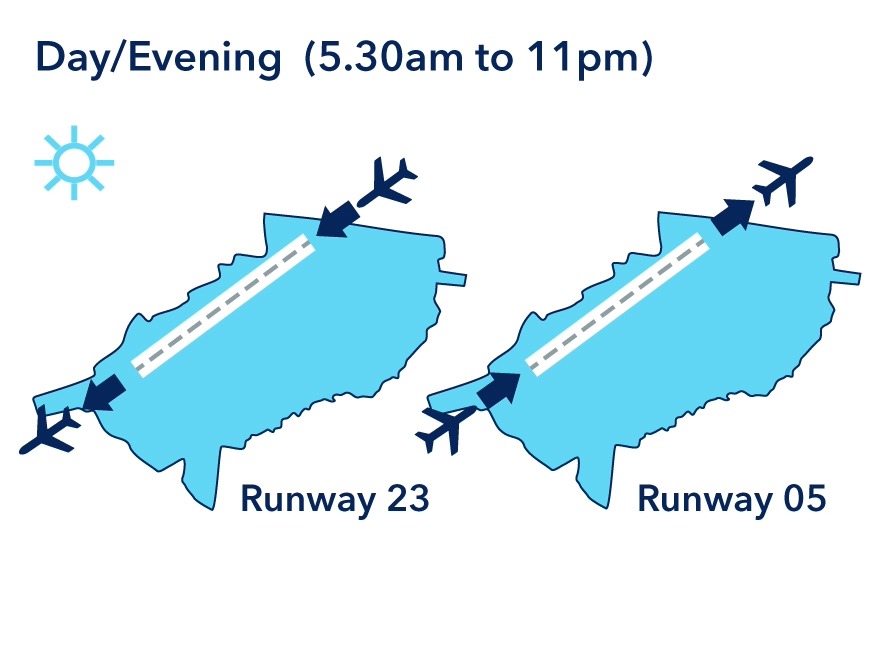
  • Runway 05 when aircraft depart to the north-east/arrive from south-west, or
  • Runway 23 when aircraft depart to the south-west/arrive from the north-east.  

There are 5 different modes that the runway can be used in. Generally, aircraft land and take-off into the wind. Therefore, the prevailing wind conditions influence which runway direction is being used at any time during the day and evening.

During the daytime period (5:30am-11pm), there are two runway modes available:

  • Runway 23 (day)
  • Runway 05 (day)

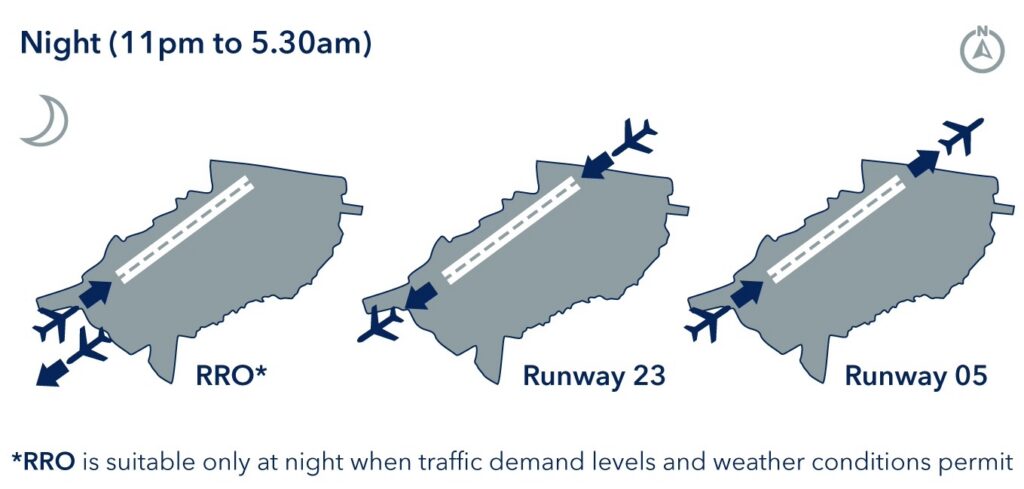
During the overnight period (11pm to 5:30am), there are three runway modes available:

  • Reciprocal Runway Operations (RRO)
  • Runway 23 (night)
  • Runway 05 (night)

RRO is only available overnight and can only be used when very specific weather and traffic conditions are met. More information about RRO can be found in the factsheet here.

Runway modes at Western Sydney Airport

Watch the runway mode explainer video below for more information about how runway modes operate at Western Sydney Airport

Western Sydney Airport flight paths

Western Sydney Airport has a one runway, oriented north-east/south-west.

Generally, aircraft land and take-off into the wind. Therefore, the prevailing wind conditions influence which runway direction is being used at any time during the day and evening. When Runway 05 is used, all aircraft arrive from the south-west and depart to the north-east. When Runway 23 is used, all aircraft arrive from the north-east and depart to the south-west. When Reciprocal Runway Operations (RRO) is in use, aircraft depart to the south-west and aircraft arrive from the south-west.

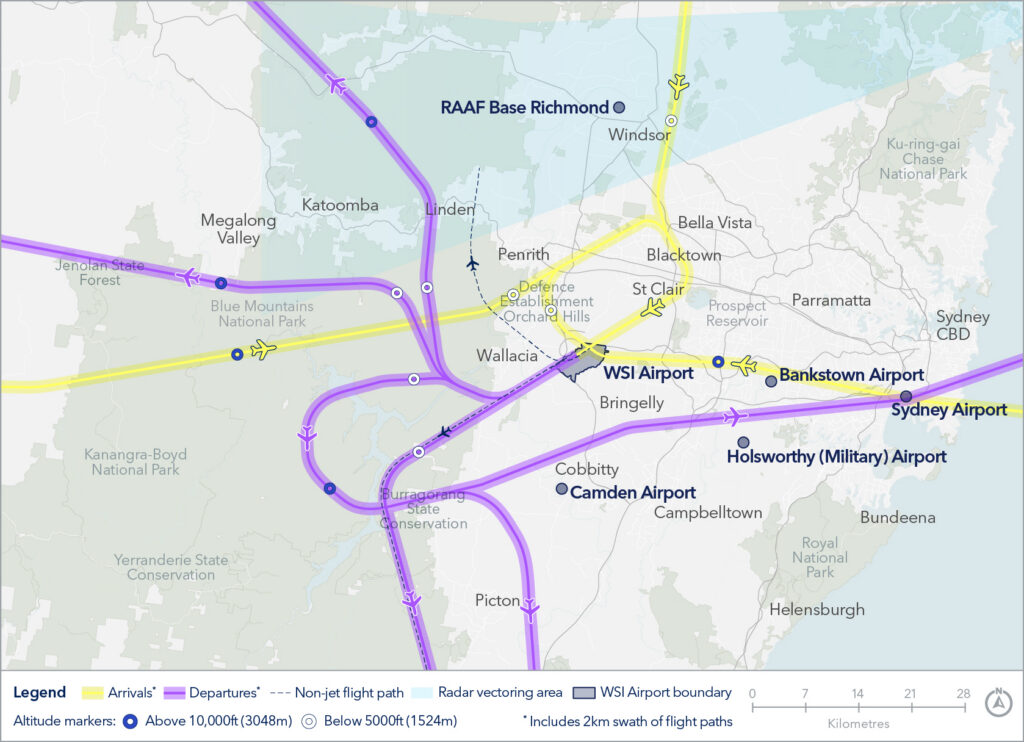
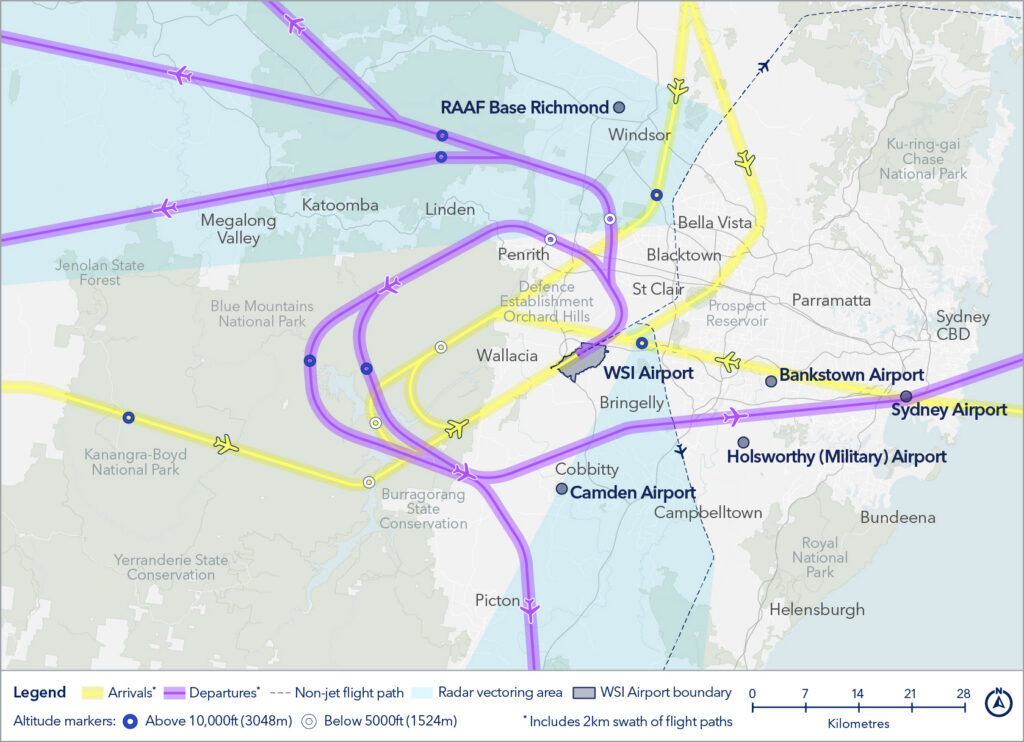
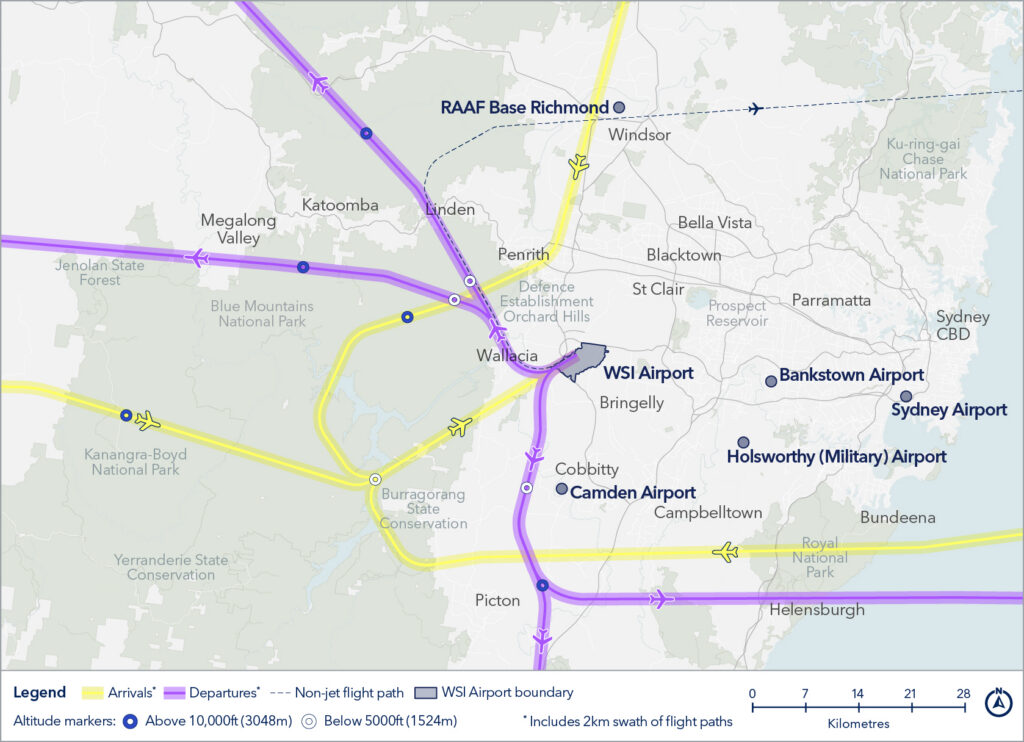
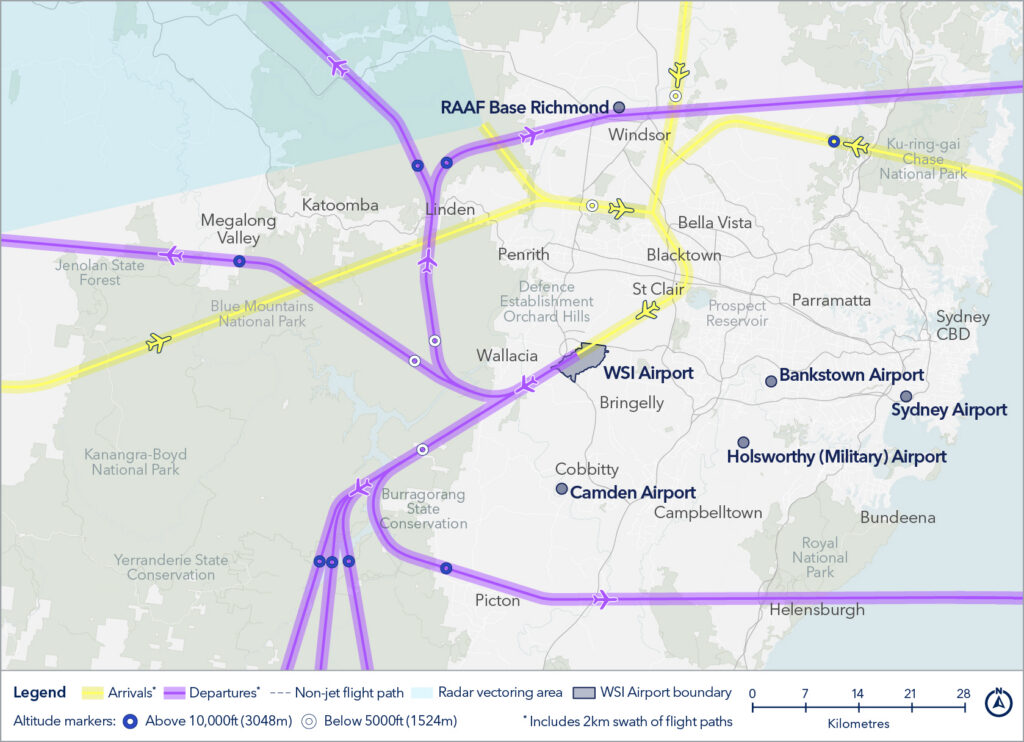
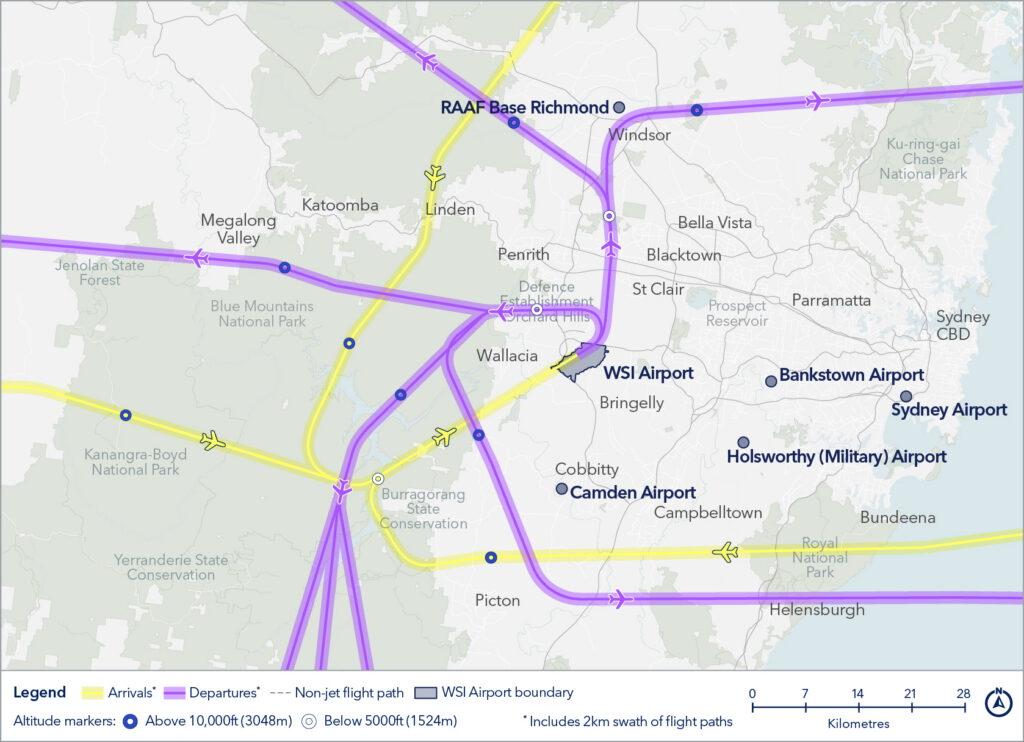
There are five different modes that the runway can be used in. There are different flight paths associated with the different runway modes. Maps showing these flight paths are shown below.

During the day time period (5:30am-11pm), there are two runway modes available:

  • Runway 23 (day)
  • Runway 05 (day)

Runway 23 (day)
Departing aircraft (in purple) take-off from Runway 23 in a south-westerly direction. Arriving aircraft (in yellow) land on Runway 23 approaching from the north-east.

Runway 05 (day)
Departing aircraft (in purple) take-off from Runway 05 in a North-easterly direction. Arriving aircraft (in yellow) land on Runway 23 approaching from the south-east.

During the overnight period (11pm to 5:30am), there are three runway modes available:

  • Reciprocal Runway Operations (RRO)
  • Runway 23 (night)
  • Runway 05 (night)

Reciprocal Runway Operations (RRO)
Aircraft depart to the south-west (in purple) and aircraft arrive from the south-west (in yellow)

RRO is only available overnight and can only be used when very specific weather and traffic conditions are met. More information about RRO can be found in the factsheet here.

Runway 23 (night)
Departing aircraft (in purple) take-off from Runway 23 in a south-westerly direction. Arriving aircraft (in yellow) land on Runway 23 approaching from the north-east.

Runway 05 (night)
Departing aircraft (in purple) take-off from Runway 05 in a North-easterly direction. Arriving aircraft (in yellow) land on Runway 23 approaching from the south-east.

Airservices Australia: Who we are and what we do

As Australia’s air traffic management and aviation rescue fire fighting service provider managing 11% of the world’s airspace, our primary focus is to ensure the safety of air travel both in the air and on the ground at airports.

Each year, millions of people travel to, from and within Australia, with about 3.9 million flights taking off and landing across the country. 

Managing air travel—including safety, efficiency, environmental and community impact—is a shared responsibility. Government agencies, airlines and airports work together to balance these priorities.

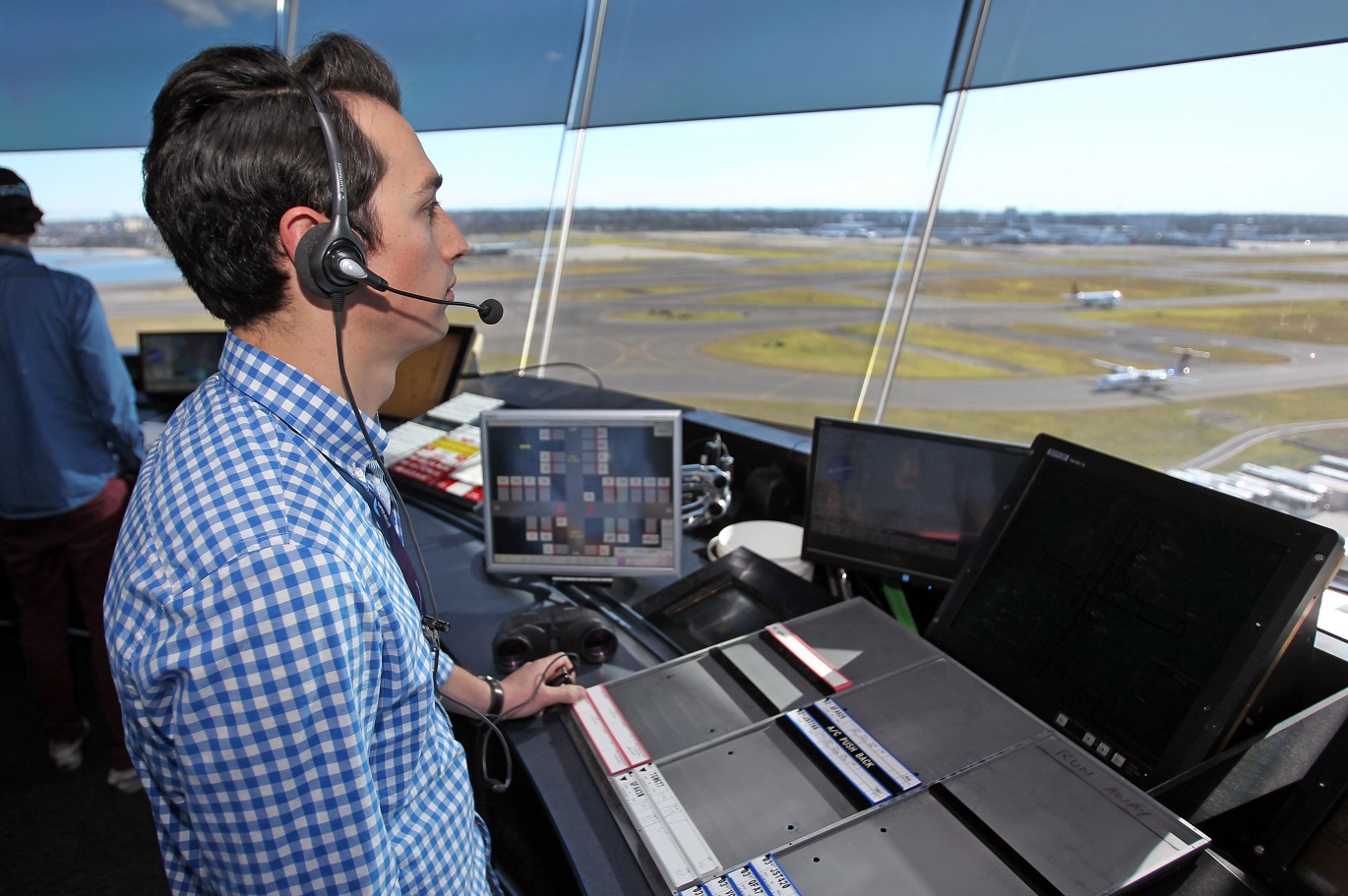
At Airservices, our highly trained air traffic controllers manage flights at every stage—departure, enroute travel, and arrival—working together to keep planes safe in controlled airspace. 

We provide air traffic services at 29 airports, across Australia. Our aviation rescue fire fighters are on standby at 27 airports, ready to respond to emergencies. Most of these airports operate 24/7 without restriction, but some have movement caps and curfews set by the Federal Government to manage local impacts. 

At Airservices Australia, we are committed to ensuring safe, efficient, and responsible air travel while balancing the needs of communities and the aviation industry.

How we manage Australia’s airspace

Australia’s skies are some of the busiest in the world, with millions of flights taking off and landing every year. At Airservices Australia, we work behind the scenes, safely managing air traffic in controlled airspace while considering noise impacts on communities.

When is each flight path used?

Generally, aircraft land and take-off into the wind. Therefore, the prevailing wind conditions influence which runway direction is being used at any time during the day and evening. When Runway 05 is used, all aircraft arrive from the south-west and depart to the north-east. When Runway 23 is used, all aircraft arrive from the north-east and depart to the south-west.

During the day and evening (5.30am to 11pm), arrival and departure paths are designed to ensure separation from arriving and departing aircraft from Sydney Kingsford-Smith Airport (Sydney Airport).

At night (11pm to 5.30am), when additional airspace flexibility is available because of the curfew at Sydney Airport noise preferential flight paths are used to direct aircraft away from residential areas, where possible. The use of night runway operating modes at WSI is dependent on transition to and from Sydney Airport curfew, so this means there may be variations from day to day to accommodate these transitions.

Departures

Departing aircraft will initially follow the runway heading after take-off. Once they have reached the appropriate altitude and air traffic control clearance, they will then turn onto their designated flight paths and continue toward their destination.

Depending on the runway mode in use, residents in suburbs located to the south-west and north-east of the runway centreline may notice aircraft overhead shortly after take-off. These aircraft will generally be climbing and following the runway heading before commencing any turns onto their assigned departure routes. This means that the areas experiencing departing aircraft can vary depending on which runway configuration is being used on the day.

The altitude of aircraft after departure will depend on factors such as the type of aircraft, how heavily laden it is with fuel and passengers, and the atmospheric conditions at the time. All these factors affect an aircraft’s climb rate. There is no regulated minimum altitude for an aircraft in the process of taking off.

Arrivals

Aircraft arriving at the airport will generally follow their designated flight paths as they approach the runway. As they get closer to the airport, aircraft will align with the runway centreline and continue straight ahead for landing.

Depending on the runway mode in use, residents in suburbs located to the south-west and north-east of the runway centreline may notice aircraft overhead during the final stages of their approach. These aircraft will typically be descending and aligning with the runway in preparation for landing. As a result, the areas experiencing arriving aircraft can vary depending on which runway configuration is being used on the day. The altitude of an aircraft when it begins its final approach will depend on how far it still has to fly before reaching the runway.

Flight path information

You can access historical information about flight path use through WebTrak. To access this information click the “Historical” link below the text in the Quick Start Guide at the top left-hand side of the screen. Then use the tick boxes at the bottom-right of the screen to select monthly, quarterly or yearly information. Use the sliders to refine your selection to specific timeframes.