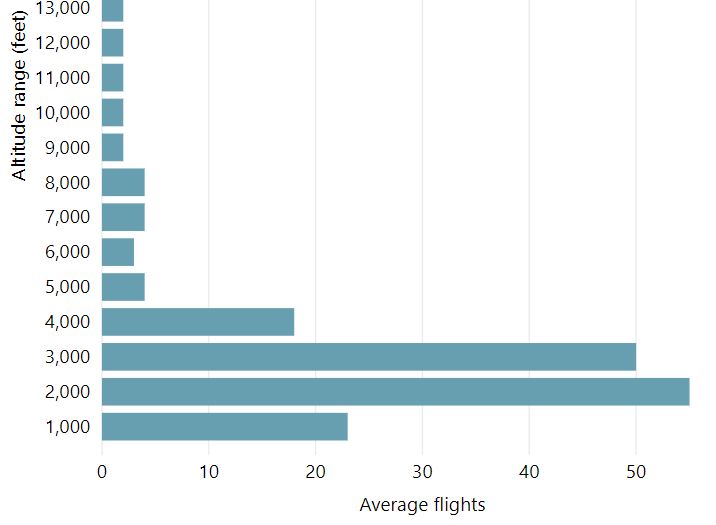
How high are aircraft near me?

The altitudes of aircraft over your area can vary according to:

  • the airport the flight is coming from or going to
  • whether the aircraft is arriving, departing or in level flight
  • the specific requirements of the flight path
  • the need for air traffic control to maintain vertical separation between aircraft.

Find out more on our What are the rules about altitudes? page.

*Please note due to technical issues between 19 June and 22 June 2024, flight data may not be accurately displayed. Our supplier is working to resolve the issue. We apologise for any inconvenience this may cause.

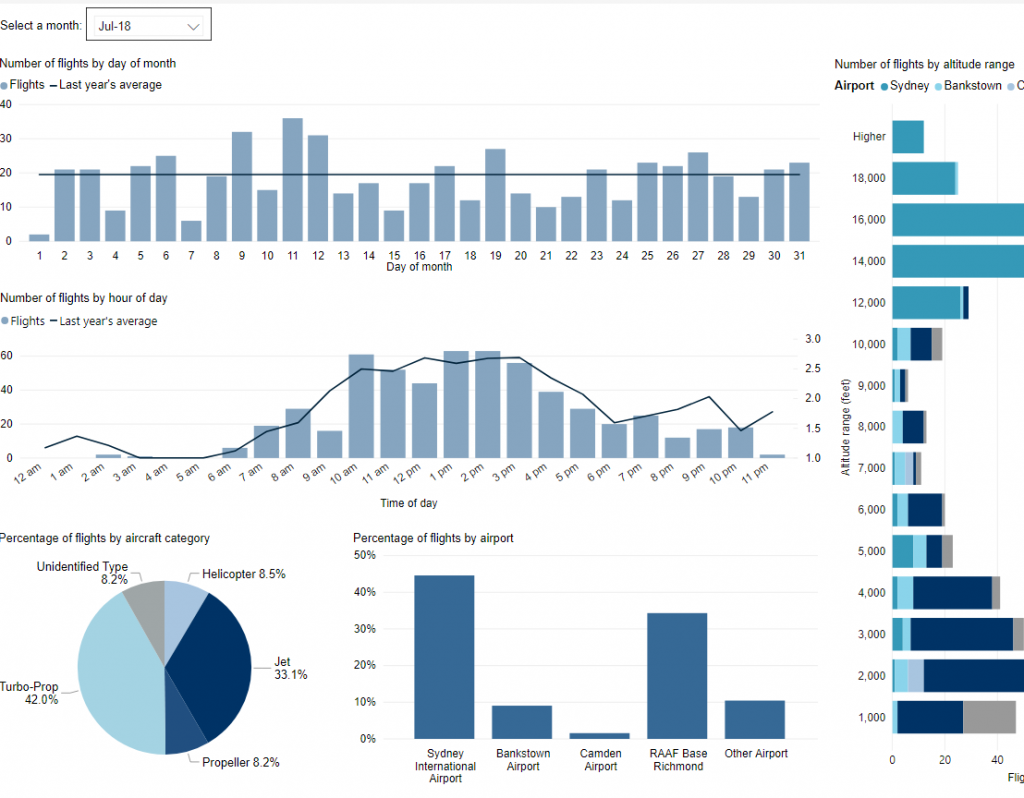
Explore detailed data for your area

Use this interactive tool to explore detailed data for your suburb in the month of your choice.

This report is best viewed in full screen mode.

*Please note due to technical issues between 19 June and 22 June 2024, flight data may not be accurately displayed. Our supplier is working to resolve the issue. We apologise for any inconvenience this may cause.

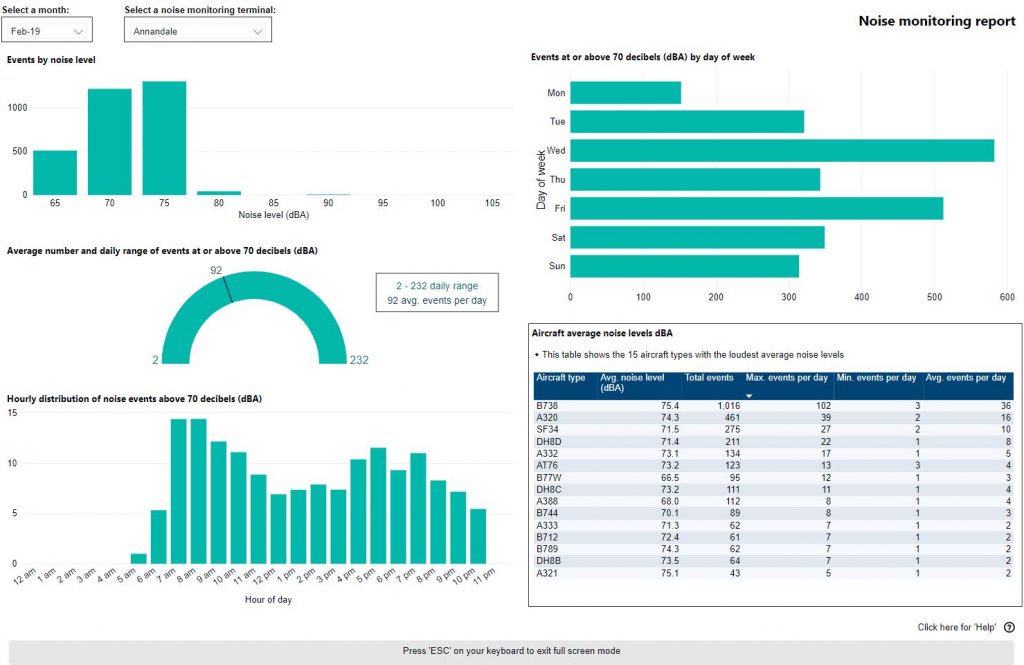
Sydney noise monitoring report

Use this interactive tool to explore monthly noise monitoring data.

This report is best viewed in full screen mode.

To learn more about noise monitor terminal locations visit our Sydney Noise and Flight Path Monitoring System page.

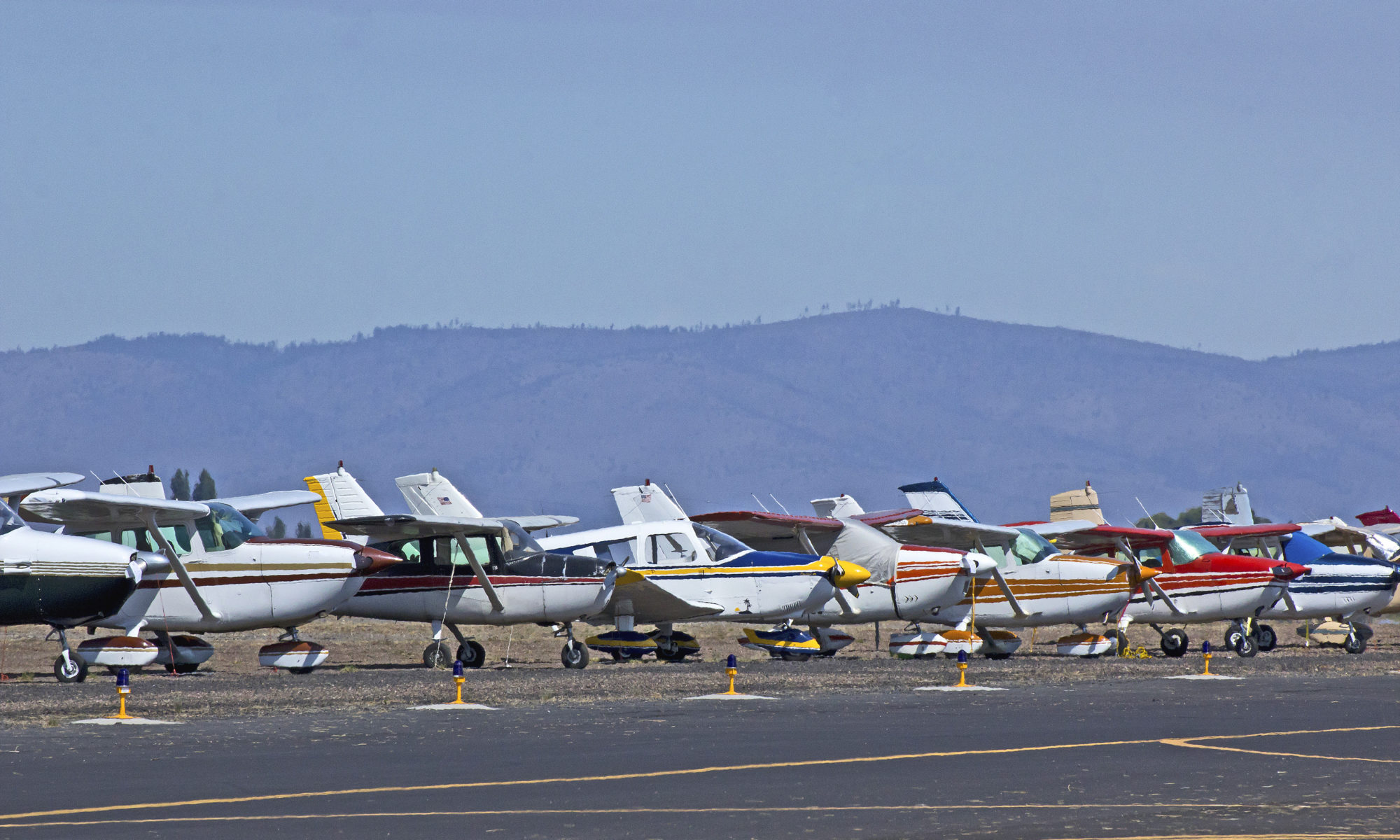
Why does the amount of light aircraft and helicopter traffic vary?

The amount of light aircraft and helicopters flying at any given time will vary.

Weather

Helicopters and light aircraft often fly Visual Flight Rules (VFR) where the pilot uses visual references to the ground or water and does not fly on a set flight path. This means that when the weather is poor, for example when low cloud or fog hampers visibility, these aircraft cannot fly and you will notice a significant drop in the amount of this type of traffic.

Weekends and holidays

Pilots who fly solely for their own recreation generally have weekday jobs and therefore will fly on weekends and holidays when the weather is good. This can contribute to an increase in light aircraft traffic on weekends and some holiday periods.

Time of day

As most recreational pilots are not licenced to fly at night, recreational traffic generally ceases at sunset.

Flying courses

Flying courses have a number of different stages in which students cover theory, then begin circuit training and then progress to flying to training areas and other locations with their instructor. Some courses include night flying training. As students progress through these different stages you may notice variation in the frequency and/or location of light aircraft and helicopter traffic. During periods in-between courses, or during holiday breaks within courses, you may notice a drop in traffic.

Sydney Airport flight paths

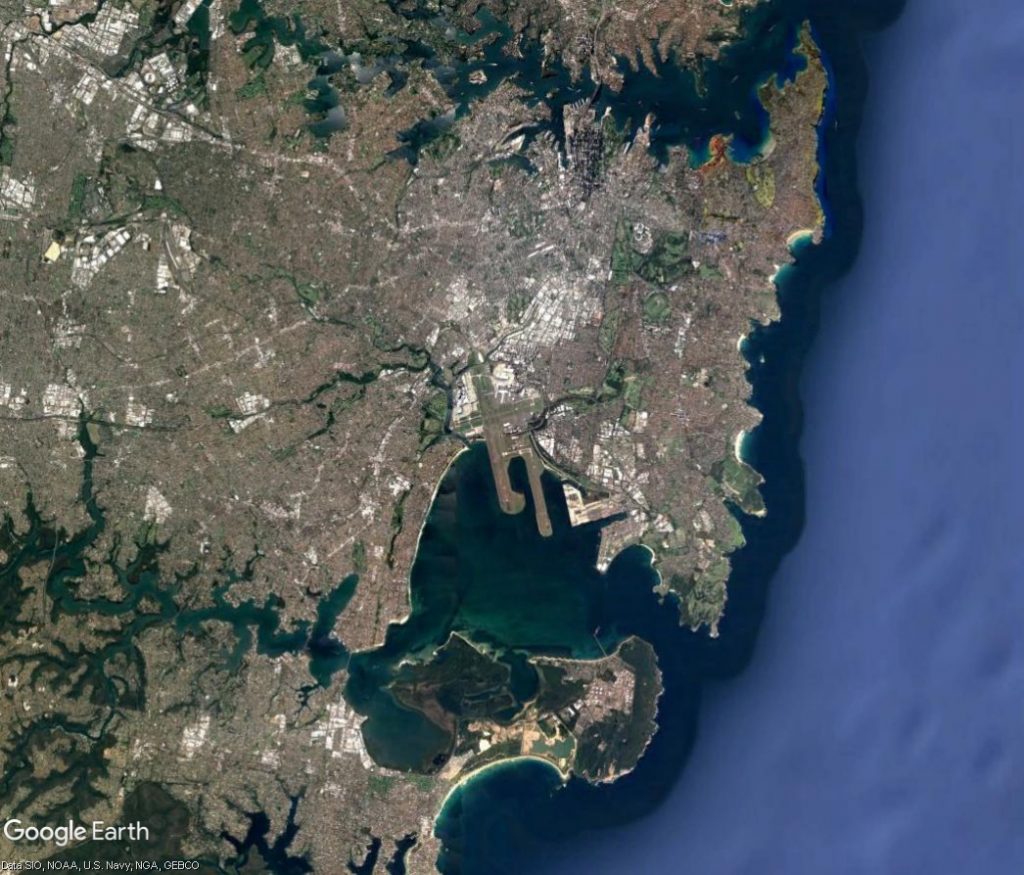
Sydney Airport has three runways:

  • Two parallel runways that are orientated north/south, and
  • A single crossing runway that runs east/west.

Runways can be used in both directions which results in four flows that are outlined in the illustration below. To learn how the flow direction is determined, visit our When is each flight path used? page.

The animation is indicative only and provided for information purposes, on occasions flights may leave these general areas from time-to-time.

RAAF Base Richmond

A large expanse of military airspace exists around Richmond RAAF Base in the north-west of Sydney, as shown in the image below. Locations inside and surrounding this area are likely to experience noise from military aircraft operations. This includes activities within the restricted area and aircraft flying in and out of the Base to and from other destinations.

Military airspace

Noise Mitigation

The Department of Defence Aircraft Noise Management Strategy outlines how they work with local communities to reduce noise impacts, while balancing operational and training requirements.

Flying operations are conducted in consideration of local communities, whilst maintaining the safe operation of the aircraft. More information can be found in the:

You can access more information on military aircraft activity at:

Will flights increase in the future in my area?

Flight Path and Airspace Changes

Visit Engage Airservices to engage with our program of flight path and airspace changes.

Airport Master Plans

Airport Master Plans provide a blueprint for the future development of an airport over a twenty year period. They include information on forecast growth, airport terminals and facilities, runways and flight paths.

Who is responsible for master planning?

Airports are responsible for producing the master plan, while the overall process is administered and regulated by the Department of Infrastructure, Transport, Regional Development and Communications.

Sydney Airport

The Sydney Airport Master Plan 2039 and Environment Strategy 2019 – 2024 can be found on the Sydney Airport website.

Bankstown and Camden Airport

The Bankstown and Camden Airports Master Plans can be found on the Sydney Metro Airports website.

Why are some times busier than others at Sydney Airport?

The number and frequency of flights will vary on a daily, weekly and yearly basis due to differences in airline schedules. The airlines schedule flights in response to consumer demand.

Busy times of day

The busiest times of day tend to be in the morning and evening as business travellers arrange their flights to coincide with business hours at their destinations.  At these times it is not unusual for flights to arrive and depart every few minutes.

Busy times of the week

Monday mornings and Friday afternoons and evenings are very busy times for Sydney Airport, largely due to business travel.  Sunday afternoon is also a busy time.

Busy times of the year

Easter, Christmas/New Year, Lunar New Year and school holidays generally see an increase in aircraft movements because the airlines will schedule additional flights to meet the extra demand for travel during these times.  You are likely to notice increased frequency of movements during these periods.

Arrivals during peak periods

During peak periods at Sydney Airport the parallel runways will always be used because using both runways at the same time allows the most aircraft to be moved through the airport.

This means that, when the parallel runways are being used in a southerly direction (south flow) during peak periods, your area will experience aircraft noise.

Peak periods tend to be 7am to 11am and 3pm to 8pm, but may also extend beyond these hours.

Departures during peak periods at Sydney Airport

During peak periods at Sydney Airport the parallel runways will always be used because using both runways at the same time allows the most aircraft to be moved through the airport.

This means that, when the parallel runways are being used in a northerly direction (north flow) during peak periods, your area will experience aircraft noise.

Peak periods tend to be 7am to 11am and 3pm to 8pm, but may also extend beyond these hours.