Brisbane Airport Runways

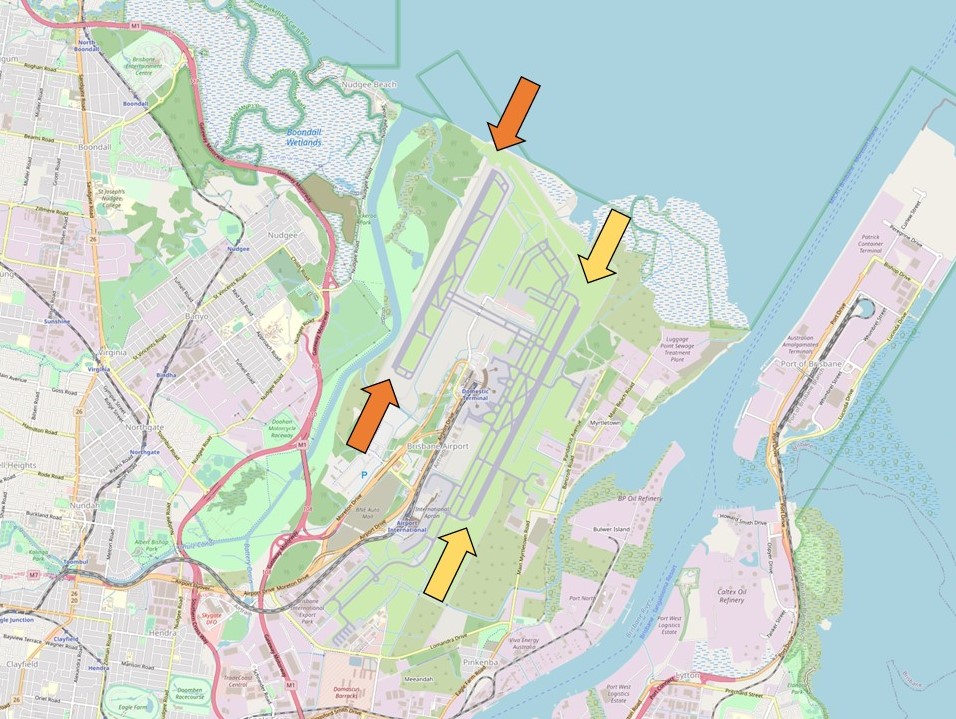
Brisbane Airport has two parallel runways oriented North-South – Runway 01R/19L (existing/legacy), and Runway 01L/19R (new) which opened on 12 July 2020. Both runways are shown in the image below with orange and yellow arrows at either end.

The image below shows the runways, with:

  • The orange arrows pointing to Runway 01L/19R
  • The yellow arrows pointing to Runway 01R/19L.

A cross runway (14/32) was de-commissioned as part of the construction of the new runway.
Each runway is referred to differently according to in which direction it is being used, as explained in the following video.

When Brisbane airport is operating in a northerly direction runways 01R and 01L are in use, and runways 19L and 19R are used when the airport is in a southerly direction.

Runway numbering reflects the runways’ orientation and correlates with degrees on a compass. Runway 19 is at 190 degrees.

Runway selection

Operations are divided into two time periods. The day period is 6am to 10pm and the night period is 10pm to 6am.

During the day period, the runway used is based on the planned route of the aircraft. Aircraft planning a route through the north or the west use the new runway, and through the east or the south, the legacy runway.

At night aircraft will when possible operate over Moreton Bay. Arrivals use one runway and departures the other. As the overnight traffic volume is light, aircraft can more readily operate in the same airspace.

Weather conditions

Runway selection is based on wind direction, weather conditions, traffic volume and other factors. Aircraft primarily take-off and land into the wind for safety and performance reasons. Therefore, as the wind direction changes the runway in operation may also change depending on the strength of the wind.

Australia’s Civil Aviation Safety Authority (CASA) sets the rules for the provision of Air Traffic Control services. These rules include criteria applying to air traffic control for nominating the runway direction.

If a runway surface is dry, it should not be nominated for use if the downwind exceeds 5 knots. Downwind is wind that blows towards the tail of the aircraft. If the runway surface is wet, it should not be nominated if there is any downwind. For this reason the runway that is nominated for use will usually have a headwind, or if there is downwind, it will be below the criteria.


Learn more about seasonal changes in your area on our How seasonal variation affects your area page.
Useful documents and websites

Further information about aircraft operations

You can find a range of information on the Airservices website.

Accessing earlier noise and complaint information reports

Our interactive noise and complaint reports include data from 1 January 2017. Previous reports are available on request.

Understanding noise and annoyance – video

Everyone encounters sound every day. It is only when that sound causes an adverse effect on a listener, such as annoyance, does that sound become noise. Noise is not always just about how loud the sound is, there is a complex set of factors that drive annoyance both based upon the noise itself and what that noise means to us. Find out more by watching this video:

From the ATC archives – video

Take a look at how air traffic control and flight operations used to operate.

Introduction to aircraft noise

Although the terms noise and sound can be used interchangeably, noise is used to refer to an unwanted sound, while sound is the generic term used to refer to anything acoustic.

In the case of aircraft noise, the acoustic energy can pass through 500 metres to 10 kilometres (or more) of air to reach local communities. As a result an aircraft can sound very different depending on the distance between the community and the aircraft, be that at flying or on the ground at a nearby airport.

The following video explains how aircraft noise is generated and how the characteristics of sound from aircraft can vary depending on a range of factors, such as the height of the aircraft, the type of aircraft (jet/propeller), its speed and weather:

If you would like to read more about aircraft noise and how we monitor it, you can visit our aircraft noise webpage.

How frequent are flights in my area?

There are a number of factors that influence the frequency of flights.

Firstly, the number and frequency of flights will vary on a daily, weekly and yearly basis due to differences in airline schedules. The airlines schedule flights in response to consumer demand. This is particularly the case around Christmas, Easter, school holidays and Lunar New Year.

Secondly, the runway in use at any given time will also vary, largely due to the wind conditions. Each runway has its own set of flight paths, and each flight path will affect different areas. As the runway in use changes, the flight paths change, and so too do the areas affected by aircraft movements.

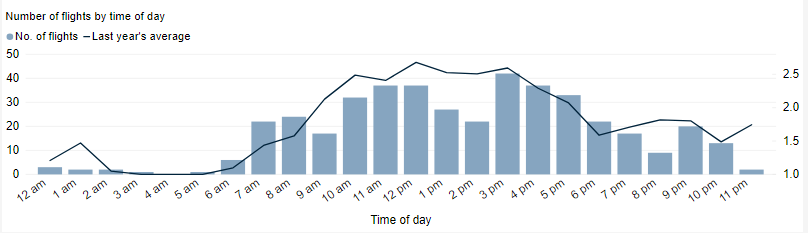
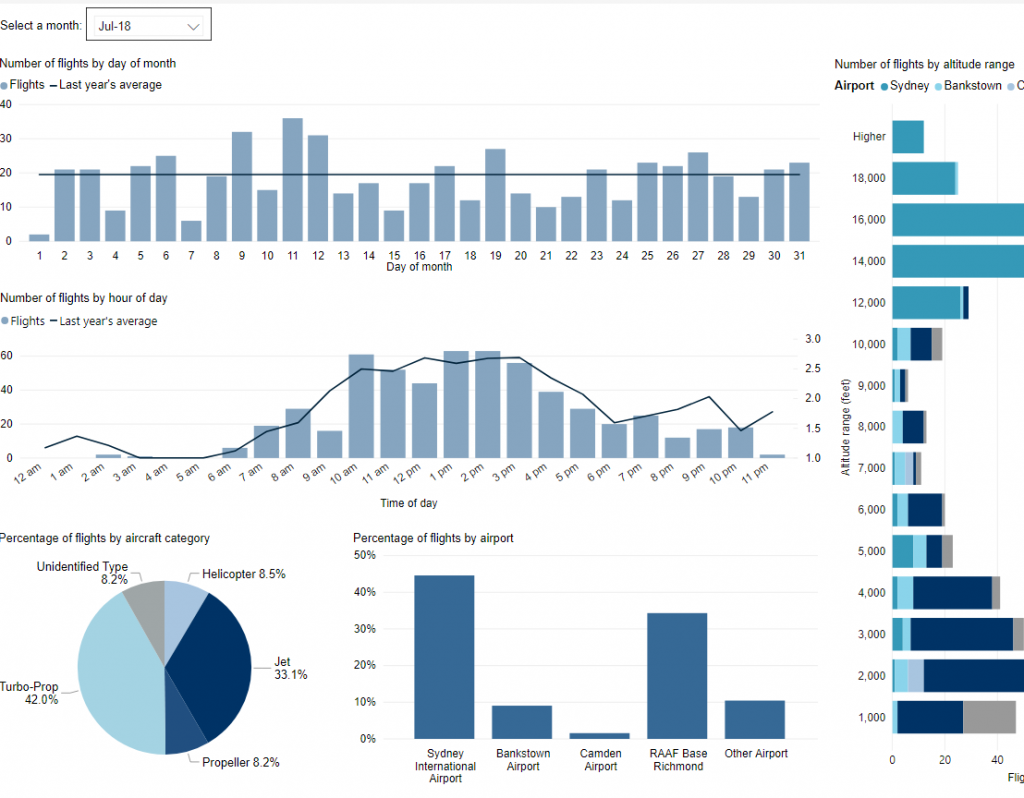
This chart shows the total number of flights each hour over the month, compared to the average for last year. Change the selected month to see how it has varied.

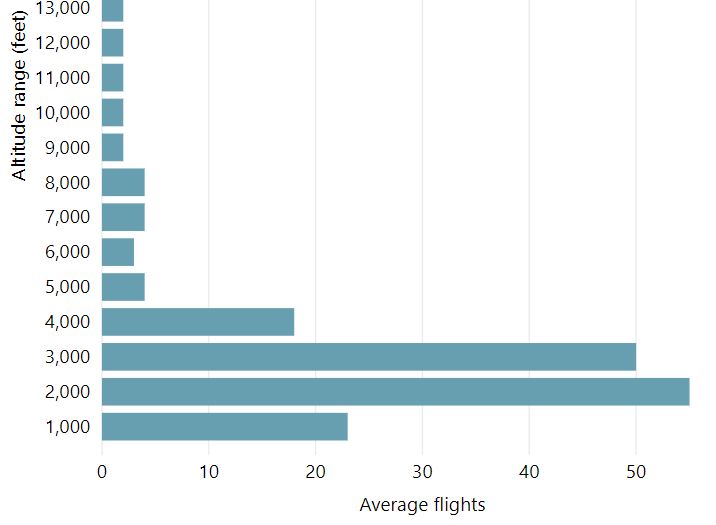
How high are aircraft near me?

The altitudes of aircraft over your area can vary according to:

  • the airport the flight is coming from or going to
  • whether the aircraft is arriving, departing or in level flight
  • the specific requirements of the flight path
  • the need for air traffic control to maintain vertical separation between aircraft.

Find out more on our What are the rules about altitudes? page.

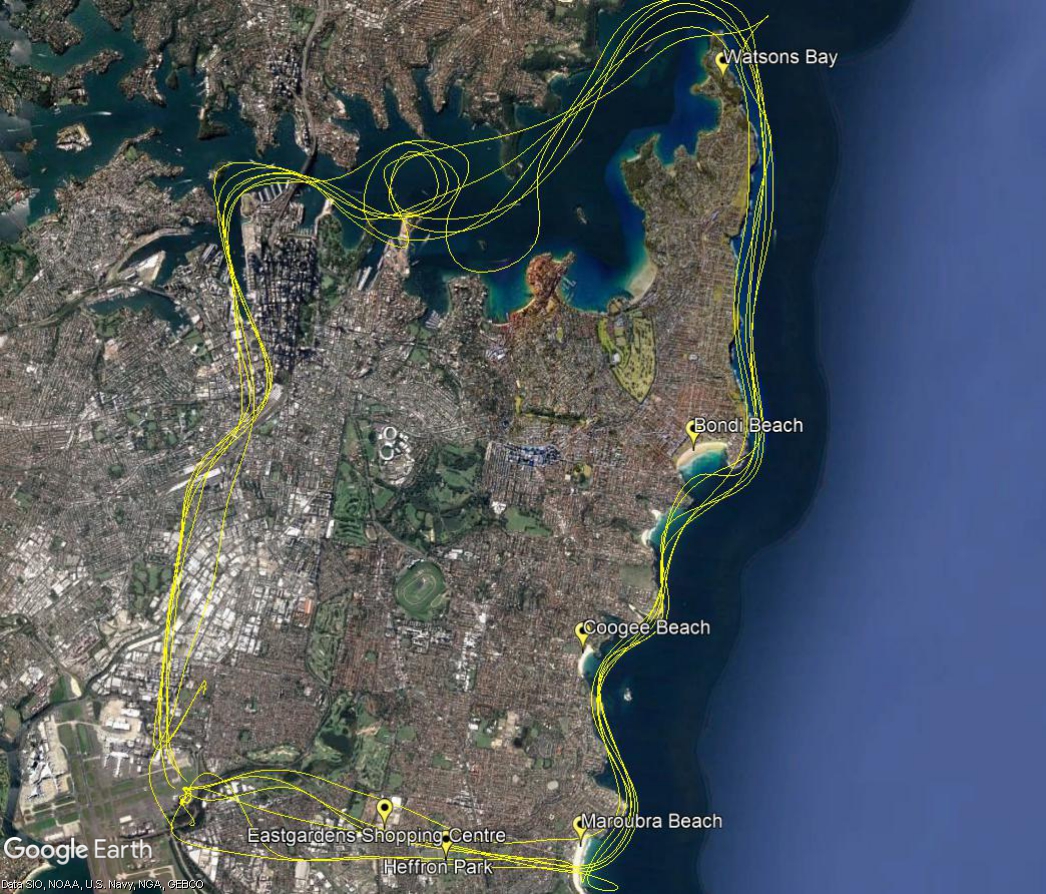
Helicopter routes from Sydney Airport

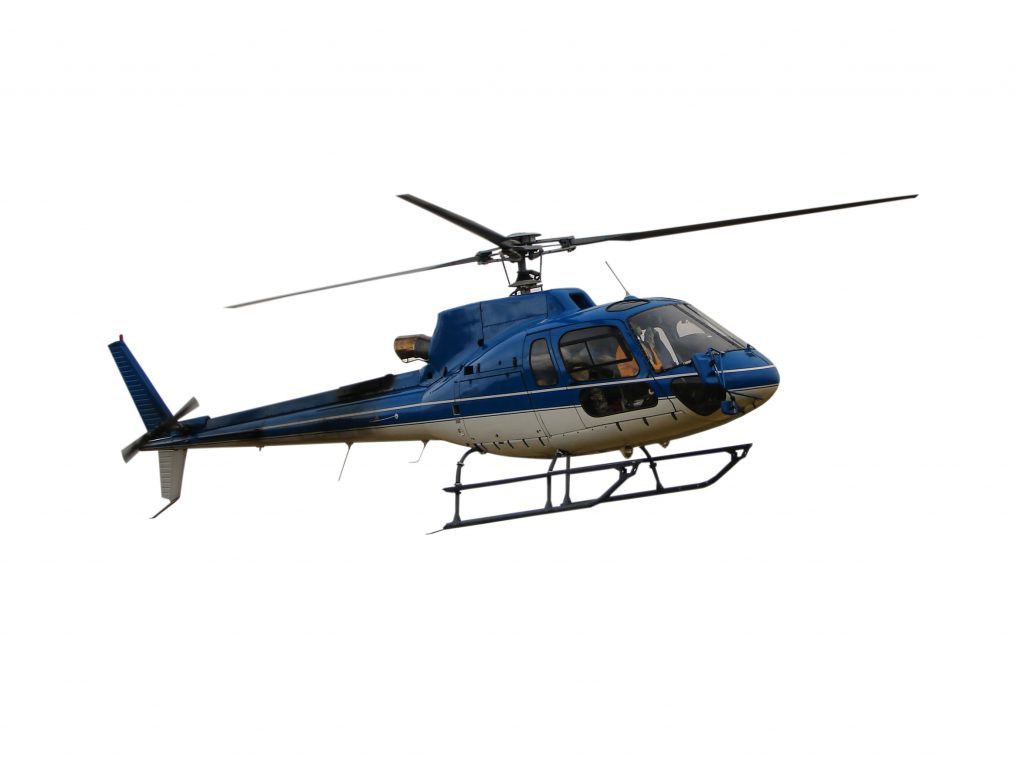
There are helicopter routes between Sydney Airport, the harbour and the coast. Scenic helicopter flights in these areas are becoming increasingly popular, especially on weekends and holidays.

Helicopters will fly these routes in one of two ways outline below. Helicopters may fly outside these routes if (for example):

  • they are bound for other destinations, or
  • by direction of air traffic control, or
  • if they are conducting “airwork” such as aerial filming, photography or surveying, shark spotting, or
  • if they are performing emergency services operations.

Option 1: To/from the north

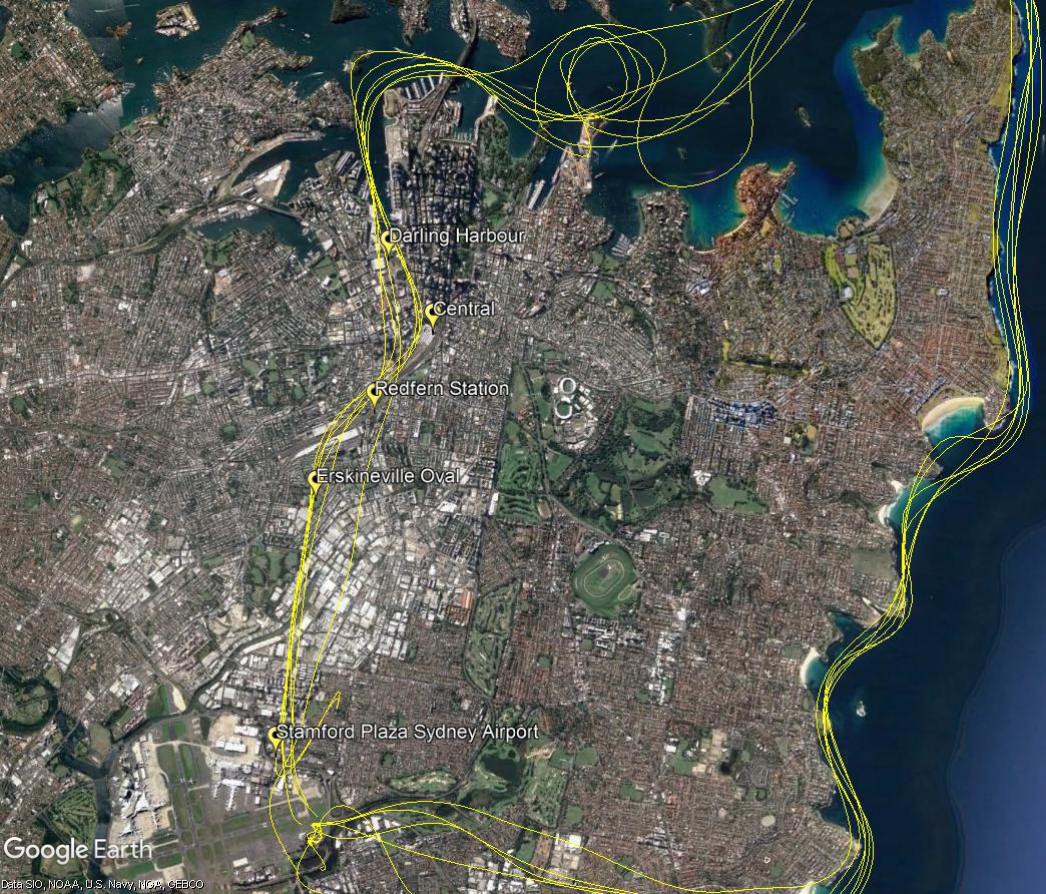
Helicopters inbound to Sydney Airport from the north will track from Darling Harbour to Central Railway station, usually at 1000 feet. Altitudes may vary on instruction by air traffic control.  They will then follow the railway line to Redfern Station.  From there they track to Erskineville Oval before descending to 500 feet while tracking to The Stamford Hotel on the outskirts of the airport. Instructions are then given for tracking to the helipad.

Outbound helicopters track via The Stamford to Erskineville Oval and then via Redfern Railway Station and the railway line to Central, and then to Darling Harbour, all at 1,000 feet.

Sydney Airport to harbour

Option 2: To/from the West

Helicopters inbound to Sydney Airport from the west will track from Maroubra Beach to Heffron Park on Bunnerong Road and to Eastgardens Shopping Centre at 1,000 feet.  From there they towards Southern Cross Drive while descending to 500 feet (altitudes may vary on instruction by air traffic control).  They are then given instructions by air traffic control for tracking to the helipad.

Outbound helicopters track via Southern Cross Drive to Eastgardens Shopping Centre at 1,000 feet and then to Maroubra Beach.  Once east of the coast they will descend to 500 feet which is the minimum altitude for flight over water.

Sydney Airport to coast helis

Explore detailed data for your area

Use this interactive tool to explore detailed data for your area in the month of your choice.

This report is best viewed in full screen mode.

Investigation: Flight paths over Katoomba

We conducted a an investigation into whether it was feasible to alter the flight path over Katoomba (Blue Mountains), including what impact this would have on other routes.

Our investigation found this would adversely impact on safety and would not be operationally feasible due to the constraints of military airspace restrictions and air traffic control sector boundary and route segregation requirements.

We also found a change would negatively impact on communities closer to Sydney Airport.

A further investigation was conducted in 2017 for a noise improvement suggestion from the Aircraft Noise Ombudsman. This investigation found that the change would significantly increase complexity, did not meet accepted design standards and could have a negative impact on parts of the community closer to the airport.

How many aircraft fly near me?

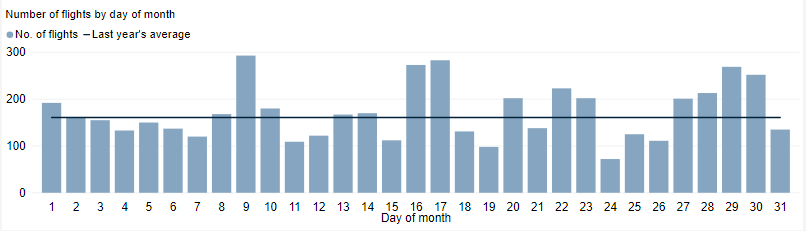
This tool shows the number of flights each day over your area in the selected month compared to the average for last year.  The bottom axis shows the day of the month. Use the drop-down menu to change the selected month to see how movements have varied. Hover over each day to see flight numbers.

Sunshine Coast flight paths

New flight paths commenced at Sunshine Coast Airport on 14 June 2020. To learn more about the runways at Sunshine Coast Airport, take a look at our Sunshine Coast Airport Runways page.

The illustration below shows how jet and non-jet (turbo-prop) aircraft typically operate at Sunshine Coast Airport on the published instrument arrival and departure flight paths

The animation is indicative only and provided for information purposes, on occasions flights may leave these general areas from time-to-time.