Adelaide Airport Consultative Committee

Federally-leased airports (excluding Mt. Isa and Tennant Creek) have established Community Aviation Consultation Groups (CACGs), which provide an effective avenue for local community engagement on airport planning and operations, including aircraft noise. The Department for Infrastructure, Transport, Regional Development and Communications provides guidelines for CACGs.

Non federally-leased airports may also choose to establish CACGs or community forums.

CACG membership depends on the characteristics of the airport and any local issues of community concern however, generally includes:

  • airport management
  • aircraft operators
  • community organisations or representatives
  • representatives from state, territory or local government bodies
  • local tourism and business groups.

Airservices does not formally belong to CACGs, but is invited to attend to provide relevant information and assist in discussions. We engage with CACGs on flight path and airspace changes, as well as technical reviews, such as noise monitoring and noise abatement procedures.

Find out more information on the Adelaide Airport Community Aviation Consultation Group webpage.

Adelaide Airport NAP 3: Preferred Flight Paths

The NAP lists the preferred flight paths as:

3.1 and 3.2. General.

  • 3.1: The procedures do not apply to single engine aircraft under 1,750 kg maximum take-off weight.
  • 3.2: The procedures may be waived for non-jet aircraft under 32,000 maximum take-off weight between 0700 and 2100 local time.

3.3 Arrivals

Aircraft should use a STAR if available.

3.3.a: Runway 23

  • From the East: Intercept RWY 23 at or beyond MOPRI or at beyond 10nm. Maintain at least 3000 ft until passing MOPRI or 10nm.
  • From the East: Intercept runway centerline at or beyond waypoint MOPRI or at beyond 10 nautical miles. Maintain at least 3000 ft until passing waypoint MOPRI or 10 nautical miles.
  • From the West: Use a right circuit/base approach.
  • From the East: Intercept RWY 23 at or beyond MOPRI or at beyond 10nm. Maintain at least 3000 ft until passing MOPRI or 10nm.
  • From the East: Intercept runway centerline at or beyond waypoint MOPRI or at beyond 10 nautical miles. Maintain at least 3000 ft until passing waypoint MOPRI or 10 nautical miles.
  • From the West: Use a right circuit/base approach.

3.3.b: Runway 05

  • Arrivals from the East:
    • Jets – track via waypoint PEGTU to intercept runway centerline at or beyond 5 nautical miles.
    • Non-Jets – track via waypoint PEGTU intercept runway centerline at or beyond 3 nautical miles.
  • Arrivals from the West:
    • Jets – intercept runway centerline at or beyond 5 nautical miles.
    • Non-Jets – intercept runway centerline at or beyond 3 nautical miles.

3.3.c: Runway 12

  • Jets – intercept runway centerline at or beyond 5 nautical miles.
  • Non-Jets – intercept runway centerline at or beyond 3 nautical miles.
  • Descent below 3,000ft is not allowed until west of the coast

3.3.d: Runway 30

  • Arrivals from the East – intercept runway centerline at or beyond 10 nautical miles.
  • Arrivals from the West – Determined by traffic management.

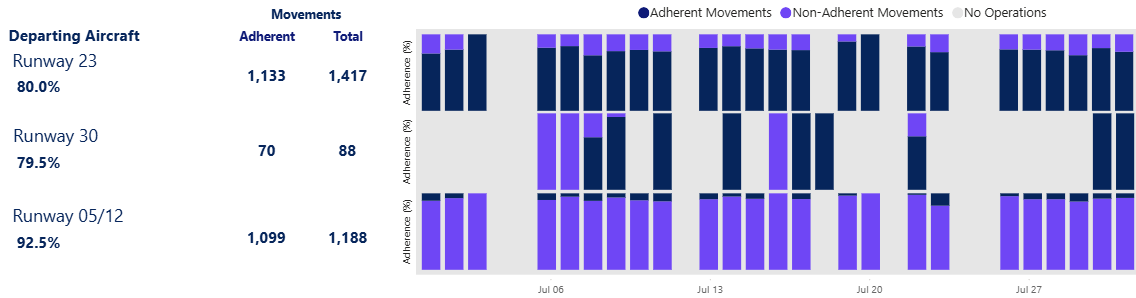
Adherence with this procedure is reported below.

3.4 Departures

3.4.a: Runway 23

  • East: Jets maintain heading until 6nm, then via waypoint LEMAT.  Non-Jets maintain heading until 3 nautical miles, then seaward of the coast and via waypoint LEMAT.
  • West: Maintain heading until 3 nautical miles.


3.4.b: Runway 30:

  • West: Maintain heading until 3 nautical miles.

3.4.c: Runway 12

  • No specific procedures apply
  • No specific procedures apply

3.4.d: Runway 23 or 30

Adherence with this procedure is reported below.

Note: A waypoint is a geographical location used to define a point on a flight path. Waypoints are defined by geographic coordinates and typically take the form of a five-letter capitalised word 

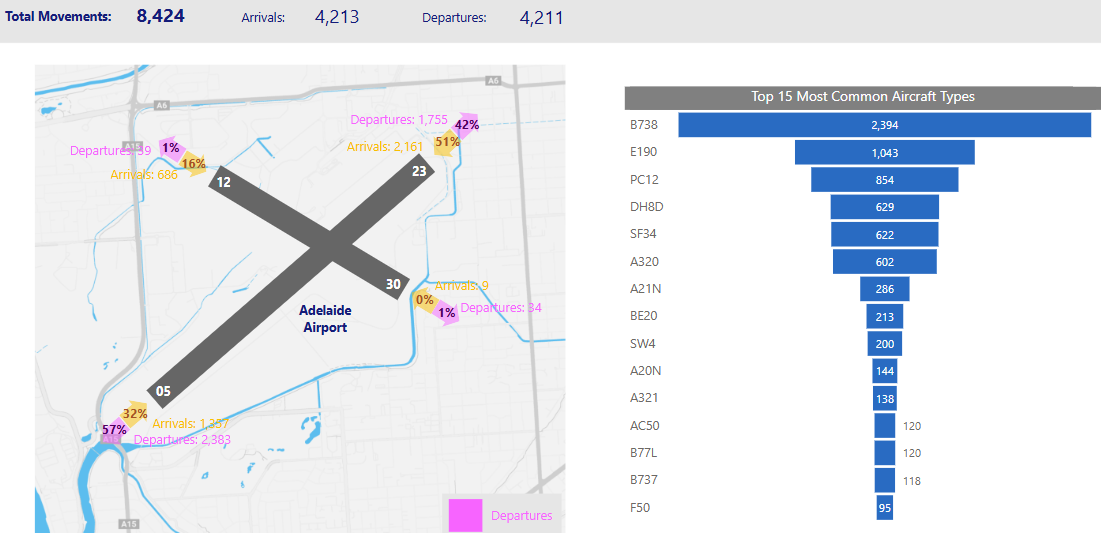
The report below provides the percentage adherence against the NAP criteria for preferred flight paths for June 2025. Reporting dating back to January 2025 is currently being prepared and will be added to this page soon.

“Other Operations” refers to operations where adherence was unable to be determined.

The report is best viewed in full screen mode.

Note: Due to rounding, percentage values may not sum to exactly 100.0%. Minor discrepancies of up to ±1% are expected and do not indicate any errors in the underlying absolute figures, which remain accurate and unaffected.

NAP 3.4 Departure Procedure

Adelaide Airport NAP 5: Curfew

Airport curfew

An airport curfew is a legislated restriction on aircraft operations at a federally-leased airport during a specified time period.

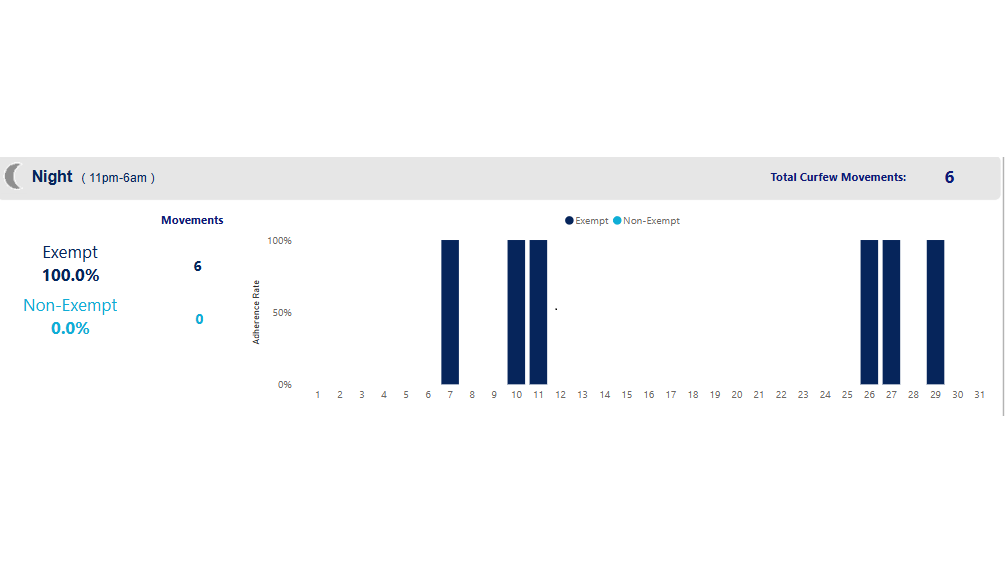
Adelaide Airport is operational 24 hours a day, however, there is a curfew in place which restricts operations in and out of Adelaide Airport during the hours of 11pm to 6am.

While most aircraft operations are prohibited during this period, emergency aircraft, some small jets, propeller-driven aircraft and freight movements are allowed. The curfew limits what aircraft can land and take-off and, in some cases, the runways that can be used.

Curfews are legally enforceable and regulated by the Department of Infrastructure, Transport, Regional Development, Communications, Sport and the Arts, who can make a determination of a curfew violation and prosecute an airline or aircraft operator for breaching a curfew.

The report is best viewed in full screen mode.

Note: Due to rounding, percentage values may not sum to exactly 100.0%. Minor discrepancies of up to ±1% are expected and do not indicate any errors in the underlying absolute figures, which remain accurate and unaffected.
Note: Non-permitted movements are those that do not meet standard exemption criteria; however, this does not necessarily indicate non-compliance, as dispensations or other approvals may have been granted outside of standard classifications. Curfew dispensations can be found here: Curfew Dispensation Reports.

Parafield Training Area

Training Area

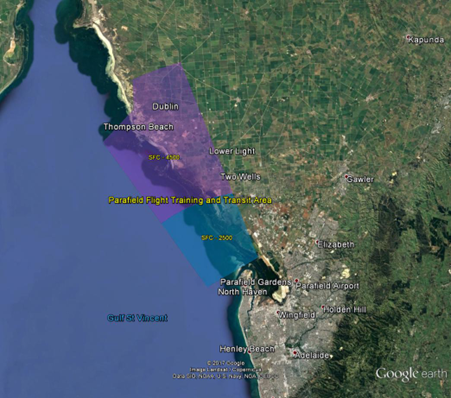
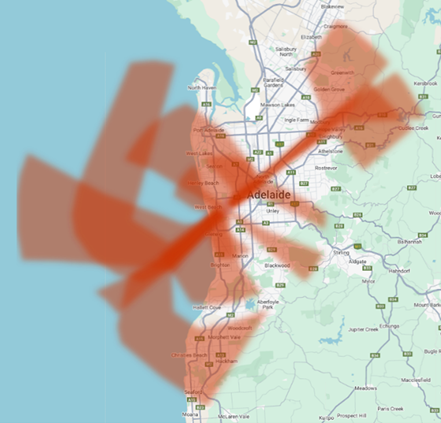
A designated training area exists to the north-west of the airport and to the west and north-west of the RAAF Edinburgh Base. Once pilots progress past the circuit training stage of their courses they will begin flying to and around the training area.

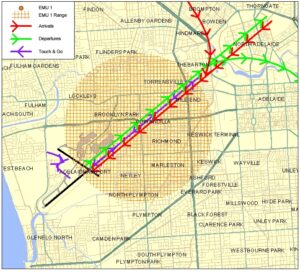
Click to enlarge the image, right, and use your browser “back” button to return to this page.

The training area is outside controlled airspace. It extends from St Kilda, which is approximately 10 kilometres west-north-west of the airport, to Long Plains, which is a further 45 kilometres to the north-west of St Kilda. The training area is to the west of this line and extends to 9 kilometres off the coast. It is ‘wedge-shaped’ because it is located in-between military restricted airspace to the west and north and the RAAF Edinburgh Base Control Zone to the east.

From the St Kilda area to just south of Middle Beach the training area exists between the surface (“SFC”) and 2500 feet. North to Long Plains the area extends between the surface and 4500 feet. These levels keep the aircraft below controlled airspace; therefore aircraft do not need a clearance from air traffic control to operate in the training area.

Aircraft wishing to track to the training area from Parafield Airport must remain south of the Bolivar strobe light and west of St Kilda to remain outside controlled airspace. The north- and southbound VFR routes (described above) transit the area.

Activities that may occur inside the training area include parachute operations and light aircraft movements at Lower Light aircraft landing area, as well as training flights by light aircraft in and around the area and aircraft transiting on the north and southbound VFR routes. There can be increased traffic volumes in the area due to use by flight training companies from Parafield Airport and because all aircraft are confined to a relatively small area due to the surrounding military airspace including RAAF Base Edinburgh.

Adelaide Airport Flight Paths

Adelaide Airport has a number of flight paths from its runway.

To learn more about the runway at Adelaide Airport, take a look at our Adelaide Airport Runway page.

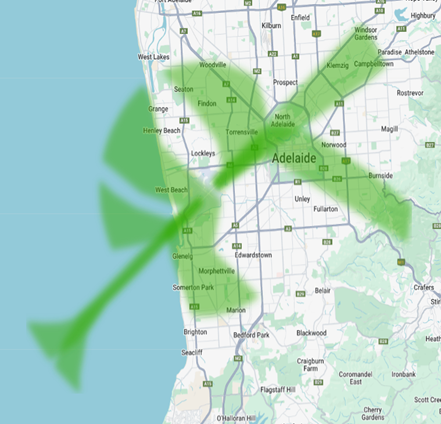
The illustration below shows how jet and non-jet (turbo-prop) aircraft typically operate at Adelaide Airport on the published instrument arrival and departure flight paths.

The animation is indicative only and provided for information purposes, on occasions flights may leave these general areas from time-to-time.

Adelaide Airport Runways

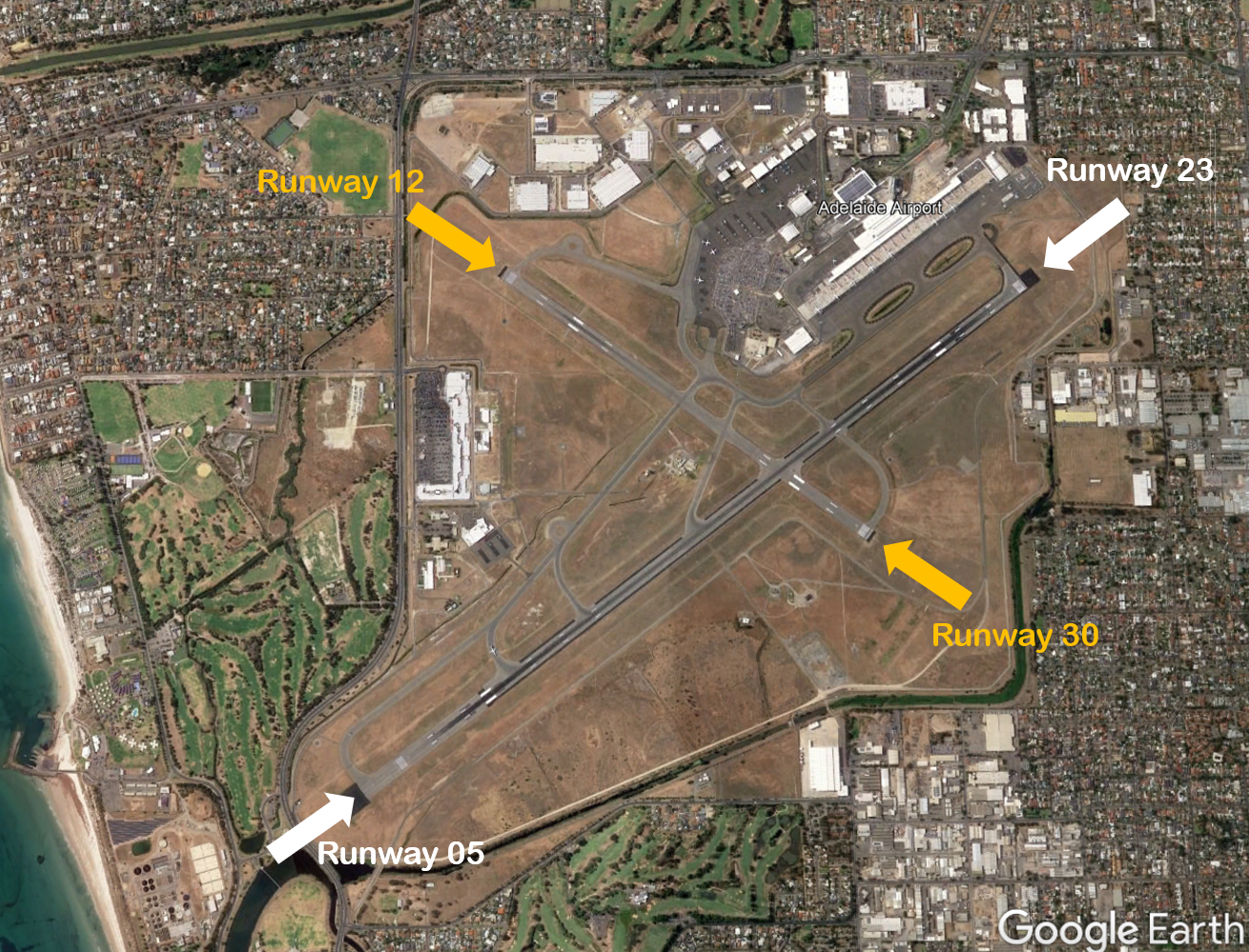
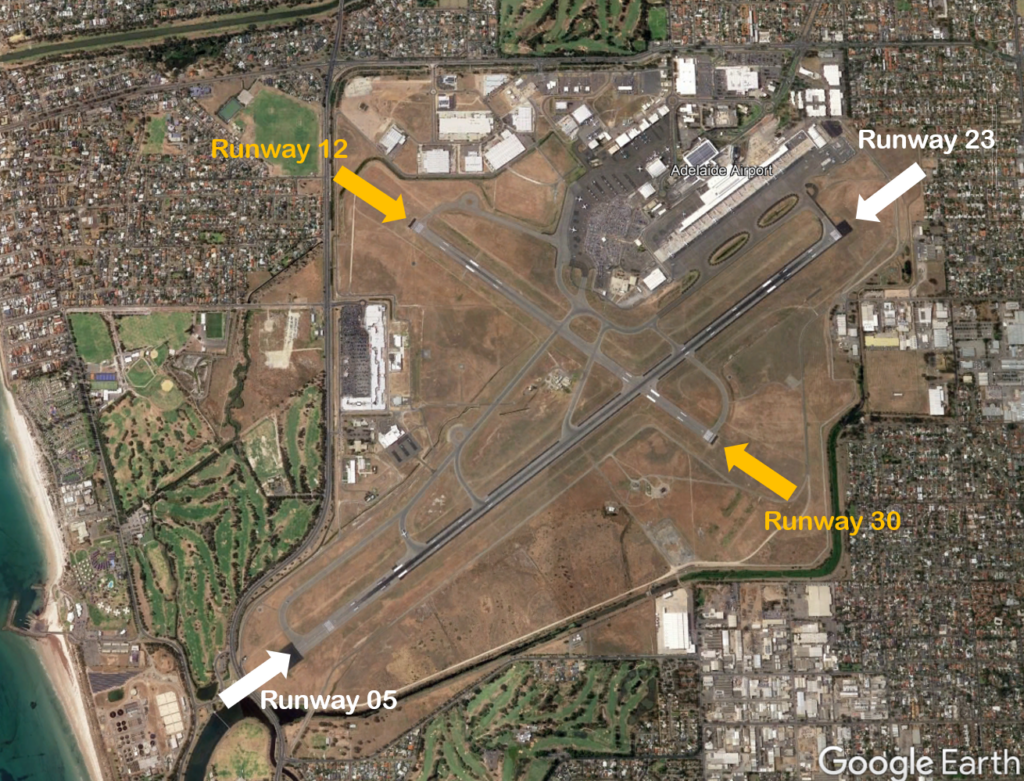
The main runway at Adelaide Airport, Runway 05/23 is 3 kilometres long and is orientated south-west to north-east. There is a smaller 1.6 kilometre cross runway, Runway 12/30, which is orientated north-west to south-east. The cross runway is primarily used by propeller aircraft.

Each runway is referred to differently according to in which direction it is being used. For example the main runway is known as Runway 05 when used in a north-easterly direction and 23 when used in a south-westerly direction. Runway numbering reflects the runways’ orientation and correlates with degrees on a compass. Runway 23 is 230 degrees.

The following video explains how runways are named and used.

Runway selection and seasonal winds

Runway selection is based on wind direction, weather conditions, traffic volume and other factors. Aircraft primarily take-off and land into the wind for safety and performance reasons. Therefore, as the wind direction changes the runway in operation may also change depending on the strength of the wind.

This means that Adelaide’s seasonal wind patterns affect usage of the different runway directions. The prevailing wind is southerly for most of the year, meaning that Runway 23 is used the most frequently. During the cooler months Runway 05 typically receives more use than at other times of the year because there tends to be more northerly winds.

Noise abatement procedures

Noise abatement procedures are designed to help reduce the impact of aircraft noise on communities. While they are applied whenever it is possible to do so, their use is not mandatory and is subject to weather conditions and traffic requirements.

In Adelaide the noise abatement procedures set out the preferred runway configuration for use during specific periods of the day. Between 6 am and 11 pm the most preferred runway is Runway 23 (arrivals over the suburbs and departures over the water), followed by Runway 05 as a second preference. If Runway 23/05 is not available, the preferred runway is Runway 30 and the second preference is Runway 12.

Adelaide complaints report TEST

We manage complaints and enquiries about aircraft noise and operations through our Noise Complaints and Information Service (NCIS). The information below is collected for the purpose of complaint management, analysis of issues and identification of causal factors.

The complaints report

Use this interactive tool to explore the issues raised by residents from different suburbs. For help, click the button in the bottom right-hand corner.

This report is best viewed in full screen mode.

Read an explanation of issues and classifications used in complaint reporting.


How many aircraft fly near me?

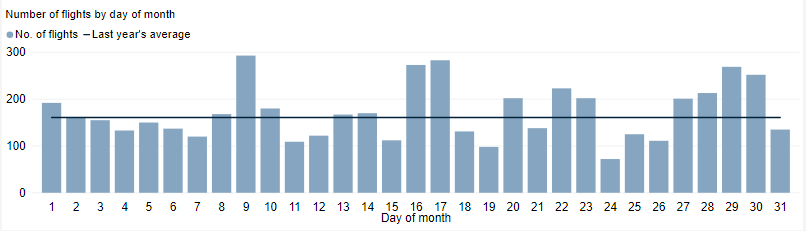
This tool shows the number of flights each day over your area in the selected month compared to the average for last year.  The bottom axis shows the day of the month. Use the drop-down menu to change the selected month to see how movements have varied. Hover over each day to see flight numbers.

*Please note due to technical issues between 19 June and 22 June 2024, flight data may not be accurately displayed. Our supplier is working to resolve the issue. We apologise for any inconvenience this may cause.

The Adelaide Noise and Flight Path Monitoring System (NFPMS)

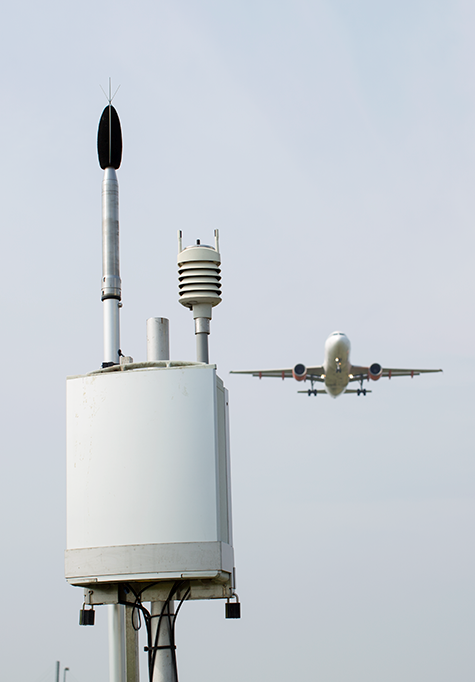
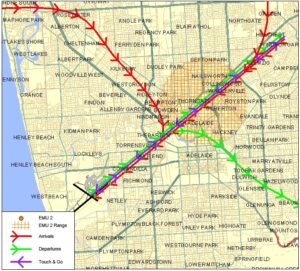
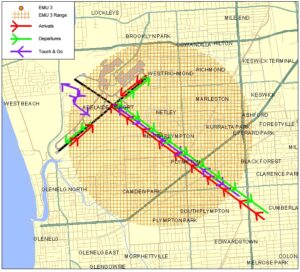
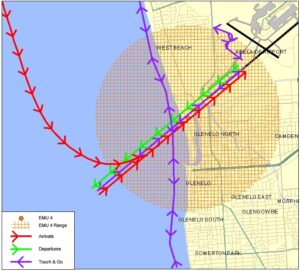
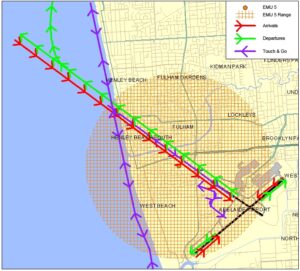
We collect noise and operational data from five noise monitors (Environmental Monitoring Unit, EMU) around Adelaide Airport.

Long term noise monitors are listed below according to their location.

Access monthly data on our Adelaide noise monitoring reports page.

BROOKLYN PARK (EMU 1)

Captures arrivals to Runway 23 and departures from Runway 05.

The pattern of noise events reflects the number of departures from Runway 05.

MEDINDIE (EMU 2)

Captures arrivals to Runway 23 and departures from Runway 05.

NETLEY (EMU 3)

Located to the south east of the cross runway.

Due to the low level of use of the cross runway, most of the noise events captured are associated with arrivals to Runway 05.

GLENELG NORTH (EMU 4)

Captures arrivals to Runway 05 and departures from Runway 23.

WEST BEACH (EMU 5)

Located to the north west of the cross runway.

Most of the noise events captured by this noise monitor are associated with departures from Runway 23.


Learn more about monitoring aircraft noise on the Airservices website.

How frequent are flights in my area?

There are a number of factors that influence the frequency of flights.

Firstly, the number and frequency of flights will vary on a daily, weekly and yearly basis due to differences in airline schedules. The airlines schedule flights in response to consumer demand. This is particularly the case around Christmas, Easter, school holidays and Lunar New Year.

Secondly, the runway in use at any given time will also vary, largely due to the wind conditions. Each runway has its own set of flight paths, and each flight path will affect different areas. As the runway in use changes, the flight paths change, and so too do the areas affected by aircraft movements.

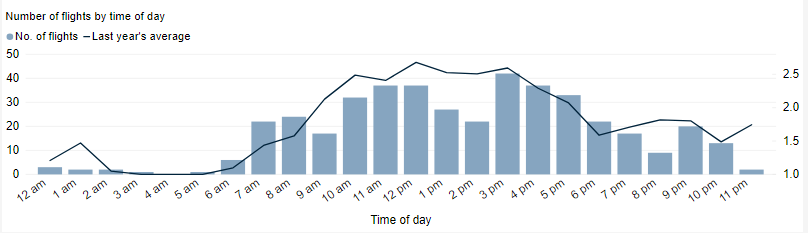
This chart shows the total number of flights each hour over the month, compared to the average for last year. Change the selected month to see how it has varied.

*Please note due to technical issues between 19 June and 22 June 2024, flight data may not be accurately displayed. Our supplier is working to resolve the issue. We apologise for any inconvenience this may cause.