Gold Coast Airport Noise Abatement Procedure Overview

A Noise Abatement Procedure (NAP) is a procedure designed to reduce the impact of aircraft noise on the community.

Airservices Australia has the following NAP in place at Gold Coast Airport:

Reporting is now available for:

1. Preferred Runway Use Report

3.1 and 3.2. Preferred Flight Paths (Arrivals and Departures)

3.1.3. Preferred Runway 14 Approach

5. Curfew

ILS Report

The following NAPs are not able to be reported on by Airservices Australia as we do not have ready access to the required data:

  1. Intersection Departures
  1. Training Flights

Additional reporting will be added to this site in 2025.

NAP reporting for this airport will be released in the fourth week of the month for the previous month.

It is important to note that NAPs are not mandatory; Air Traffic Control (ATC) and pilots apply the NAPs whenever possible. ATC and pilots will determine when critical operational requirements override the use of NAPs.

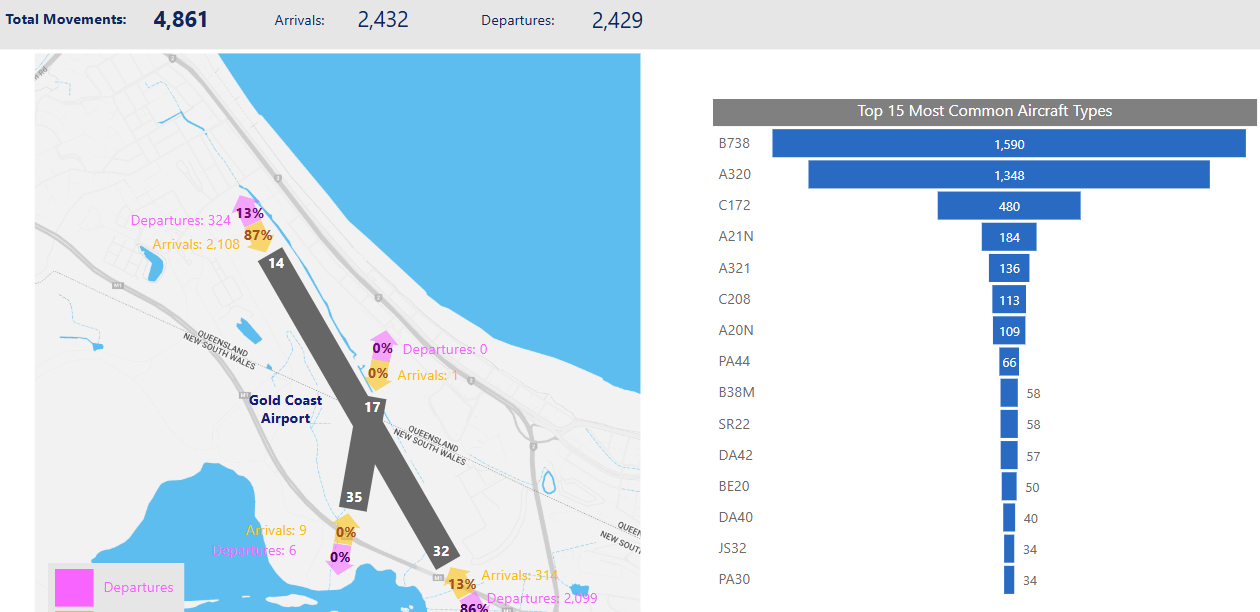
The overview below provides monthly movement numbers, runway end usage, and the types of aircraft operating at Gold Coast airport.

Note: Due to rounding, percentage values may not sum to exactly 100.0%. Minor discrepancies of up to ±1% are expected and do not indicate any errors in the underlying absolute figures, which remain accurate and unaffected.
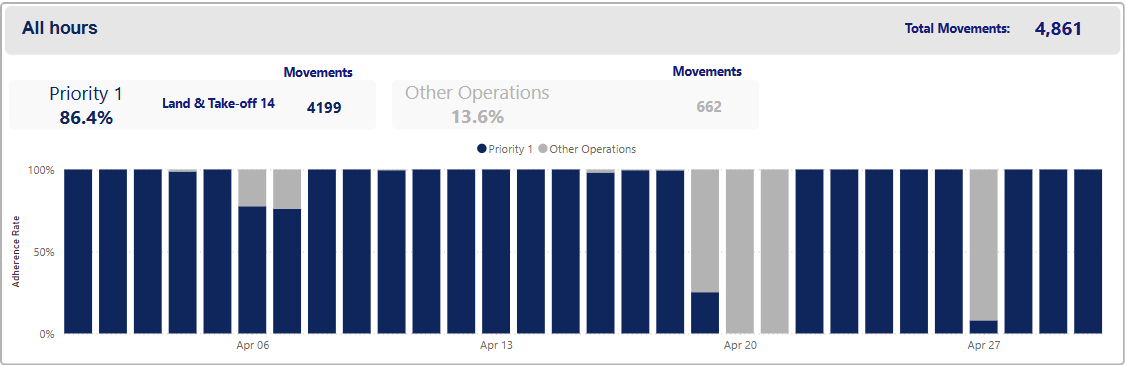
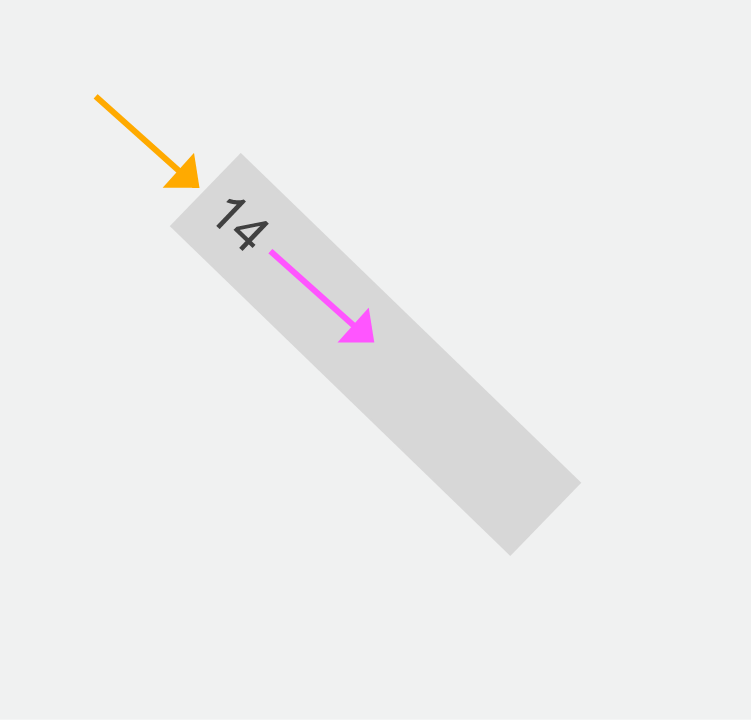
Gold Coast Airport NAP 1: Preferred Runway Use

The NAP lists the preferred runways as:

Priority 1:

Arriving Runway 14 , departing Runway 14

The report below provides the percentage use for each operating mode during daytime and night-time periods for each month (hover over each day in the column graph and the mode, the number of movements and the percentage use on that day will appear). “Other Operations” refers to modes used when preferred modes are not available, due to things like runway works, adverse weather and emergency situations.

The report is best viewed in full screen mode.

Note: Due to rounding, percentage values may not sum to exactly 100.0%. Minor discrepancies of up to ±0.1% are expected and do not indicate any errors in the underlying absolute figures, which remain accurate and unaffected.

There is no reporting for 6 and 7 March 2025 due to the suspension of flights as a result of Tropical Cyclone Alfred.

Gold Coast Airport NAP 3.1 and 3.2: Preferred Flight Paths (Arrivals and Departures)

The NAP lists the preferred flight paths as:

3.1 Arrivals

  • Maximise operation over water and avoid noise sensitive sites where possible or minimise aircraft noise while flying over these areas.

Note: This NAP is under review to determine how it can be reported.

  • Delay flap deployment until as late as possible – data not available.

3.1.1 Jet Aircraft

3.1.1a – Landing Runway 32

  • Track east of the coast.
  • Expect visual or instrument approach via STAR or radar vectors.

3.1.1b Landing Runway 14

  • Remain above 5000ft over water.
  • Join final approach using visual or instrument approach.

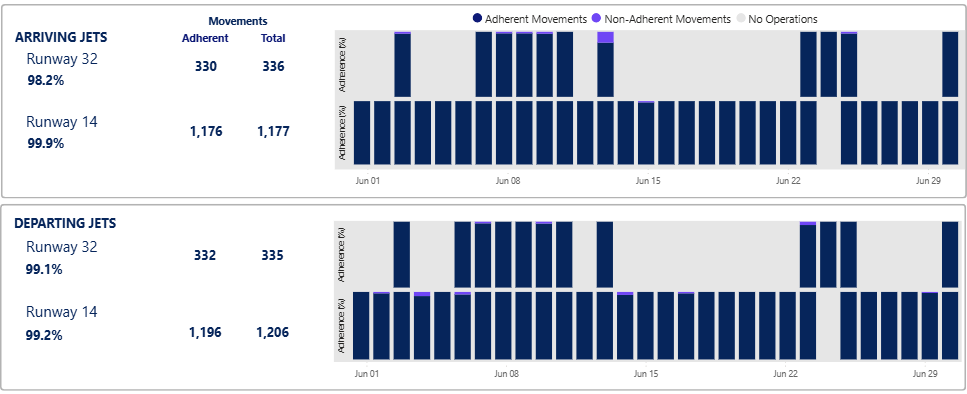
Adherence with this procedure is reported below.

3.1.2 Non-Jet Aircraft

3.1.2a Landing Runway 32

  • From the NORTH: In visual conditions track east of the coast and turn right south of Point Danger and over Ukerebagh Island.
  • From the SOUTH: In visual conditions left turn to join final approach

3.1.2b Landing Runway 14

  • Remain above 3000ft until established over water to join final approach using a visual or instrument approach

Note: Reporting for this procedure is currently under development.

3.2 Departures

  • Jet noise abatement procedures apply – data not available

3.2.1 Jet Aircraft

3.2.1a Departing Runway 32

  • To the NORTH and EAST: Right turn to fly over water
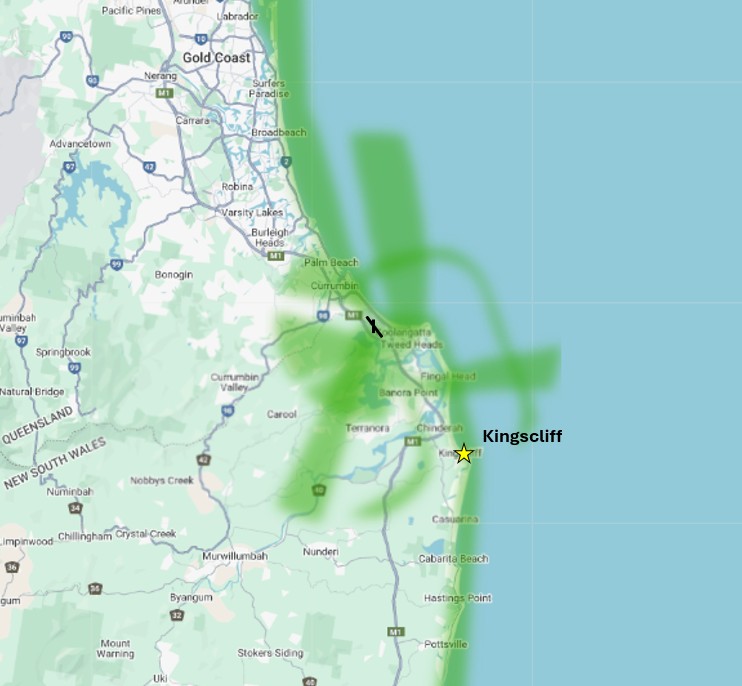
  • To the SOUTH: Right turn to fly over water until south of Kingscliff and above 5000ft.

3.2.1b Departing Runway 14

  • To the NORTH, EAST and SOUTHEAST: Left to turn fly over water.
  • To the South and SOUTHWEST: Right turn until passing DME (navigation beacon).

Adherence with this procedure is reported below.

3.2.2 Non-Jet Aircraft

3.2.2a Departing Runway 32

  • Right turn to fly over water to 3000ft.

3.2.2b Departing Runway 14

  • To the NORTH: Left turn to fly over water to 3000ft (Right turn may be required for traffic management).
  • To the EAST: Left turn.
  • To the SOUTH or SOUTHWEST: Right turn until pass 3000ft (Left turn may be required for traffic management).

Note: Reporting for this procedure is currently under development.

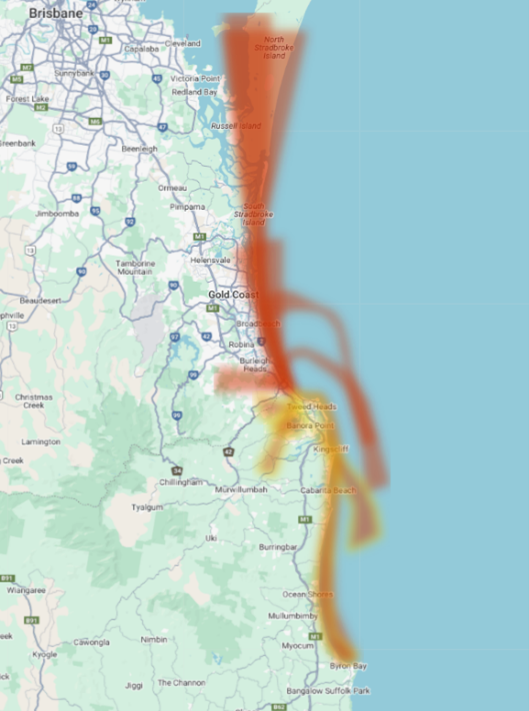
The report below provides the percentage adherence against the NAP criteria for preferred flight paths.

“Other Operations” refers to operations where adherence was unable to be determined.

The report is best viewed in full screen mode.

Note: Due to rounding, percentage values may not sum to exactly 100.0%. Minor discrepancies of up to ±1% are expected and do not indicate any errors in the underlying absolute figures, which remain accurate and unaffected.
Gold Coast Airport NAP 3.1.3: Preferred Runway 14 Approach

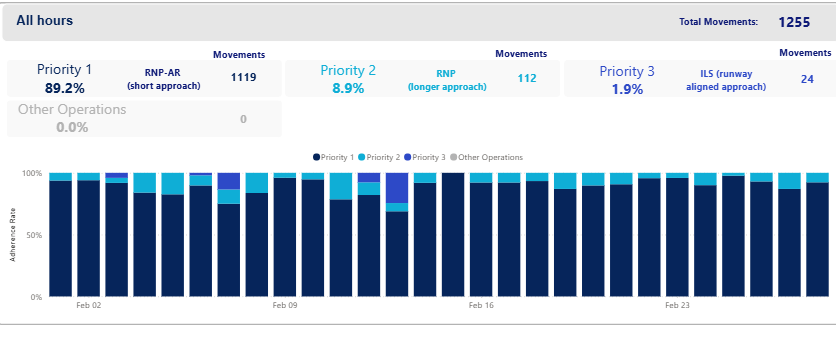
This NAP prioritises the use of approach procedures to runway 14.

Priority 1. RNP-AR (short GPS navigation approach)

Priority 2. RNP (longer standard navigation approach) or visual approach

Priority 3. ILS (long runway aligned approach) – aircraft over 5700kg (generally non-training aircraft) only to use when other approaches are unavailable due to weather, emergencies or operational critical requirements)

Landing to Runway 14

The report below provides the percentage use for each approach procedure to runway 14.

Please visit here for Instrument Landing System (ILS) Report.

The report is best viewed in full screen mode.

Note: Due to rounding, percentage values may not sum to exactly 100.0%. Minor discrepancies of up to ±1% are expected and do not indicate any errors in the underlying absolute figures, which remain accurate and unaffected.
Gold Coast Airport NAP 5: Curfew

Airport curfew

An airport curfew is a legislated restriction on aircraft operations at a federally-leased airport during a specified time period.

Gold Coast Airport is operational 24 hours a day, however, there is a curfew in place which restricts operations in and out of Gold Coast Airport during the hours of 11pm to 6am. During daylight saving time the airport curfew operates on Queensland time so New South Wales residents will see aircraft movements until 12 am instead of 11 pm.

While most aircraft operations are prohibited during this period, emergency aircraft, some small jets, propeller-driven aircraft and freight movements are allowed. The curfew limits what aircraft can land and take-off and, in some cases, the runways that can be used.

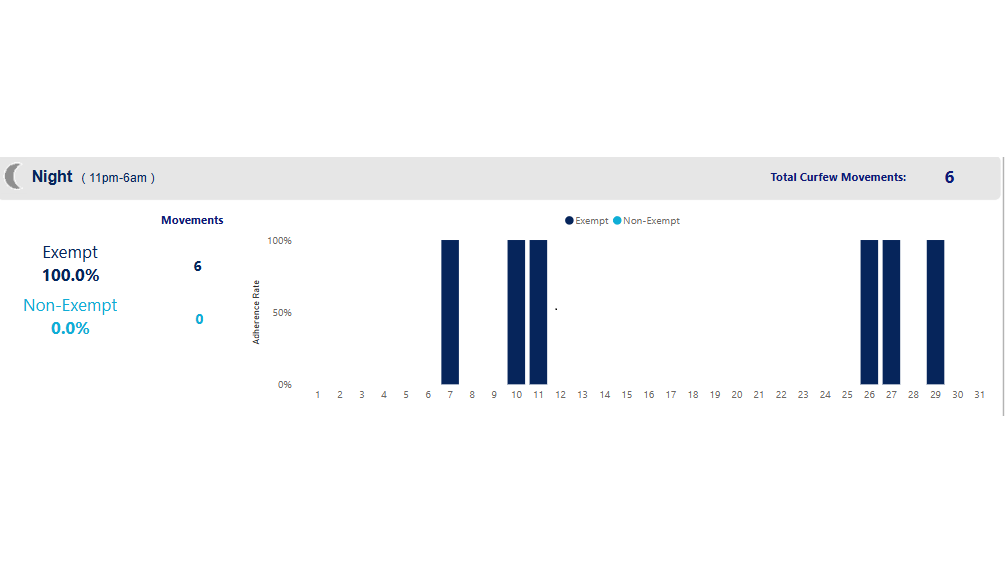
Curfew movements at Gold Coast Airport are small in number – on average less than one per night.

Curfews are legally enforceable and regulated by the Department of Infrastructure, Transport, Regional Development, Communications, Sport and the Arts, who can make a determination of a curfew violation and prosecute an airline or aircraft operator for breaching a curfew.

The report is best viewed in full screen mode.

Note: Due to rounding, percentage values may not sum to exactly 100.0%. Minor discrepancies of up to ±1% are expected and do not indicate any errors in the underlying absolute figures, which remain accurate and unaffected.
Note: Non-permitted movements are those that do not meet standard exemption criteria; however, this does not necessarily indicate non-compliance, as dispensations or other approvals may have been granted outside of standard classifications. Curfew dispensations can be found here: Curfew Dispensation Reports.

ILS Report

Noise Abatement Procedures (NAPs) at Gold Coast Airport restrict use of the ILS (Instrument Landing System) except in the following circumstances:

  • when poor weather affects visibility
  • for operational requirements,
  • or during emergencies.

Air traffic control will nominate the mode during periods of poor visibility or in emergency situations. Pilots may request the mode at other times when there is poor visibility outside of air traffic control tower hours, to manage operational issues on board the aircraft or during emergency situations.

The report below provides a breakdown of ILS use based on ATC nomination and pilot requests.

The report is best viewed in full screen mode.

Note: Due to rounding, percentage values may not sum to exactly 100.0%. Minor discrepancies of up to ±1% are expected and do not indicate any errors in the underlying absolute figures, which remain accurate and unaffected.