The NAP lists the preferred flight paths as:
3.1 Arrivals
- Maximise operation over water and avoid noise sensitive sites where possible or minimise aircraft noise while flying over these areas.
Note: This NAP is under review to determine how it can be reported.
- Delay flap deployment until as late as possible – data not available.
3.1.1 Jet Aircraft
3.1.1a – Landing Runway 32
- Track east of the coast.
- Expect visual or instrument approach via STAR or radar vectors.
3.1.1b Landing Runway 14
- Remain above 5000ft over water.
- Join final approach using visual or instrument approach.
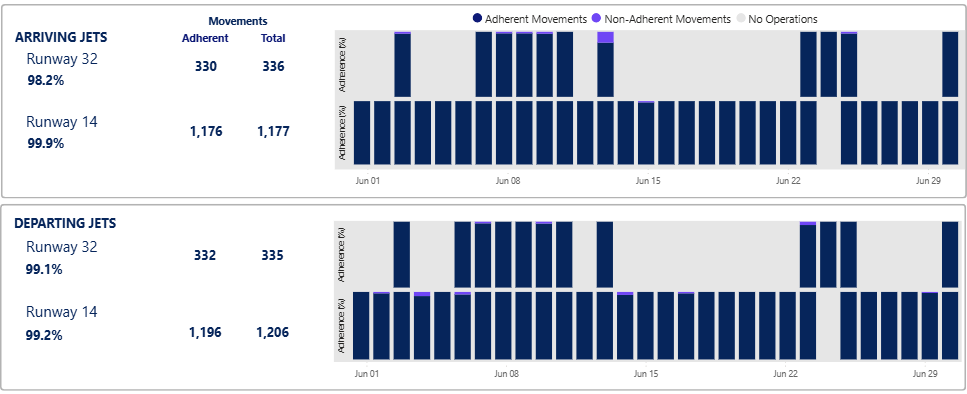
Adherence with this procedure is reported below.
3.1.2 Non-Jet Aircraft
3.1.2a Landing Runway 32
- From the NORTH: In visual conditions track east of the coast and turn right south of Point Danger and over Ukerebagh Island.
- From the SOUTH: In visual conditions left turn to join final approach
3.1.2b Landing Runway 14
- Remain above 3000ft until established over water to join final approach using a visual or instrument approach
Note: Reporting for this procedure is currently under development.
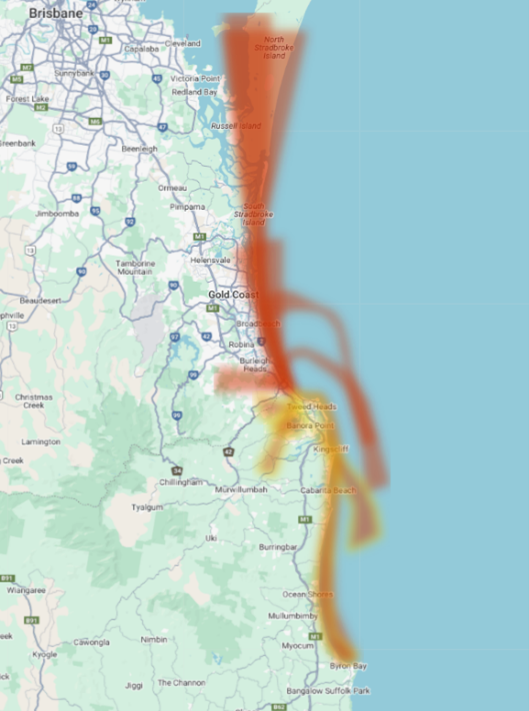
3.2 Departures
- Jet noise abatement procedures apply – data not available
3.2.1 Jet Aircraft
3.2.1a Departing Runway 32
- To the NORTH and EAST: Right turn to fly over water
- To the SOUTH: Right turn to fly over water until south of Kingscliff and above 5000ft.
3.2.1b Departing Runway 14
- To the NORTH, EAST and SOUTHEAST: Left to turn fly over water.
- To the South and SOUTHWEST: Right turn until passing DME (navigation beacon).
Adherence with this procedure is reported below.
3.2.2 Non-Jet Aircraft
3.2.2a Departing Runway 32
- Right turn to fly over water to 3000ft.
3.2.2b Departing Runway 14
- To the NORTH: Left turn to fly over water to 3000ft (Right turn may be required for traffic management).
- To the EAST: Left turn.
- To the SOUTH or SOUTHWEST: Right turn until pass 3000ft (Left turn may be required for traffic management).
Note: Reporting for this procedure is currently under development.
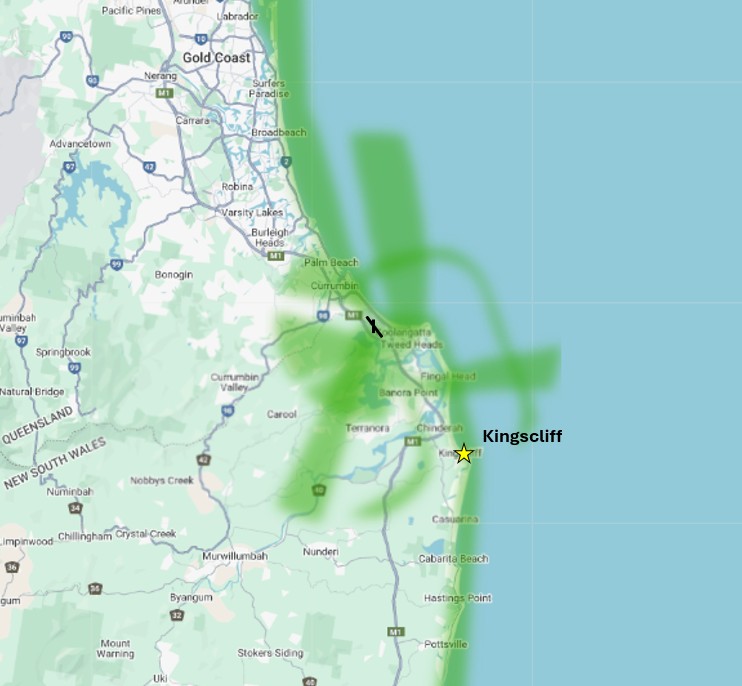
Note: Air Traffic Control may adjust paths for weather and/or traffic conditions.
Standard Instrument Departures (SID) and Standard Instrument Arrivals (STARs) are published flight paths designed to enhance safety, efficiency, and predictability. Air traffic control (ATC) may issue a deviation to a SID or STAR due to weather and/ or traffic conditions
For more information on the approach procedures including the ILS, please visit this page
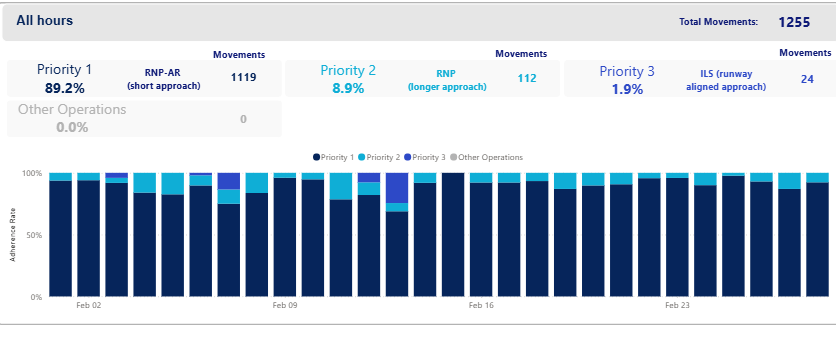
The report below provides the percentage adherence against the NAP criteria for preferred flight paths.
“Other Operations” refers to operations where adherence was unable to be determined.
The report is best viewed in full screen mode.
Note: Due to rounding, percentage values may not sum to exactly 100.0%. Minor discrepancies of up to ±1% are expected and do not indicate any errors in the underlying absolute figures, which remain accurate and unaffected.