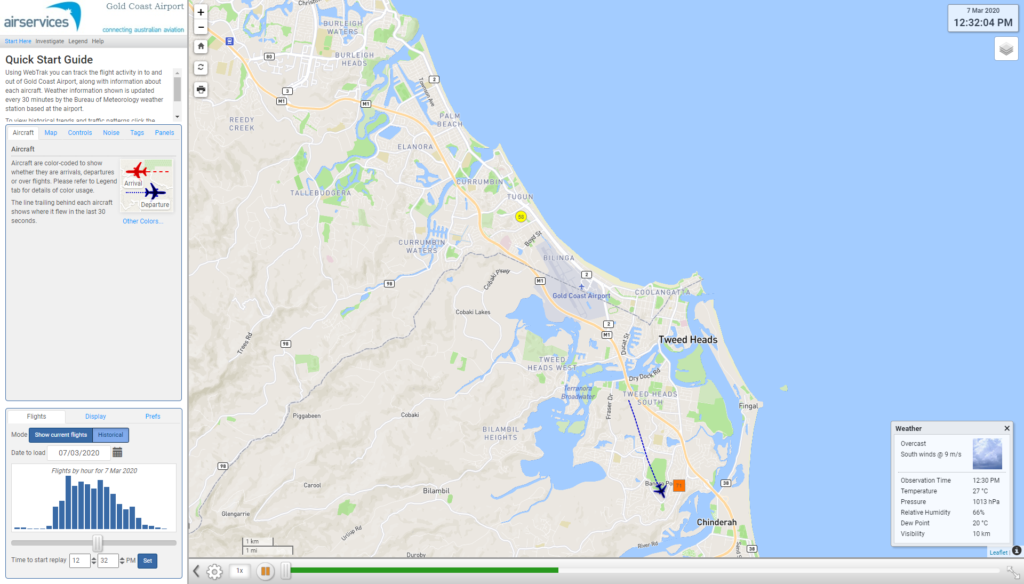
What was that flight?

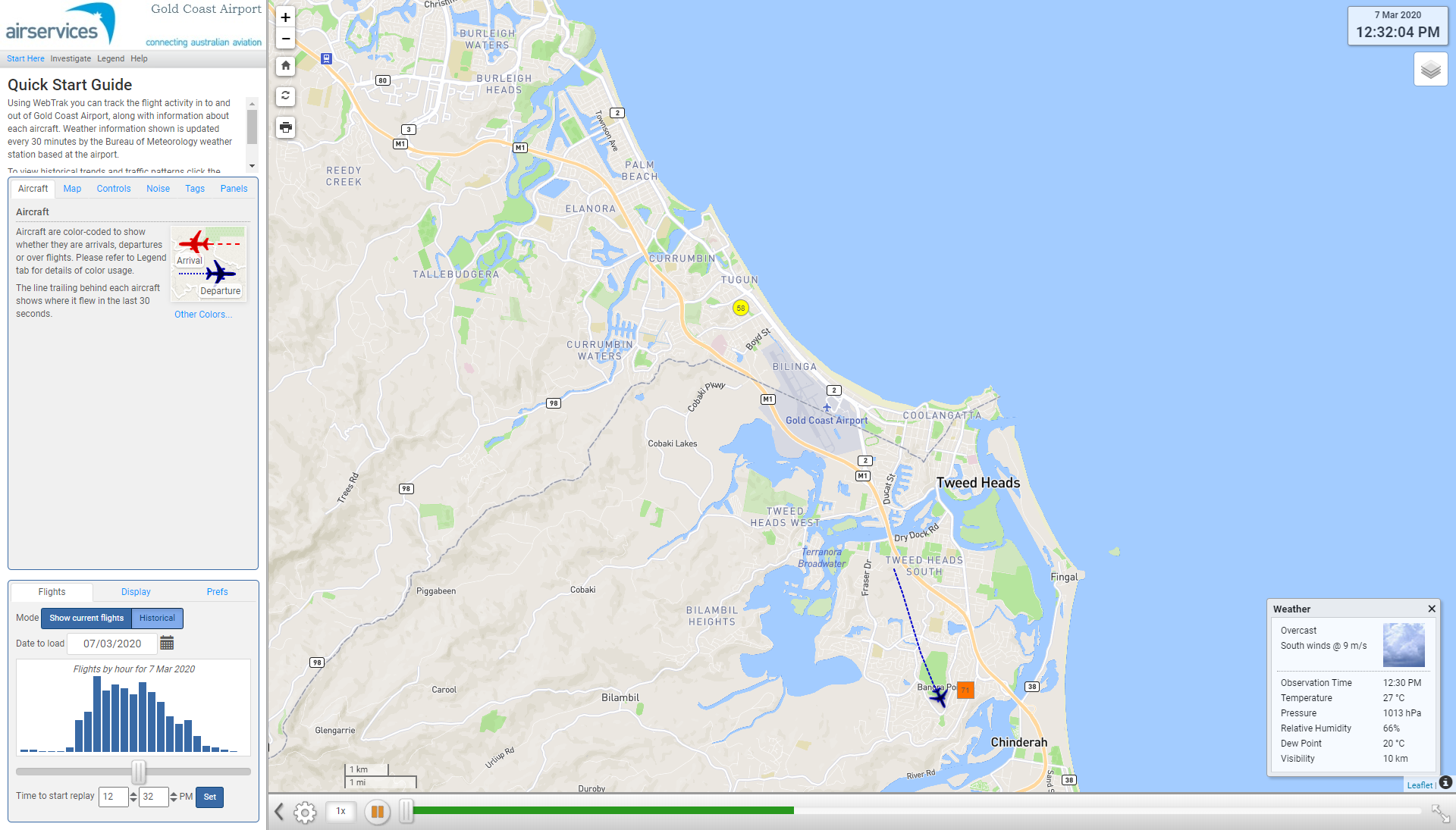
WebTrak is a tool that enables the community to see where aircraft fly and explore historical trends and patterns. WebTrak is provided by Envirosuite .

WebTrak uses information from air traffic control radars to display aircraft movements. The flight search and display function allows you to view aircraft flight activity over metropolitan areas. You can also:

  • locate your street address and have your home appear on the map
  • see noise levels of individual aircraft
  • view information about aircraft type, height, origin and destination
  • display an aircraft’s flight path and point of closest approach to your home
  • zoom in and out down to street level.

Note that there is slight delay on the display of flights.

You can view WebTrak for your region here.

Or, find out more information about WebTrak and how to use it

What was that flight?

WebTrak is a tool that enables the community to see where aircraft fly and explore historical trends and patterns. WebTrak is provided by Envirosuite.

WebTrak uses information from air traffic control radars to display aircraft movements. The flight search and display function allows you to view aircraft flight activity over metropolitan areas. You can also:

  • locate your street address and have your home appear on the map
  • see noise levels of individual aircraft
  • view information about aircraft type, height, origin and destination
  • display an aircraft’s flight path and point of closest approach to your home
  • zoom in and out down to street level.

Note that there is a slight delay on the display of flights.

You can view WebTrak for your region here.

Or, find out more information about WebTrak and how to use it

Sunshine Coast noise abatement and fly neighbourly

Noise Abatement Procedures

Every major airport has Noise Abatement Procedures (NAPs), which are procedures designed to reduce the impact of aircraft noise on the community. There are some limitations to the use of NAPs and they may not be used if they generate delay and congestion, as this can cause noise and emission impacts. Air traffic control or pilots may not be able to use them in certain situations, for example weather conditions or operational requirements. 

Under the NAPs, the preferred runway for jet aircraft at Sunshine Coast Airport is Runway 31 for landing and Runway 13 for take-off.

During the operating hours of the air traffic control tower, controllers will determine the runway direction in accordance with operational requirements and other factors, such as the NAP.

When the tower is closed, the pilot will determine the best runway to use and will take consideration of any request by airport management. When operationally possible to do so, they will also apply the NAP.

The NAPs also specify that aircraft above 5,700 kilograms in weight, should track via approved flight paths when arriving and departing the airport.

Between the hours of 11pm and 5:30am, aircraft above 5,700 kilograms require prior approval from Sunshine Coast Airport to land or take-off from the airport.

Aircraft below this weight do not require prior approval and are permitted to operate at any time. 

Further information on overnight operations, including reports, can be found on the Sunshine Coast Airport website.

Fly Neighbourly Agreements

Fly Neighbourly Advice or Fly Neighbourly Agreements are voluntary agreements established between aircraft operators and communities or authorities (normally airports or local councils) to assist in reducing the impact of aircraft noise on local communities. Sunshine Coast Airport has a voluntary Fly Neighbourly Program which encourages pilots to fly in a noise sensitive way whenever possible.

Sydney Area FAQ

Common questions that are asked in the Sydney Area:

How can I find out more information about Western Sydney Airport?

The flight paths and airspace design for Western Sydney International (Nancy-Bird Walton) Airport is being led by the Western Sydney Unit at the Department of Infrastructure, Transport, Regional Development and Communications. 

Further information on the airport and flight paths can be found on the Western Sydney Airport website.

Investigation: Southern departures trial

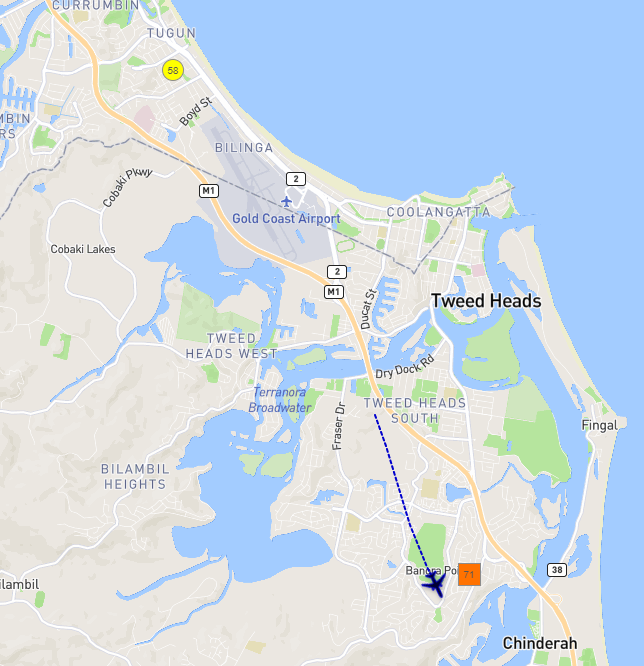
Some aircraft departing from Runway 14 (to the south) fly over residential areas near the airport, including Banora Point and Chinderah. A proposed change to this flight path was submitted to Airservices in 2012-13 by residents groups to the south of Gold Coast Airport. It aimed to reduce the noise impacts for residents by directing jet departures from Runway 14 to the south-west to maximise tracking over the Banora Point Golf Course.

Aircraft commenced flying the modified flight path in January 2015 under a 12-month trial which concluded in January 2016. This timeframe covered normal seasonal patterns and allowed the community to provide their feedback about the trial.

After conclusion of the trial a review was undertaken which included consideration of community feedback received and data from noise monitoring undertaken to determine whether there was any increase or reduction of noise experienced by local residents.

The trial did not achieve the intended noise reductions and also unintentionally concentrated flights over Farrants Hill. Due to this, and in consideration of community feedback, we decided not to implement the trial flight path permanently.

Reinstatement of the original Runway 14 departure procedure took effect on 23 June 2016. This required us to update procedures in compliance with current design rules and limitations. Waypoint locations remain the same, but the waypoint closest to the runway was changed from a fly-by to a fly-over.

Further information about the trial can be found on Engage Airservices website.

How frequent are flights in my area?

There are a number of factors that influence the frequency of flights.

Firstly, the number and frequency of flights will vary on a daily, weekly and yearly basis due to differences in airline schedules. The airlines schedule flights in response to consumer demand. This is particularly the case around Christmas, Easter, school holidays and Lunar New Year.

Secondly, the runway in use at any given time will also vary, largely due to the wind conditions. Each runway has its own set of flight paths, and each flight path will affect different areas. As the runway in use changes, the flight paths change, and so too do the areas affected by aircraft movements.

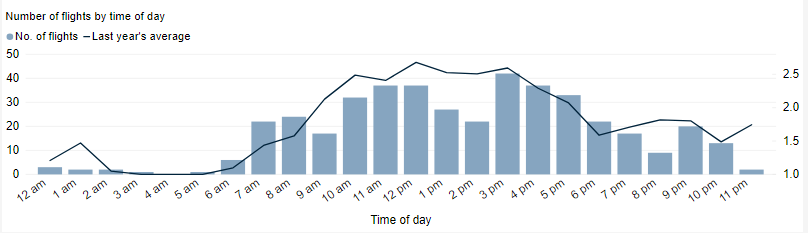
This chart shows the total number of flights each hour over the month, compared to the average for last year. Change the selected month to see how it has varied.

Daytime harbour lane for helicopters and seaplanes

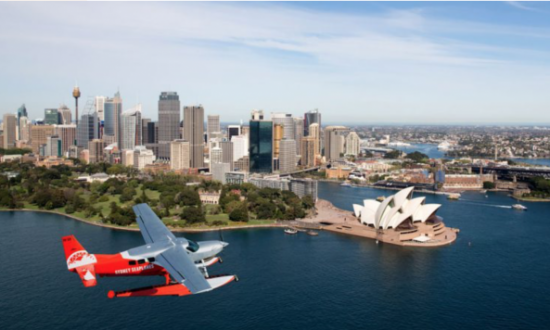
Sydney Harbour is a busy tourist precinct in the air as well as on the ground and there is growing demand for scenic flights. A harbour lane is available for the use of helicopters and seaplanes by day. This lane has been created so that harbour flights can occur without interfering with Sydney Airport arrivals and departures.

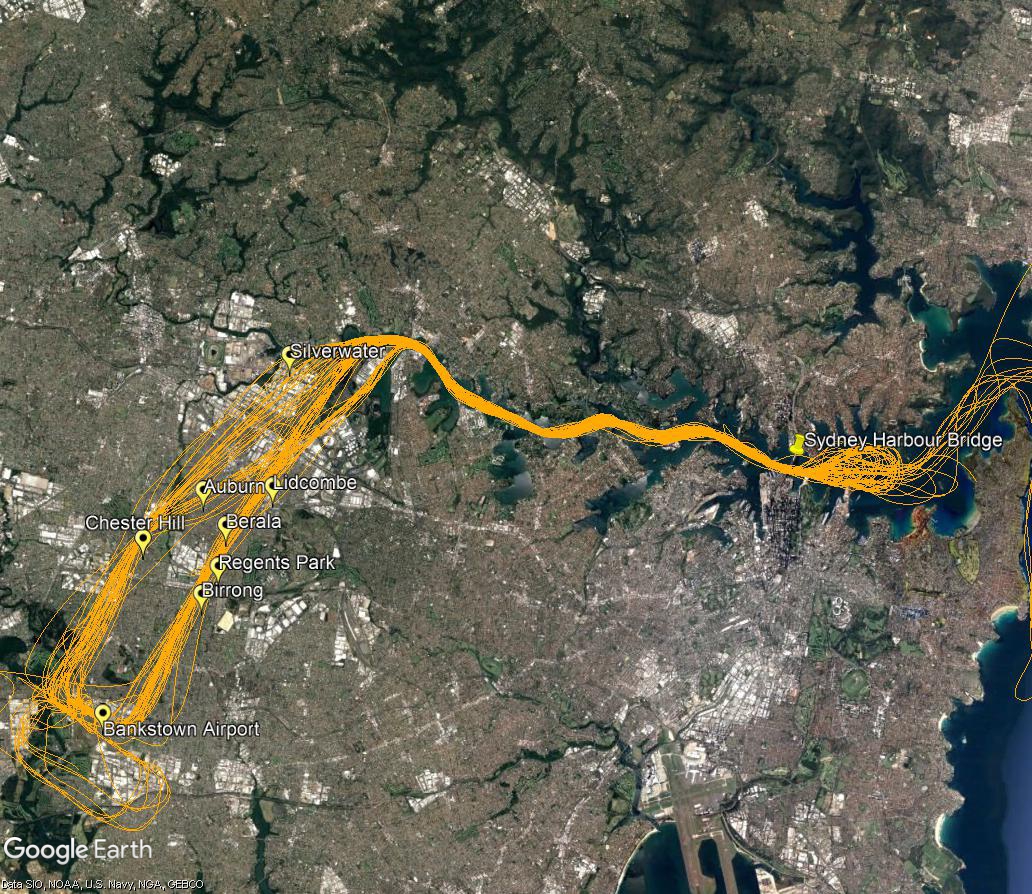
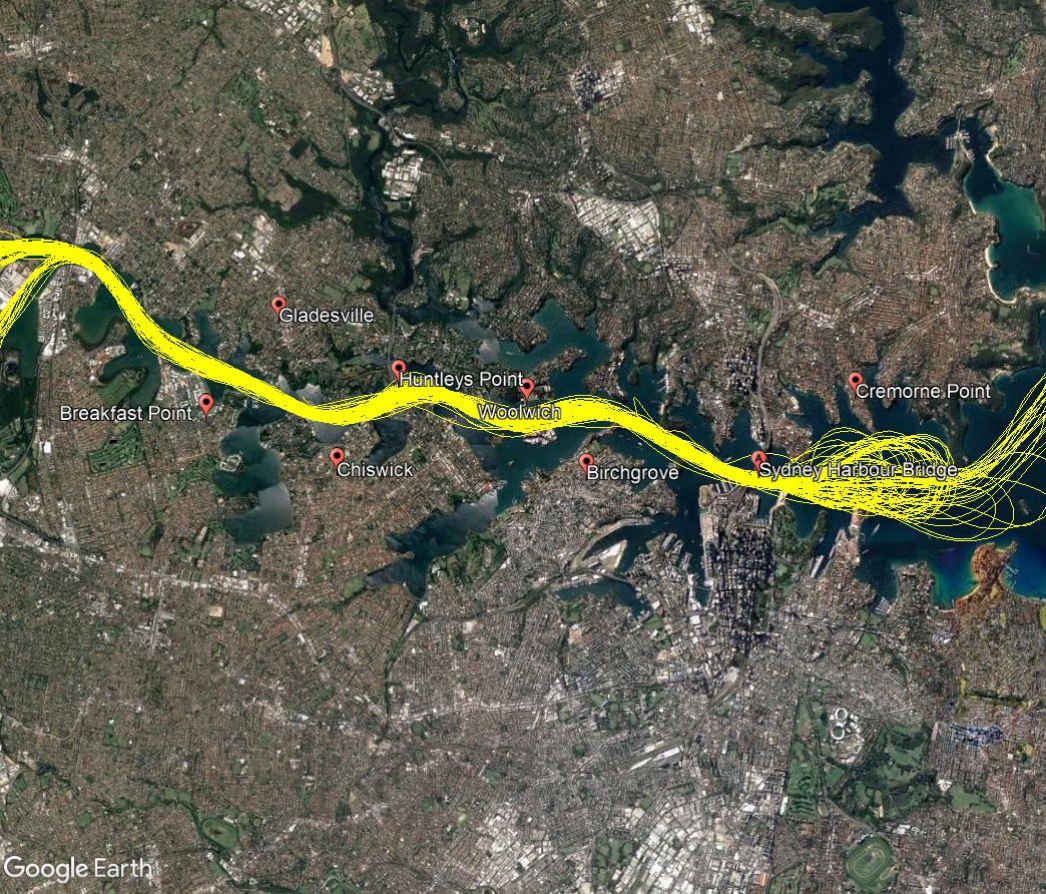
The lane follows the Parramatta River from Silverwater to Ryde Road Bridge, Gladesville Bridge, the southern pylon of the Harbour Bridge, past Bradley’s Head and Middle Head, Sydney Heads and then coastal to Long Reef.

Altitudes are restricted to a maximum of 500 feet at some points and 1,000 feet east of the Harbour Bridge. This is to ensure traffic in the lane remains outside controlled airspace. This means aircraft cannot fly higher without contacting air traffic control and receiving clearance to do so.

Wide view

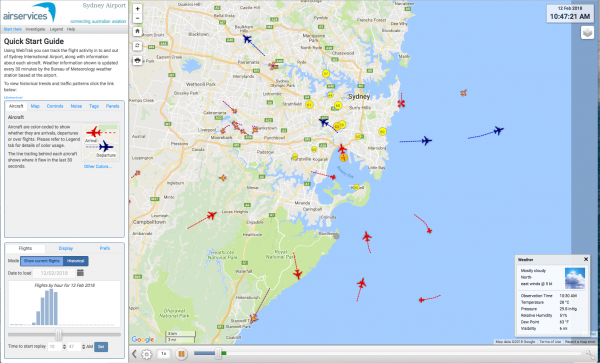
The following image shows were most of these flights originate from and fly to reach the river.

Harbour lane

Close in

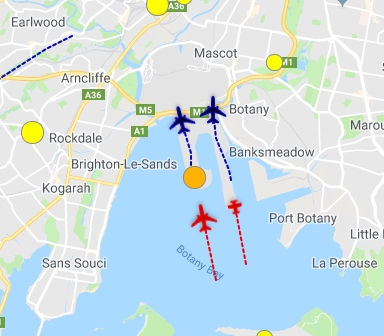
A closer view of the route over the river is shown below.

Harbour lane

Investigate flight path usage in your area

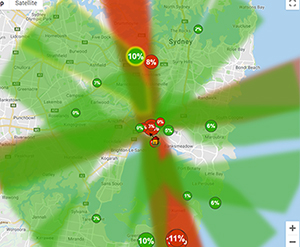
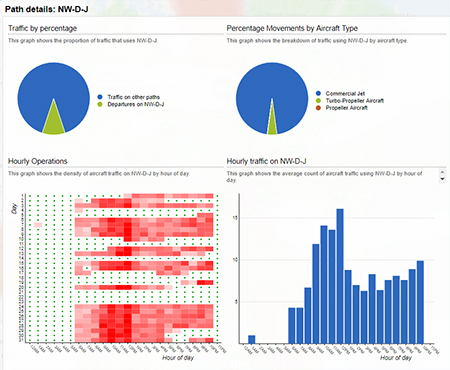
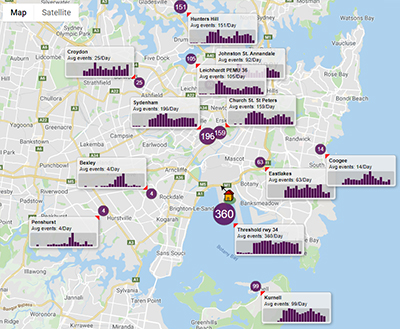
WebTrak My Neighbourhood (left) is an extension of WebTrak that presents historical information about aircraft noise and flight path use to provide an understanding of patterns over time.

Using this tool you can explore arrival, departure or both types of flight paths by month, quarter or year to see:

  • the percentage of traffic on each flight path
  • the number of aircraft that used the flight path
  • the number of hours the flight path was not used
  • weekday and weekend use
  • day, evening and night-time use
  • noise monitoring data

Access information about how to use WebTrak My Neighbourhood, including a downloadable guide

Visit WebTrak My Neighbourhood – Gold Coast

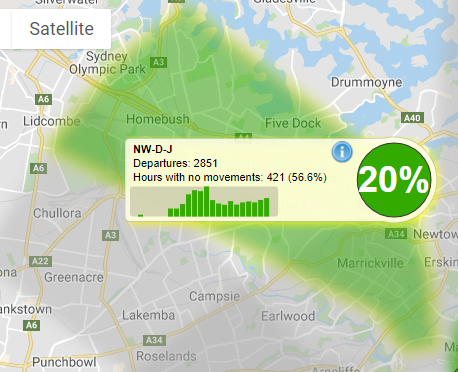
Below: a departure flight path ‘swathe’ with tag showing percentage of departure traffic, number of flights and hours of respite for that flight path in the selected timeframe

Below: Click the “i” on any flight path tag to see more detailed data

Below: noise monitoring data tags

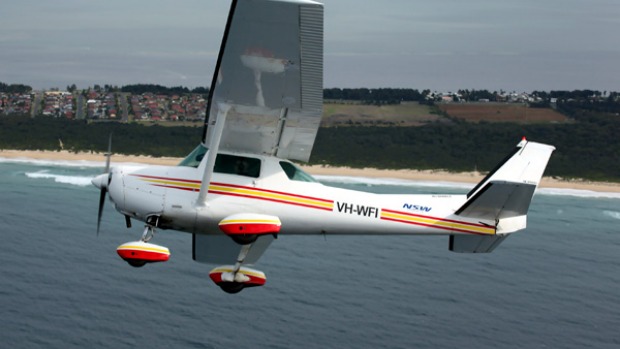
Light aircraft coastal routes

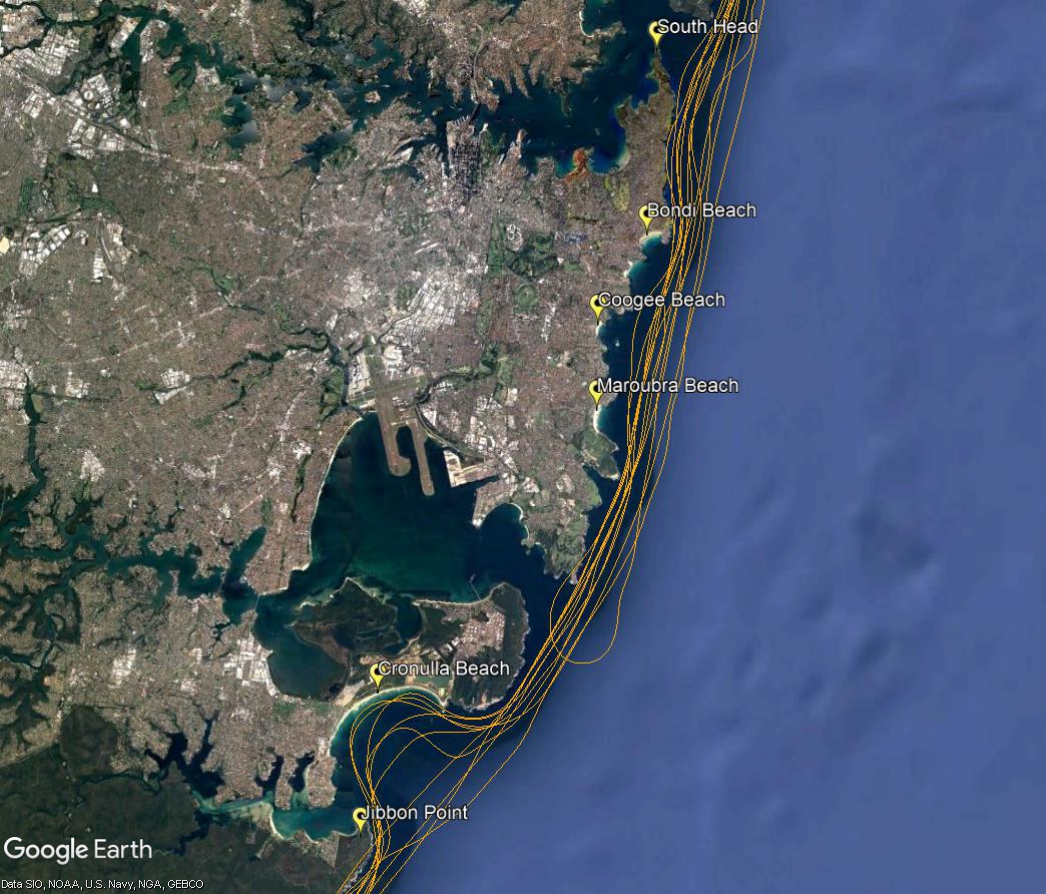
Light aircraft routes extend along the coast line, both to the south and north of Sydney as follows

South Route

The southerly route extends between Jibbon Point and South Head. On this route an altitude of exactly 500 feet must be maintained to ensure there is no conflict with aircraft arriving and departing Sydney Airport.

Coastal route south

North Route

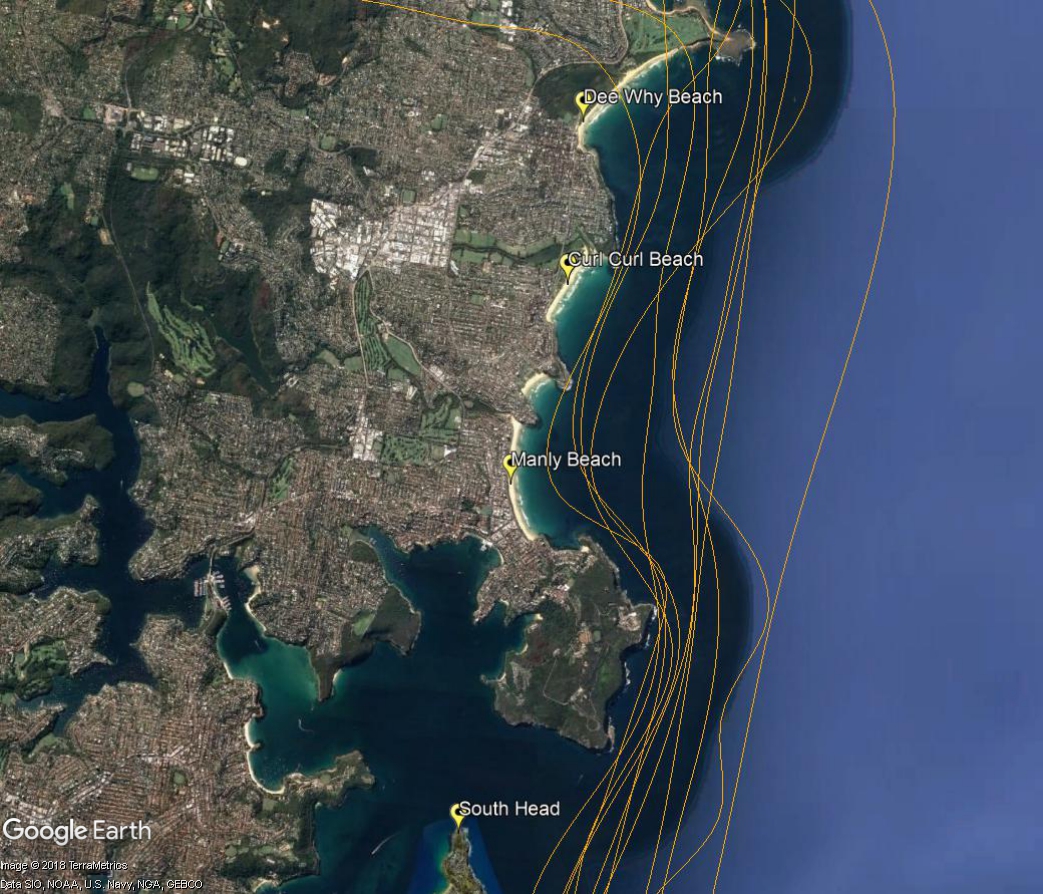
The northerly route extends east of the coast between the South Head of the Harbour and north to Dee Why. On this route aircraft must remain between 500 and 1,000 feet.

Coastal route north

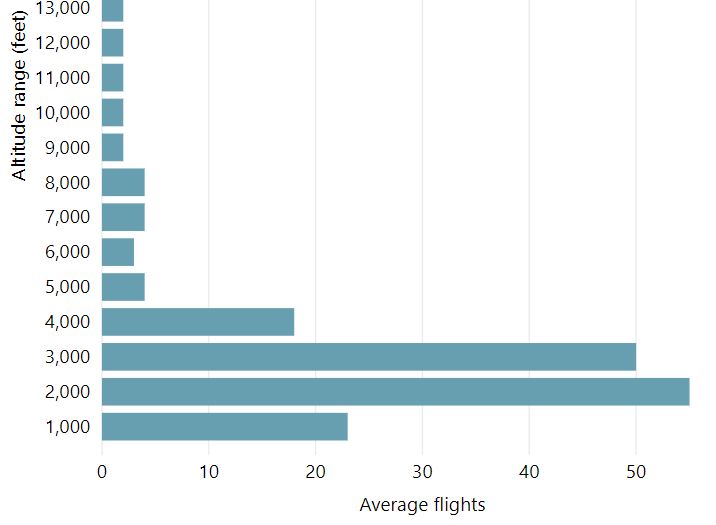
How high are aircraft near me?

The altitudes of aircraft over your area can vary according to:

  • the airport the flight is coming from or going to
  • whether the aircraft is arriving, departing or in level flight
  • the specific requirements of the flight path
  • the need for air traffic control to maintain vertical separation between aircraft.

Find out more on our What are the rules about altitudes? page.