Perth Airport NAP 1: Preferred Runways

This NAP lists the preferred runways as:

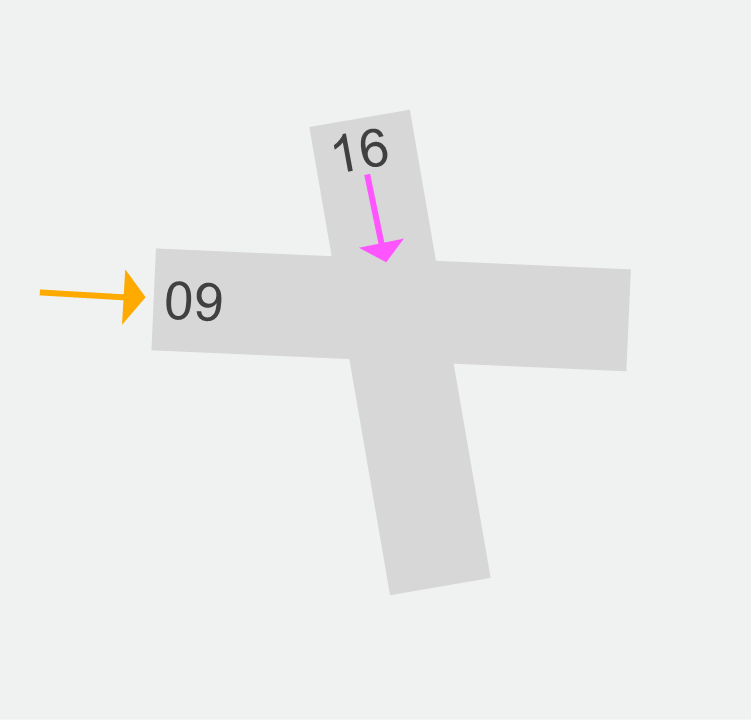
Priority 1: Arriving Runway 21/ Runway 03/ Runway 24 and departing Runway 21/ Runway 03/ Runway 06

Priority 2: Arriving Runway 06

Priority 2: Departing Runway 24

The preferred runways noise abatement procedures (NAP) at Perth Airport are designed to minimise movements over the south-western end of the crossing runway that is, arrivals to Runway 06 and departures from Runway 24. This is due to the very close proximity of residential areas to this end of the cross runway.

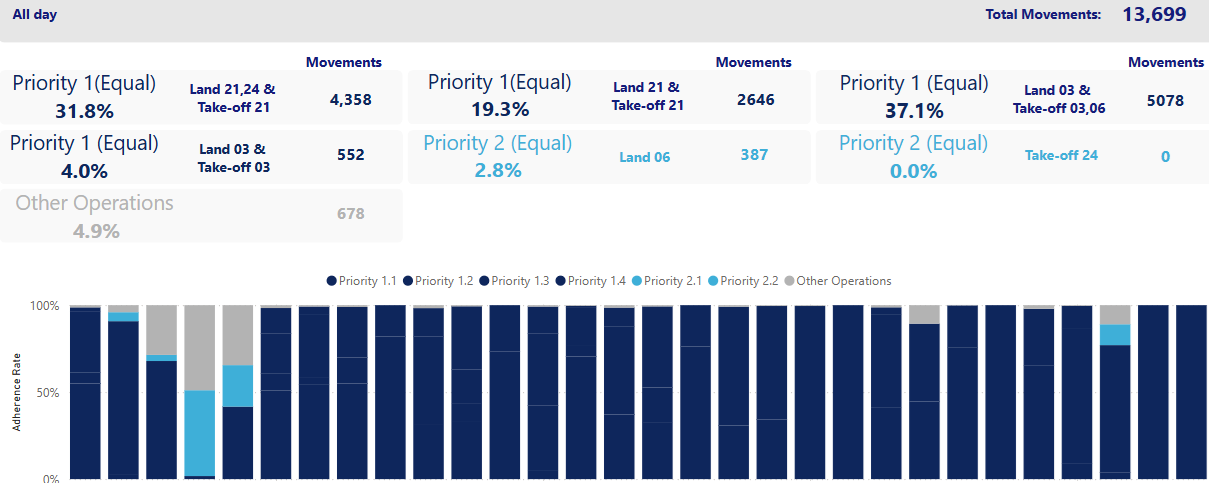
The NAP states that all runways are equally preferred for arrivals and departures (Priority 1) while arrivals to Runway 06 and departures from Runway 24 are Priority 2.  Under Priority 1, although the NAP states either of the three named runways are equally preferred for arrivals and departures, this does not mean that they are equally used, rather that there is no preference in the use of the runways and the conditions of the day will determine the preferred runways used. The runway combinations (modes) used under these priorities for southerly (when winds are predominantly blowing from the south) and northerly (when winds are predominantly blowing from the north) traffic flow are:

Priority 1.1 (Southerly Flow):

Arriving Runway 21 or Runway 24 and departing Runway 21
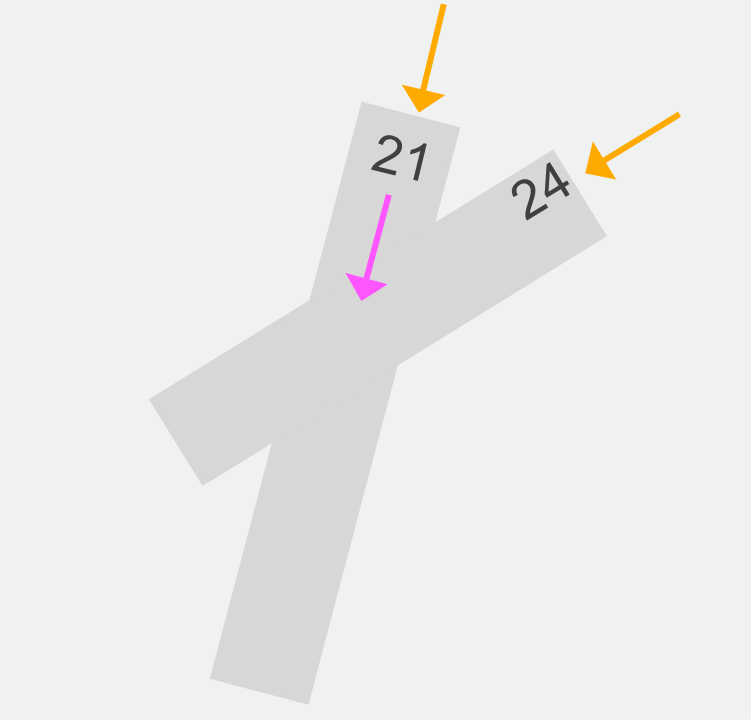
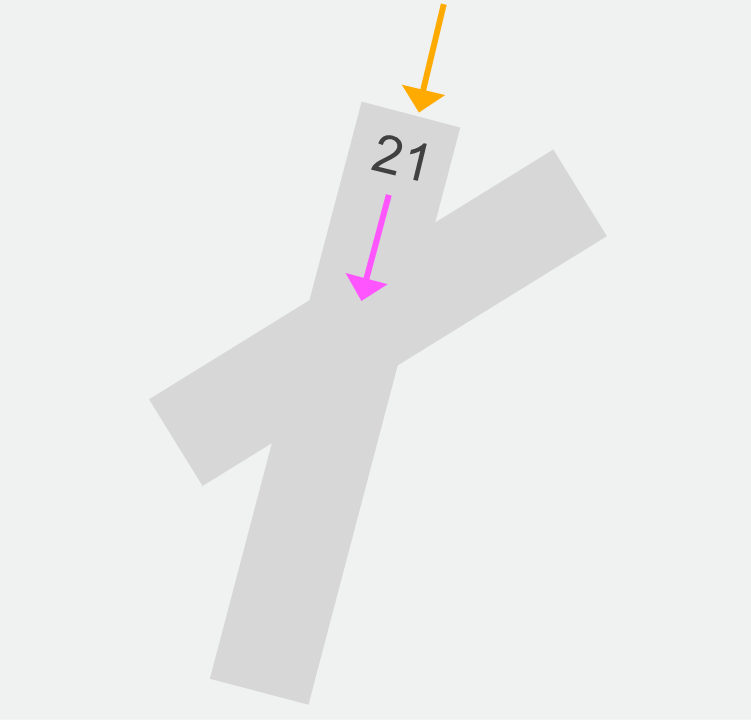
Priority 1.2 (Southerly Flow single runway):

Arriving and departing runway 21
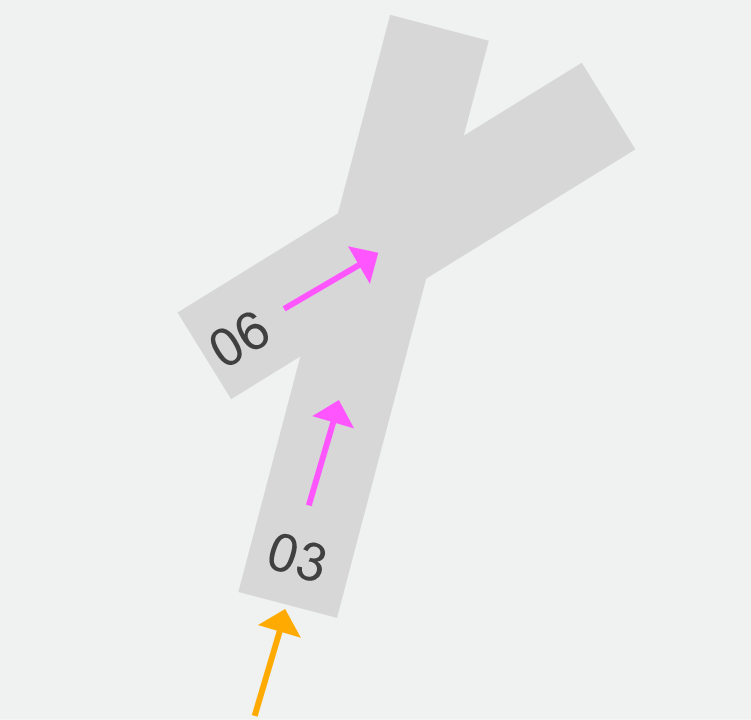
Priority 1.3 (Northerly Flow):

Arriving runway 03, departing runway 03 or 06
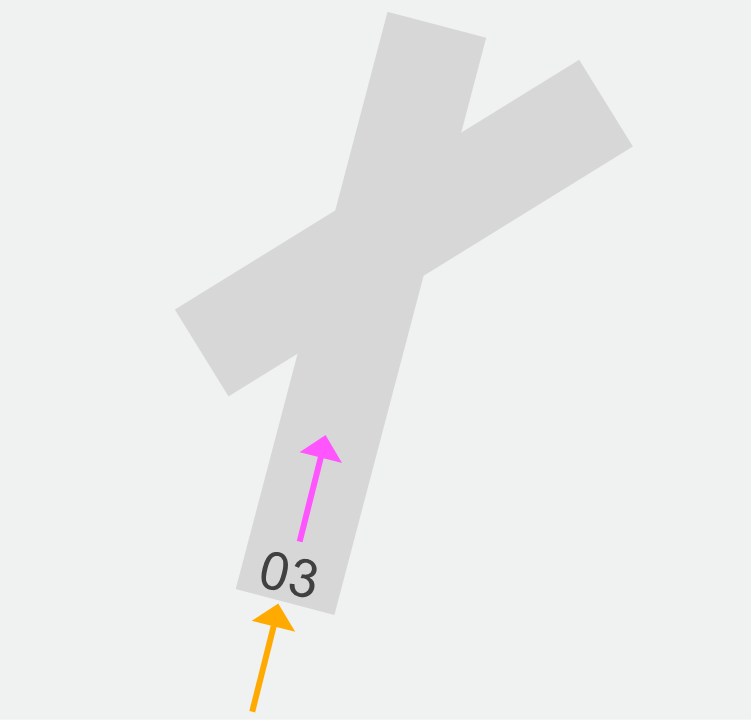
Priority 1.4 (Northerly Flow single runway):

Arriving and departing runway 03
Priority 2.1 (Northerly Flow):

Arriving and departing runway 06*
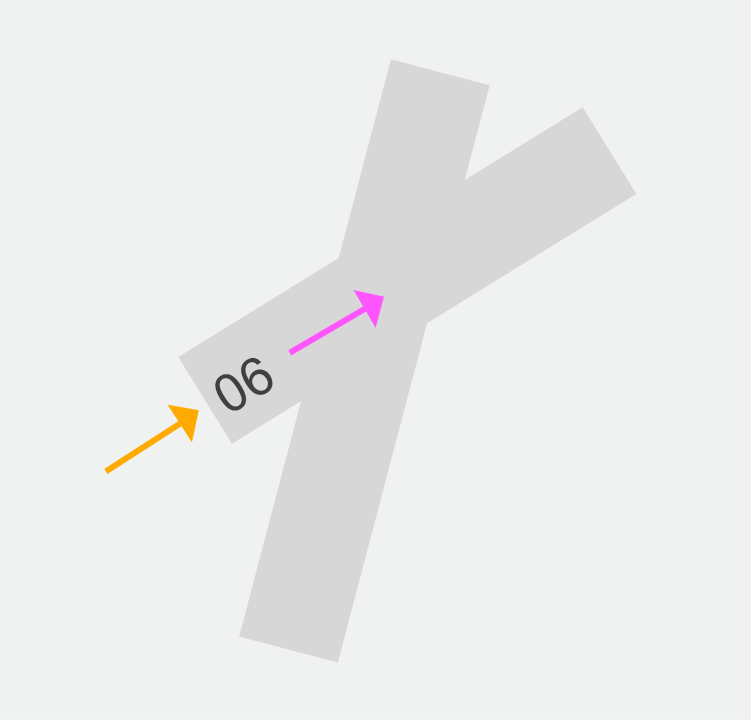
*Only arrivals are Priority 2

Priority 2.2 (Southerly Flow):

Arriving and departing runway 24*
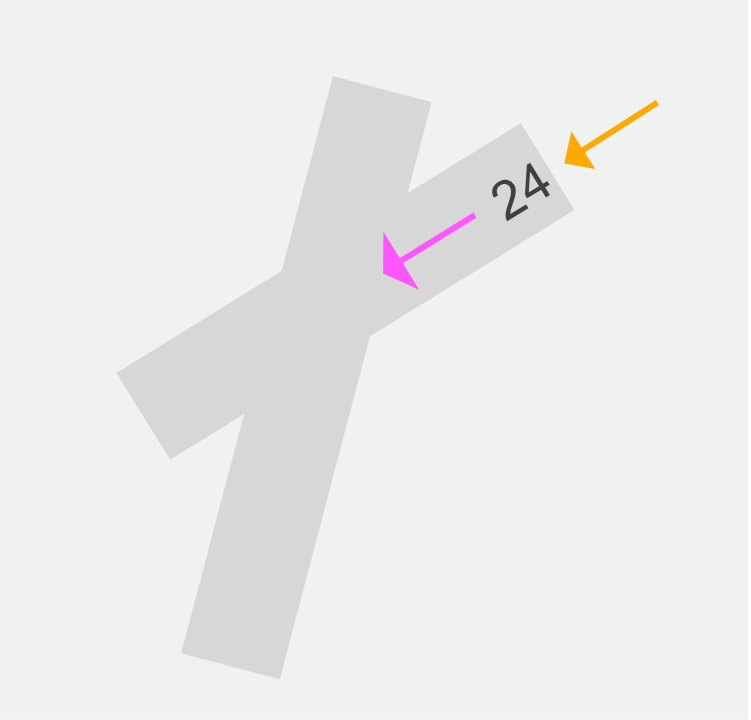
*Only departures are Priority 2

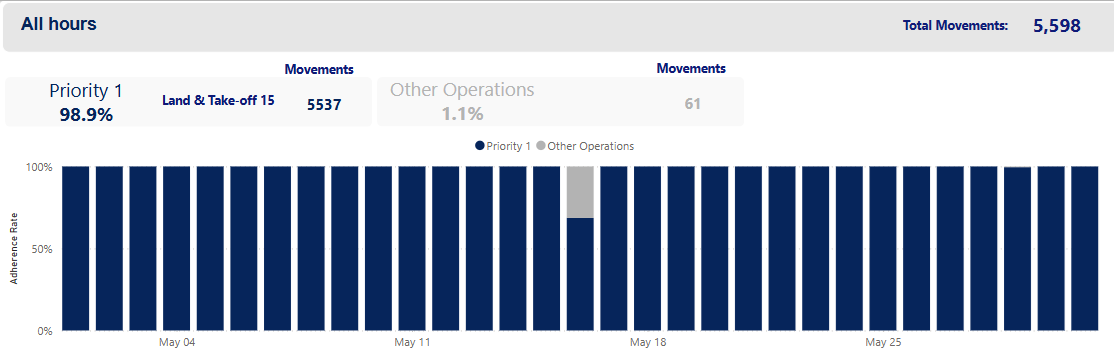
The report below provides the percentage use for of each operating mode for each month and a daily breakdown across the month (hover over each day in the column graph and the mode, the number of movements and the percentage use on that day will appear).

Priority 2.1 and 2.2 only report on movements that are under Priority 2 in the NAP (i.e. departing Runway 24 and landing Runway 06). The arrivals to Runway 24 and departures off Runway 06 when these Priority 2 movements occur, are reported under “Other Operations”. “Other Operations” also refer to modes used when preferred modes are not available, due to things like runway works, adverse weather and emergency situations.

The report is best viewed in full screen mode.

Note: A discrepancy was identified in the May data and has since been corrected. The report now reflects the most accurate and up-to-date figures.

Note: Due to rounding, percentage values may not sum to exactly 100.0%. Minor discrepancies of up to ±0.1% are expected and do not indicate any errors in the underlying absolute figures, which remain accurate and unaffected.
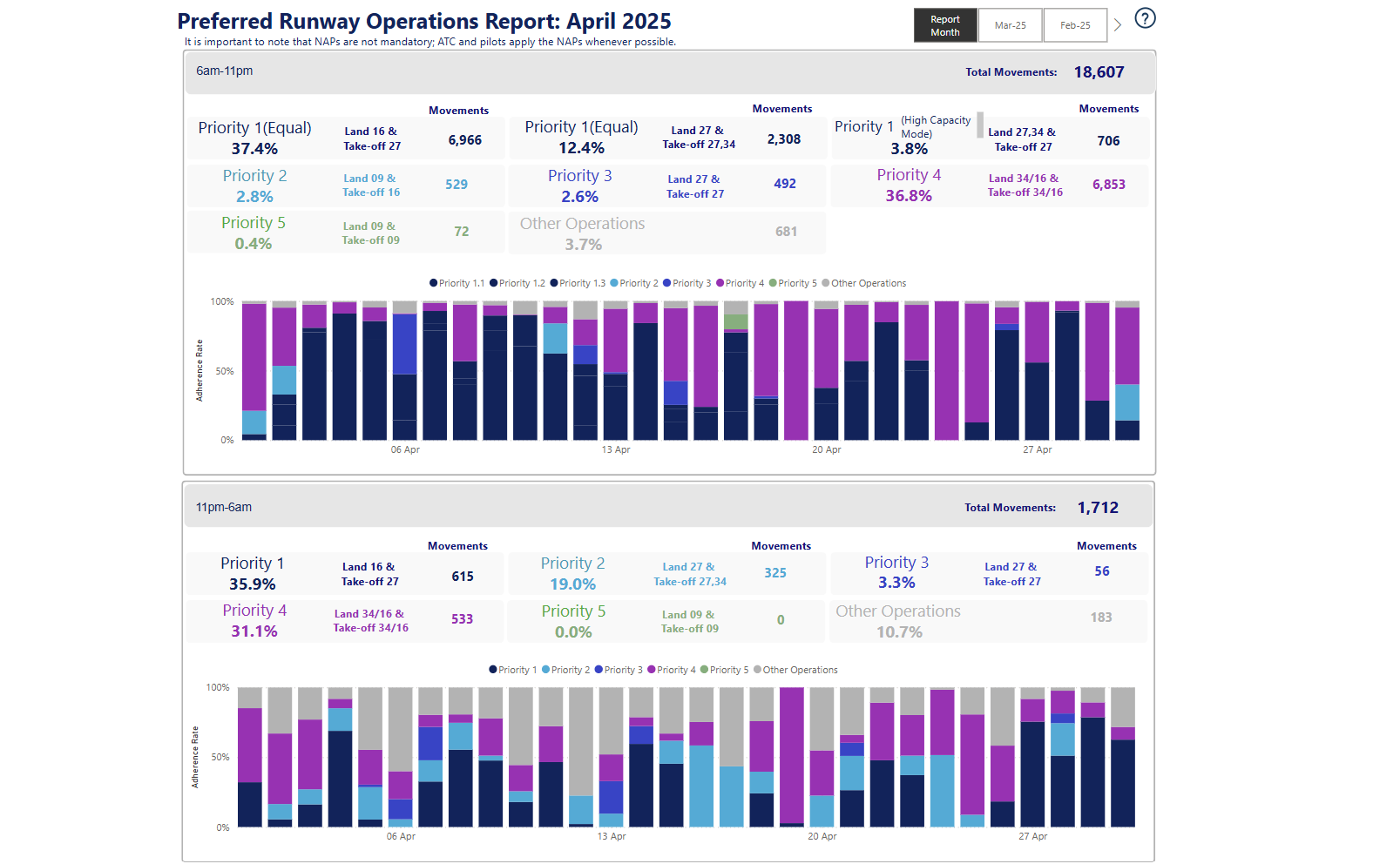
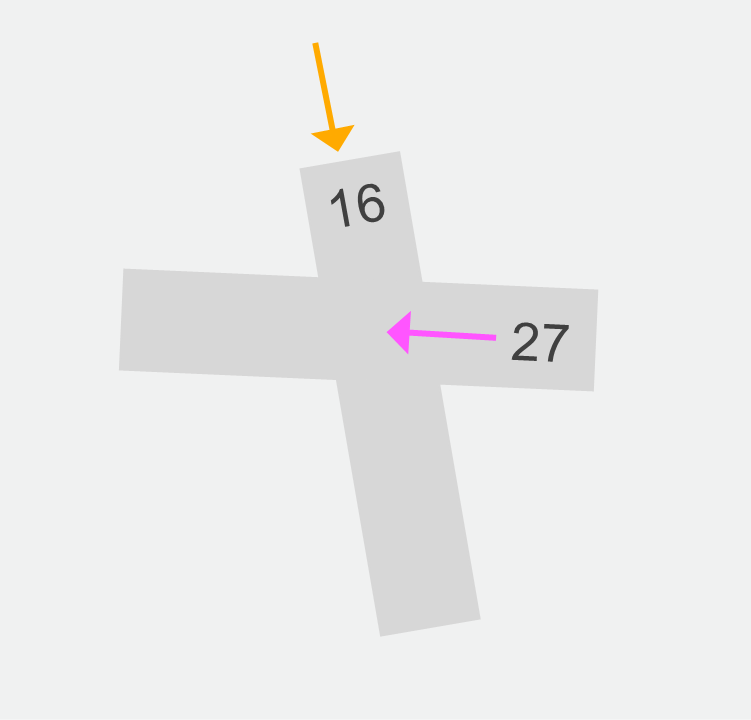
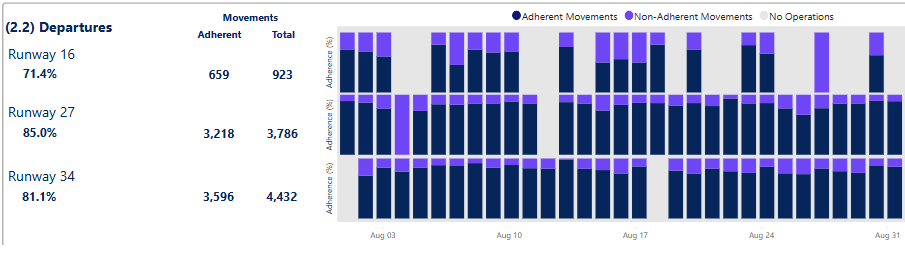
Melbourne Airport NAP 1: Preferred Runway Use

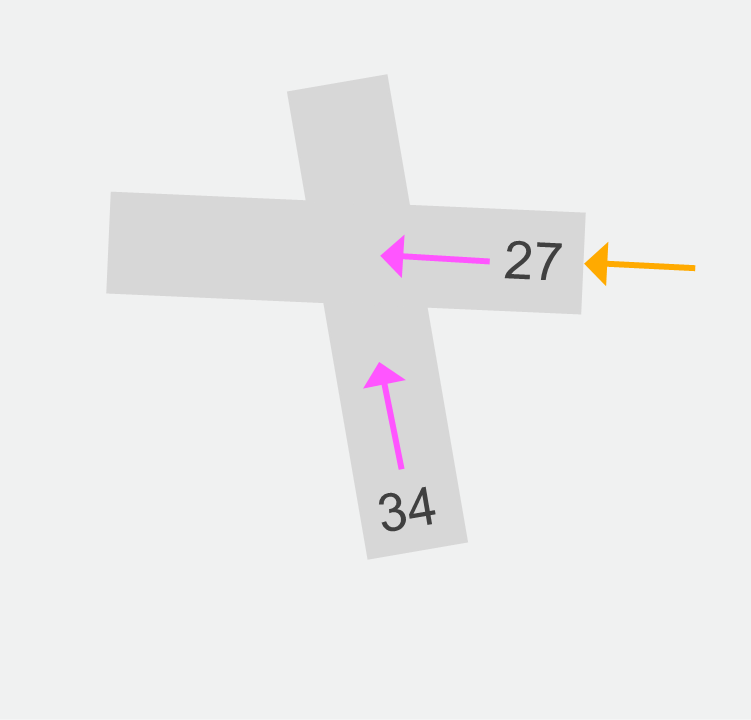
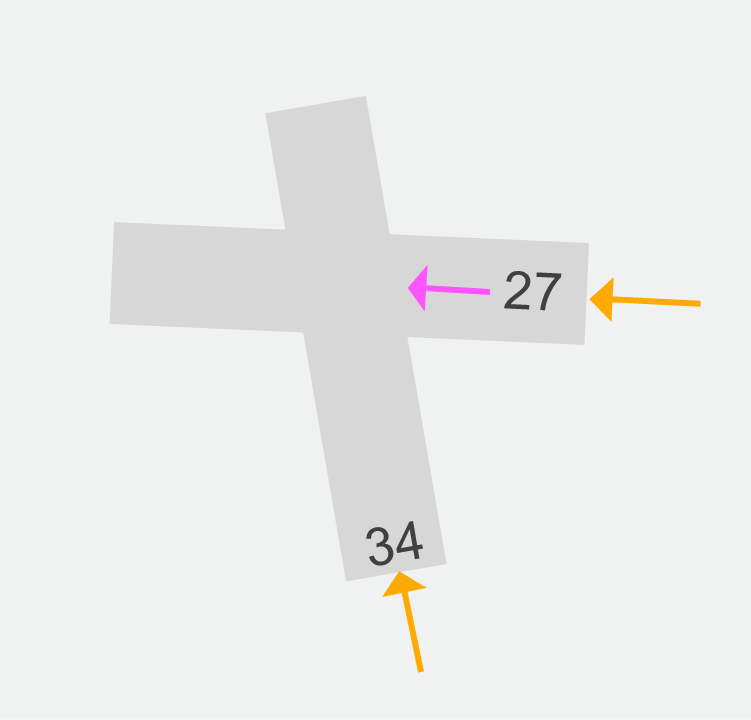
1.1a and b: The NAP lists the preferred runways during daytime hours as:

Priority 1: Arriving Runway 16/ Runway 27/ Runway 34 and departing Runway 27/ Runway 34

Priority 2: Arriving Runway 09 and departing Runway 16

Priority 3: Arriving and departing Runway 27

Priority 4: Arriving and departing Runway 34/ Runway 16

Priority 5: Arriving and departing Runway 09

1.1c: The NAP lists the preferred runways during night-time hours as:

Priority 1: Arriving Runway 16 and departing Runway 27

Priority 2: Arriving Runway 27 and departing Runway 27/ Runway 34

Priority 3: Arriving and departing Runway 27

Priority 4: Arriving and departing Runway 34/ Runway 16

Priority 5: Arriving and departing Runway 09

1.2. Runway 16 full runway length departures at during night-time hours – data not available.

1.3. Jet noise abatement climb procedure for Runway 16 and 09 – data not available

The NAPs at Melbourne Airport prioritise landings and take-offs over less populated areas to the north, east and west of the airport whenever possible. During periods of high demand, the north-south and east-west runways are used together to meet increased departure or arrival demand without compromising safety.

Seasonal winds in Melbourne are often very strong and result in only one runway being available for use as aircraft need to land and take off into the wind for safety. Priority 4 is used in either a southern or northern direction when the crosswind on the east-west runway is too strong for safe use. Priority 4 represents a large proportion of runway use due to these strong wind conditions and varies across the year as the wind patterns change.  

During the daytime period (6am-11pm local):

Priority 1.1 (Equal):

Arriving Runway 16, departing Runway 27

Priority 1.2 (Equal):

Arriving Runway 27 and departing Runway 27 or Runway 34

Priority 1.3 (Equal – High Capacity Landing Mode):

Arriving Runway 27 or Runway 34, departing Runway 27

Priority 2:

Arriving Runway 09, departing Runway 16

Priority 3:

Arriving and departing Runway 27

Priority 4 (Equal):

Arriving and departing Runway 34

Priority 4 (Equal):

Arriving and departing Runway 16

Priority 5:

Arriving and departing Runway 09

During the night-time period (11pm-6am local):

Priority 1:

Arriving Runway 16, departing Runway 27

Priority 2:

Arriving Runway 27, departing Runway 27 or Runway 34

Priority 3:

Arriving and departing Runway 27

Priority 4 (Equal):

Arriving and departing Runway 34

Priority 4 (Equal):

Arriving and departing Runway 16

Priority 5:

Arriving and departing Runway 09

The report below provides the percentage use of each operating mode during daytime and night-time periods for each month (hover over each day in the column graph and the mode, the number of movements and the percentage use on that day will appear). “Other Operations” refers to modes used when preferred modes are not available, due to things like runway works, adverse weather and emergency situations.

The report is best viewed in full screen mode.

Note: Due to rounding, percentage values may not sum to exactly 100.0%. Minor discrepancies of up to ±0.1% are expected and do not indicate any errors in the underlying absolute figures, which remain accurate and unaffected.
Cairns Airport NAP 1: Preferred Runway Use

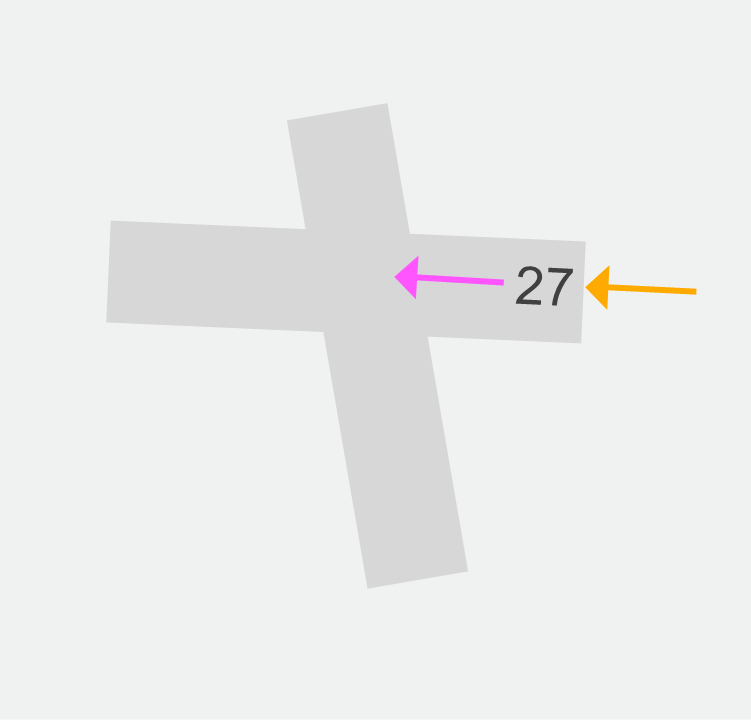
The NAP lists the preferred runways as:

Priority 1:
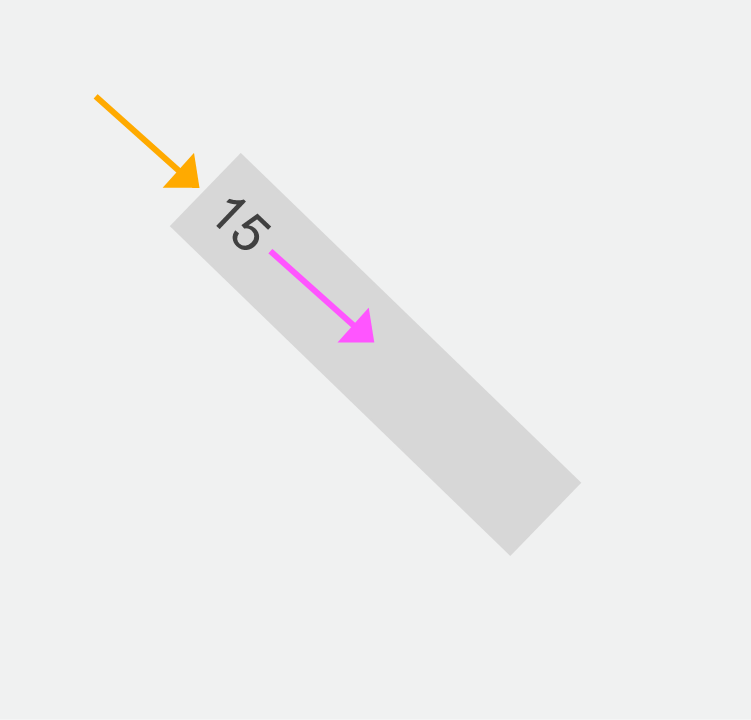
Arriving Runway 15 , departing Runway 15

NAP 1.2 (departure from runway 15) includes jet noise abatement departure procedures and restrictions on intersection departures at night (11pm to 6am local time). Airservices Australia is not currently able to report on these NAPs as the required data is not available.

The report below provides the percentage use of each operating mode during daytime and night-time periods for each month (hover over each day in the column graph and the mode, the number of movements and the percentage use on that day will appear). “Other Operations” refers to modes used when preferred modes are not available, due to things like runway works, adverse weather and emergency situations.

The report is best viewed in full screen mode.

Note: Due to rounding, percentage values may not sum to exactly 100.0%. Minor discrepancies of up to ±0.1% are expected and do not indicate any errors in the underlying absolute figures, which remain accurate and unaffected.
Cairns Airport NAP 2: Preferred Flight Paths

The NAP lists the preferred flight paths as:

2.1: Arrivals General Procedures

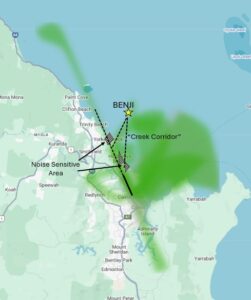
  • Aircraft will be routed away from populated areas until they are either over the ocean, or lined up with their final approach path – reporting options currently under review.
  • Pilots should delay using flaps as long as safely possible to reduce noise during landing – data not available.

2.1.a: Arrivals to Runway 15

When weather is good (VMC), aircraft will:

  • Follow STAR procedures (Standard Arrival Routes).
  • May be directed to do a Runway 33 LOC approach.
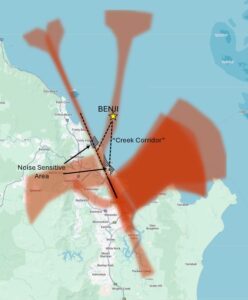
  • May also visually manoeuvre from BENJI waypoint to cross the coast at Richter’s Creek.

2.1.b: Arrivals to Runway 33

  • Track via LOC approach or
  • If suitable weather join a visual right circuit seaward of the coastline.

2.2: Departures

  • Aircraft to follow SID procedures and then be routed clear of populous areas.

Jets (Runway 33) NAP has been investigated and has been confirmed as relating to operations that leave the SID over water when heading south. We will revise reporting in future months to focus only on operations over land in the initial part of the SID which is the focus of noise abatement. This will change the reporting results.

The report below provides the percentage adherence against the NAP criteria for preferred flight paths from June 2025. Reporting dating back to January 2025 is currently being prepared and will be added to this page soon.

The report is best viewed in full screen mode.

Note: Due to rounding, percentage values may not sum to exactly 100.0%. Minor discrepancies of up to ±1% are expected and do not indicate any errors in the underlying absolute figures, which remain accurate and unaffected.
Perth Airport NAP 2: Preferred Flight Paths

The NAP lists the preferred flight paths as:

2.1 Minimum Height Over Residential Areas

  • Turbo-prop aircraft – minimum altitude of 3,000 ft AGL.
  • Jet aircraft – minimum altitude of 5,000 ft AGL.

Note: This NAP is under review to determine how it can be reported

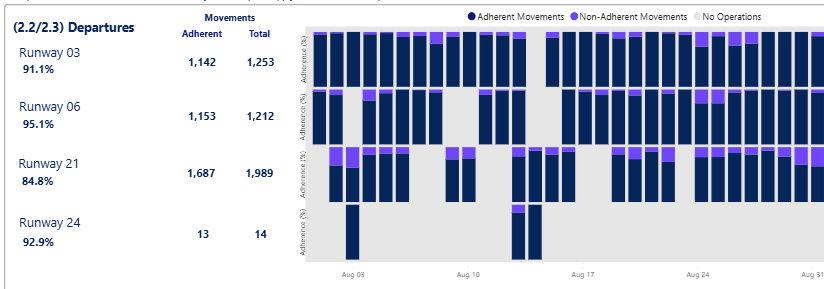
2.2 Departures to the east of Perth

  • Aircraft departing to the east of Perth on SIDs will be kept on track until leaving an altitude of 8,000ft except when required for operational reasons

Adherence with this procedure is reported below (combined with 2.3). 

2.3 Departures

  • Air traffic control (ATC) shall normally process departing aircraft using standard departure paths (SIDs)
  • When not following a procedural SID, use flight paths that approximate the SID tracks where possible

Note: 

Adherence with this procedure is reported below (combined with 2.2). SID operations are reported up to 10,000ft adherence.

Note: A procedural SID is a published route aircraft use to safely travel through the busy airspace surrounding airports. Aircraft follow this route from departure to where they transition to the enroute (high-level airspace) phase of their flight. Procedural SIDs act like a road, providing an established path for aircraft to track along. They make separation from other aircraft easier and air traffic control more predictable.

2.4 Arrivals

  • Arriving aircraft must be processed via standard arrival paths (STARs) where available
  • Only deviate from STAR path if essential for sequencing arrivals or separation with other aircraft

Adherence with this procedure is reported below.

2.5 Non-STAR Tracking

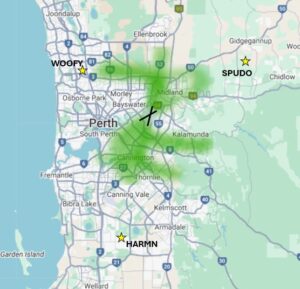
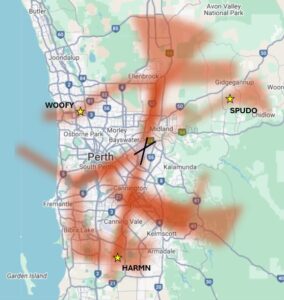
Non-STAR tracking must approximate STAR tracks or comply with minimum height requirements, with specific exceptions for each landing runway direction (e.g. visual approaches where pilots navigate by visual landmarks instead of procedures, and other exceptions based on the direction of arrival). These exceptions are:

  1. Landing runway 21, arriving from the south
    • Aircraft at or below 45000kg maximum take-off weight can fly visually using a left turn to join final approach
  2. Landing runway 21, arriving from the west
    • via waypoint WOOFY to 6 nautical miles from Runway 21 for a visual approach
  3. Landing runway 24, arriving from the south
    • via waypoint SPUDO
  4. Landing runway 03, arriving from the south or west
    • via waypoint HARMN for an Instrument Landing System (ILS) approach
    • track to 5 nautical miles from Runway 03 for visual approach
  5. Landing runway 06, arriving from the southwest or west
    • track west of the coast to conduct a straight in approach

Waypoints – A waypoint is a geographical location used to define a point on a flight path. Waypoints are defined by geographic coordinates and typically take the form of a five-letter capitalised word e.g. WOOFY, SPUDO, HARMN.

The report is best viewed in full screen mode.

Note: Due to rounding, percentage values may not sum to exactly 100.0%. Minor discrepancies of up to ±1% are expected and do not indicate any errors in the underlying absolute figures, which remain accurate and unaffected.
Adelaide Airport NAP 3: Preferred Flight Paths

The NAP lists the preferred flight paths as:

3.1 and 3.2. General.

  • 3.1: The procedures do not apply to single engine aircraft under 1,750 kg maximum take-off weight.
  • 3.2: The procedures may be waived for non-jet aircraft under 32,000 maximum take-off weight between 0700 and 2100 local time.

3.3 Arrivals

Aircraft should use a STAR if available.

3.3.a: Runway 23

  • From the East: Intercept RWY 23 at or beyond MOPRI or at beyond 10nm. Maintain at least 3000 ft until passing MOPRI or 10nm.
  • From the East: Intercept runway centerline at or beyond waypoint MOPRI or at beyond 10 nautical miles. Maintain at least 3000 ft until passing waypoint MOPRI or 10 nautical miles.
  • From the West: Use a right circuit/base approach.
  • From the East: Intercept RWY 23 at or beyond MOPRI or at beyond 10nm. Maintain at least 3000 ft until passing MOPRI or 10nm.
  • From the East: Intercept runway centerline at or beyond waypoint MOPRI or at beyond 10 nautical miles. Maintain at least 3000 ft until passing waypoint MOPRI or 10 nautical miles.
  • From the West: Use a right circuit/base approach.

3.3.b: Runway 05

  • Arrivals from the East:
    • Jets – track via waypoint PEGTU to intercept runway centerline at or beyond 5 nautical miles.
    • Non-Jets – track via waypoint PEGTU intercept runway centerline at or beyond 3 nautical miles.
  • Arrivals from the West:
    • Jets – intercept runway centerline at or beyond 5 nautical miles.
    • Non-Jets – intercept runway centerline at or beyond 3 nautical miles.

3.3.c: Runway 12

  • Jets – intercept runway centerline at or beyond 5 nautical miles.
  • Non-Jets – intercept runway centerline at or beyond 3 nautical miles.
  • Descent below 3,000ft is not allowed until west of the coast

3.3.d: Runway 30

  • Arrivals from the East – intercept runway centerline at or beyond 10 nautical miles.
  • Arrivals from the West – Determined by traffic management.

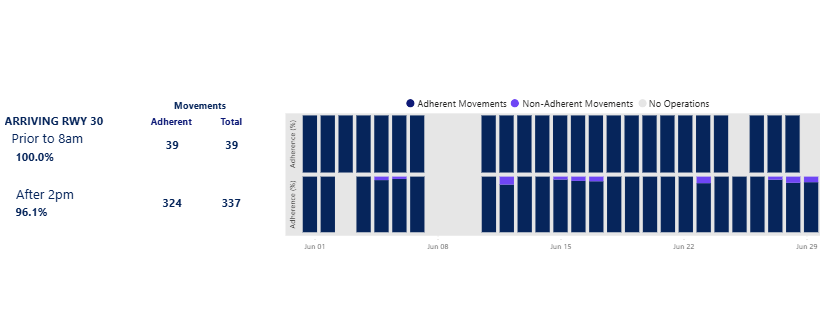
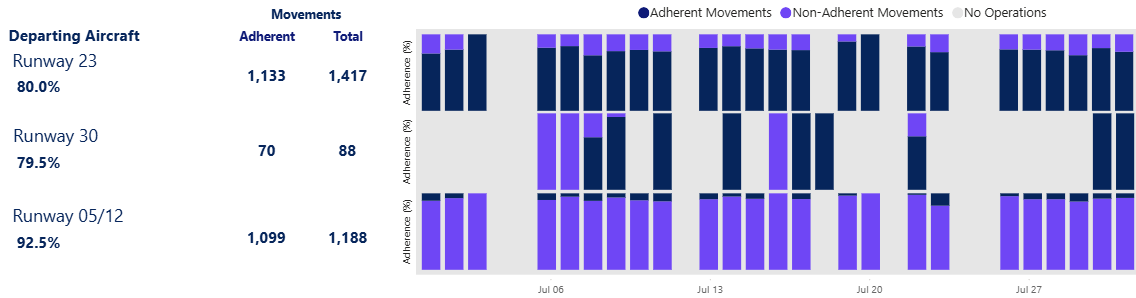
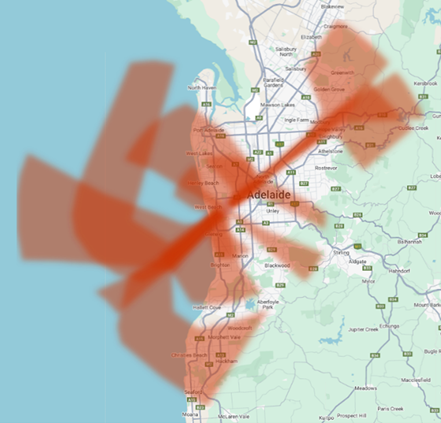
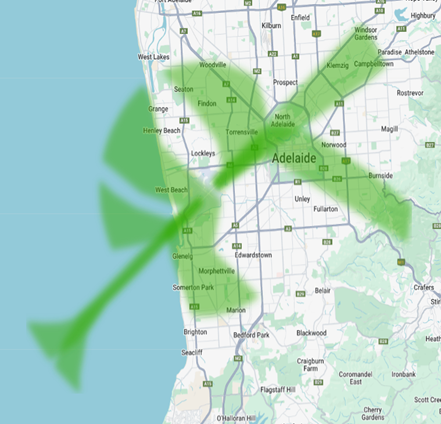
Adherence with this procedure is reported below.

3.4 Departures

3.4.a: Runway 23

  • East: Jets maintain heading until 6nm, then via waypoint LEMAT.  Non-Jets maintain heading until 3 nautical miles, then seaward of the coast and via waypoint LEMAT.
  • West: Maintain heading until 3 nautical miles.


3.4.b: Runway 30:

  • West: Maintain heading until 3 nautical miles.

3.4.c: Runway 12

  • No specific procedures apply
  • No specific procedures apply

3.4.d: Runway 23 or 30

Adherence with this procedure is reported below.

Note: A waypoint is a geographical location used to define a point on a flight path. Waypoints are defined by geographic coordinates and typically take the form of a five-letter capitalised word 

The report below provides the percentage adherence against the NAP criteria for preferred flight paths for June 2025. Reporting dating back to January 2025 is currently being prepared and will be added to this page soon.

“Other Operations” refers to operations where adherence was unable to be determined.

The report is best viewed in full screen mode.

Note: Due to rounding, percentage values may not sum to exactly 100.0%. Minor discrepancies of up to ±1% are expected and do not indicate any errors in the underlying absolute figures, which remain accurate and unaffected.
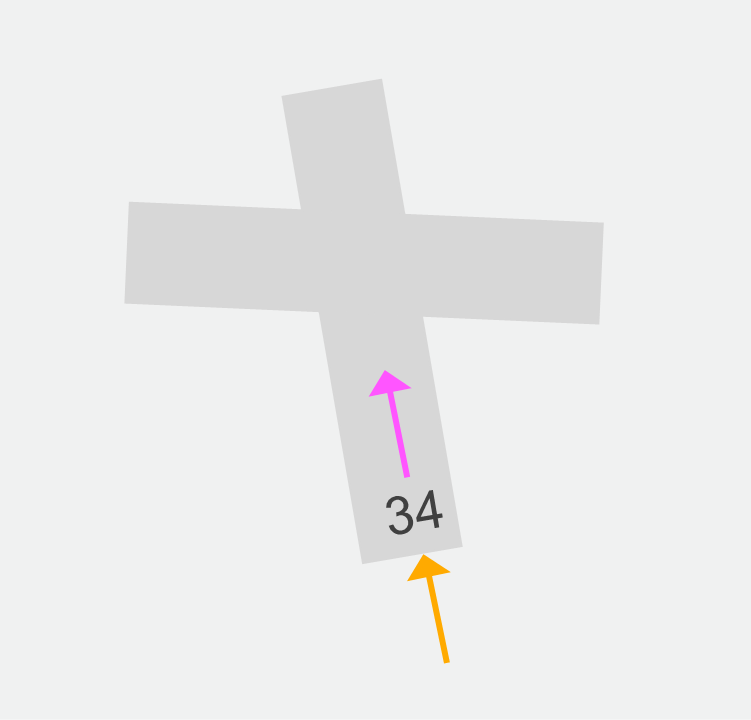
NAP 3.4 Departure Procedure

Adelaide Airport NAP 5: Curfew

Airport curfew

An airport curfew is a legislated restriction on aircraft operations at a federally-leased airport during a specified time period.

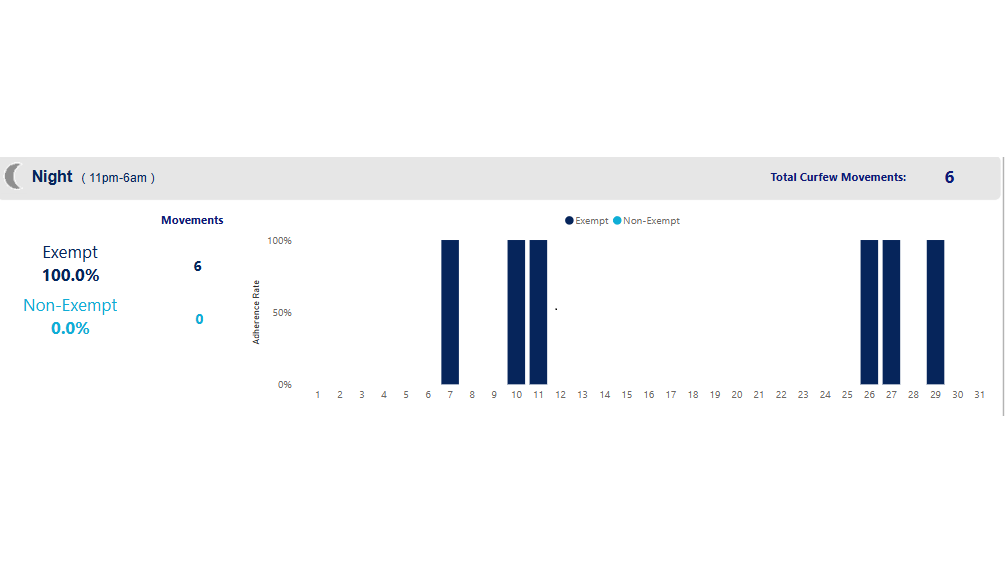
Adelaide Airport is operational 24 hours a day, however, there is a curfew in place which restricts operations in and out of Adelaide Airport during the hours of 11pm to 6am.

While most aircraft operations are prohibited during this period, emergency aircraft, some small jets, propeller-driven aircraft and freight movements are allowed. The curfew limits what aircraft can land and take-off and, in some cases, the runways that can be used.

Curfews are legally enforceable and regulated by the Department of Infrastructure, Transport, Regional Development, Communications, Sport and the Arts, who can make a determination of a curfew violation and prosecute an airline or aircraft operator for breaching a curfew.

The report is best viewed in full screen mode.

Note: Due to rounding, percentage values may not sum to exactly 100.0%. Minor discrepancies of up to ±1% are expected and do not indicate any errors in the underlying absolute figures, which remain accurate and unaffected.
Note: Non-permitted movements are those that do not meet standard exemption criteria; however, this does not necessarily indicate non-compliance, as dispensations or other approvals may have been granted outside of standard classifications. Curfew dispensations can be found here: Curfew Dispensation Reports.

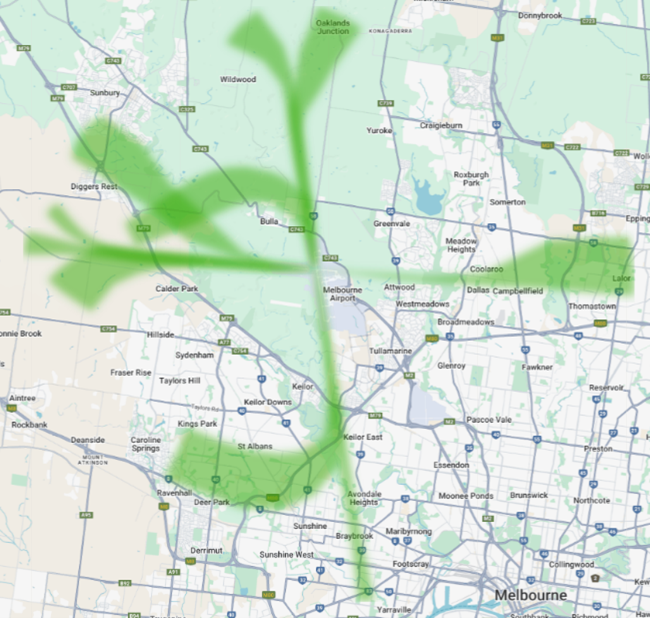
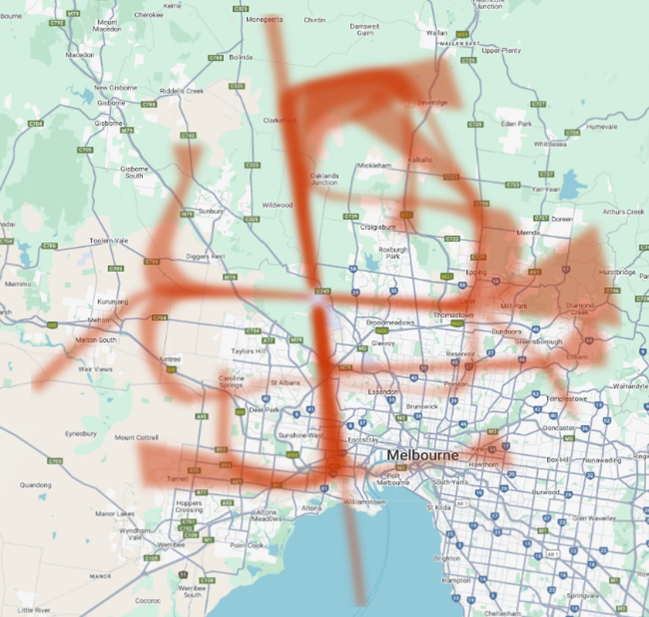
Melbourne Airport NAP 2: Preferred Flight Paths

The NAP lists the preferred flight paths as:

2.1 Minimum heights over densely populated areas (unless in the course of taking off or landing)

  • Jet aircraft: 5,000 ft
  • Non-jet aircraft: 3,000 ft

Note: This NAP is under review to determine how it can be reported.

2.2 Departures

  • Use standard departure paths (SIDs).
  • If not, fly as close as possible to those paths and follow height rules.

Adherence with this procedure is reported below. SID operations are reported up to 10,000ft adherence.

This NAP notes the need to “approximate” the SID where the procedural SID is not being flown. As we worked on defining the corridor that aircraft should be within for approximation, initial reporting on this NAP prior to 28 November 2025 were departures using the procedural SID corridor only without any variance for approximation.  As such, reporting accessed prior to 28 November will show a lower adherence result.

2.3 Arrivals

  • Use standard arrival paths (STARs) where available.
  • Radar vectors allowed.

Adherence with this procedure is reported below.

  • Radar Vectoring – Air traffic controllers can sometimes guide a plane off the STAR route and give it specific headings (or “vector”) using radar to help it join the final runway-aligned landing path. Controllers do this to keep safe spacing between planes, manage traffic flow, and make the landing process more efficient.

This NAP notes that aircraft can be vectored at particular points which will take them off the STAR approach. As we worked on defining these points, initial reporting on this NAP prior to 28 November 2025 reported arrivals using STAR tracking only without variance for radar vectors. As such, reporting accessed prior to 28 November will show a lower adherence result.

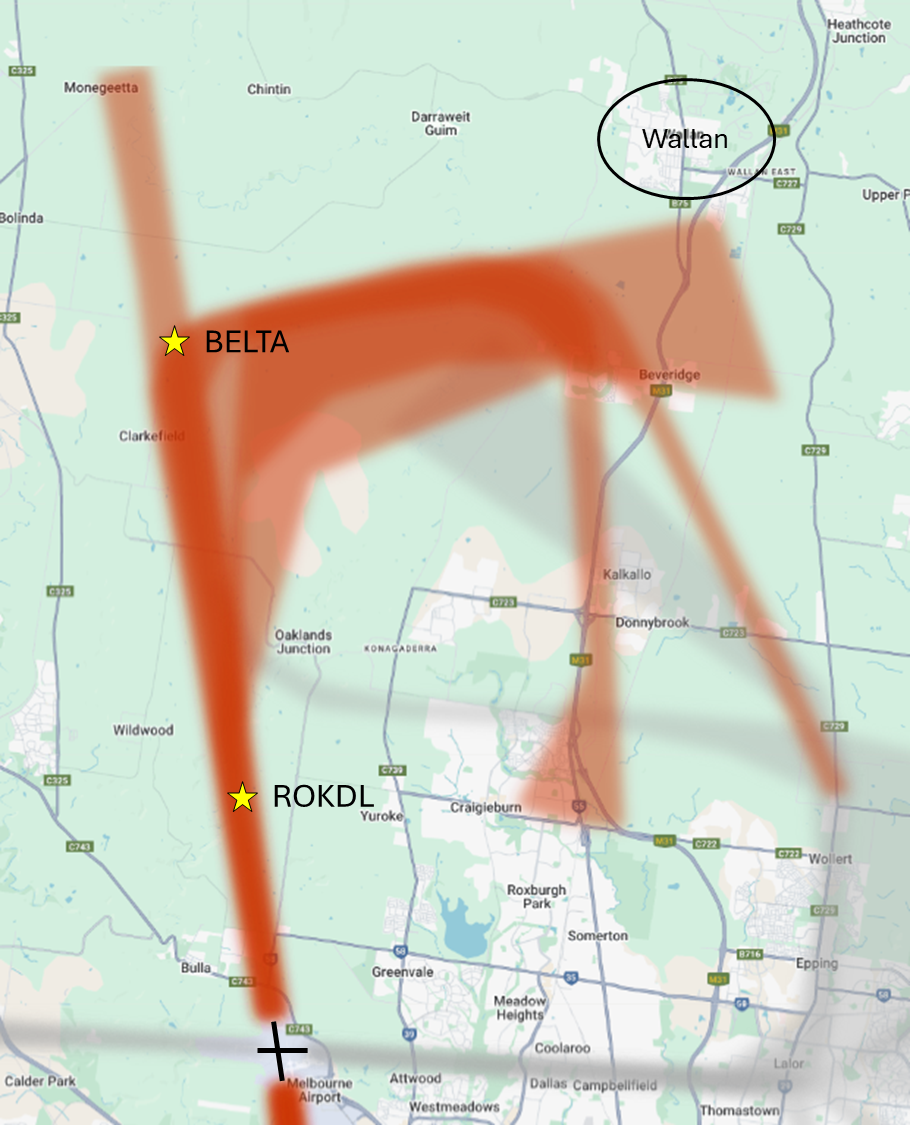
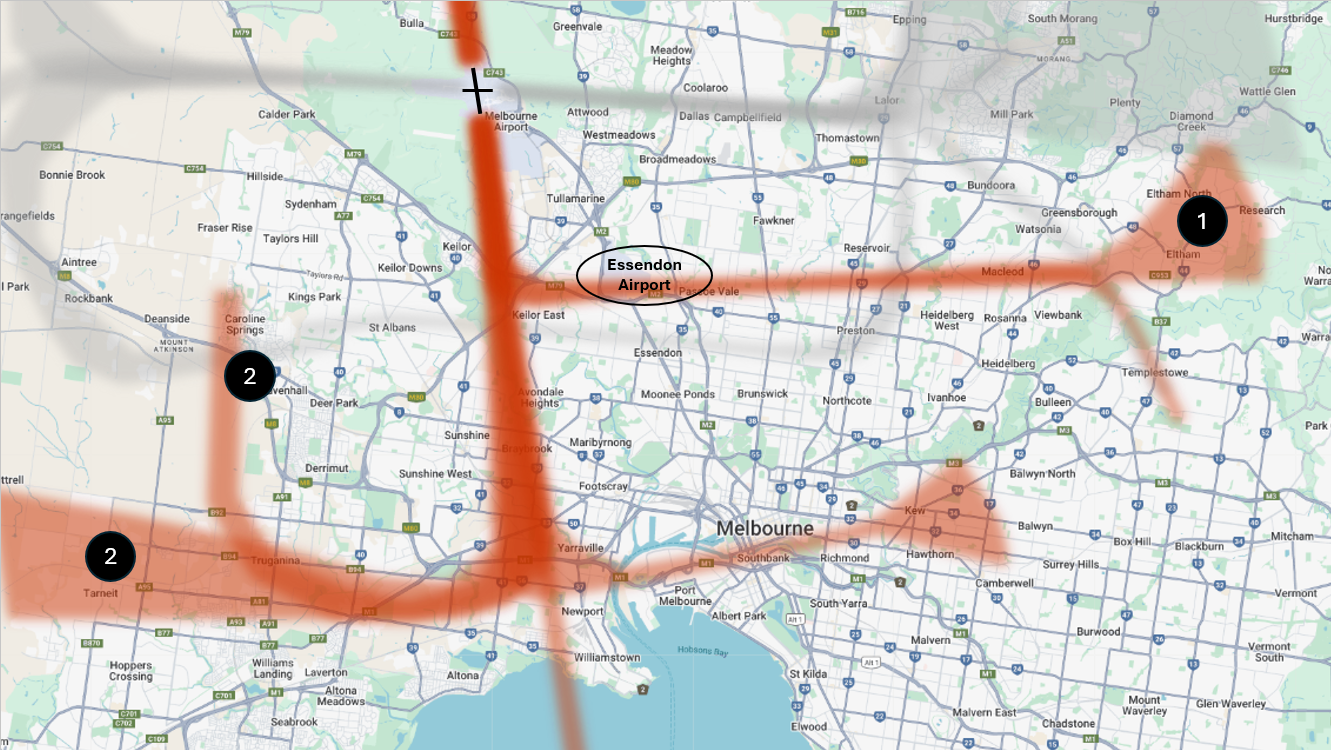
2.4 Runway 16 arrivals (arrivals from the north east turning left onto the long north-south runway) 

  • Use STAR via waypoint BELTA or
  • Visual track via waypoint ROKDL with restrictions:
    • no shortcutting early
    • avoid flying low over Wallan (if not possible, then jet aircraft should be at or above 6000 ft whenever practicable)

Note: A waypoint is a geographical location used to define a point on a flight path. Waypoints are defined by geographic coordinates and typically take the form of a five-letter capitalised word e.g. BELTA, ROKDL, PORTS.

Adherence with this procedure is reported below.

2.5 Runway 34 arrivals (arrivals from the south onto the long runway)

(1) Aircraft turning right to land:

  • Use STAR via Essendon Airport, or if needed, may be radar vectored south of Essendon Airport to join the final runway aligned landing path

(2) Aircraft turning left or heading straight-in to land:

  • Must follow applicable STAR, or
  • between 6am–11pm only, may be radar vectored to join final runway-aligned section no closer than 3.5 Nautical Miles (roughly 6.5km) from touchdown

Adherence with this procedure is reported below.

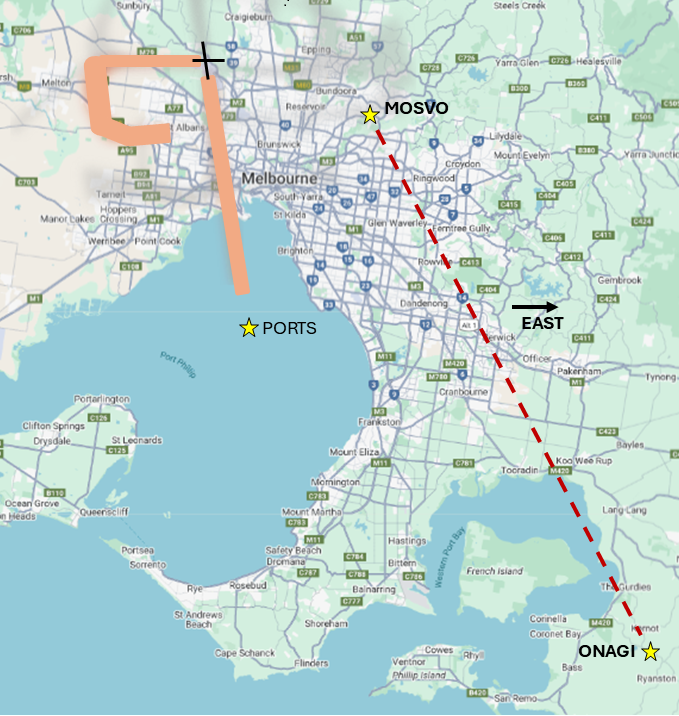
2.6 Night time arrivals (11pm–6am)

  • Southeast arrivals must stay east of the ONAGI–MOSVO line
  • Unless landing on Runway 09 or 34 using PORTS STAR

Adherence with this procedure is reported below.

The report below provides the percentage adherence against the NAP criteria for preferred flight paths.

“Other Operations” refers to operations where adherence was unable to be determined.

The report is best viewed in full screen mode.

Note: Due to rounding, percentage values may not sum to exactly 100.0%. Minor discrepancies of up to ±1% are expected and do not indicate any errors in the underlying absolute figures, which remain accurate and unaffected.
Canberra Airport NAP 2: Preferred Flight Paths

The NAP lists the preferred flight paths as:

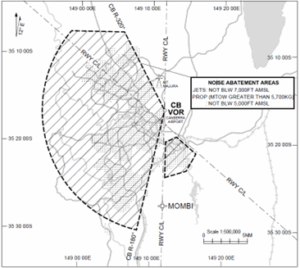
2.1 Noise Abatement Area

A designated Noise Abatement Area covers most of Canberra and Queanbeyan.

Preferred routing avoids this area whenever possible.

If aircraft must fly over the area:

  • Jet aircraft must stay above 7,000 feet AMSL.
  • Propeller aircraft over 5,700 kg maximum take-off weight must stay above 5,000 feet AMSL.

Note:  The Noise Abatement Areas do not apply to:
* Emergency or medical priority operations.
* Operations avoiding hazardous weather.
* TWR circuit training operations
* Unplanned missed approach operations

(2.1.b) All hours – aircraft with minimum altitude

We have become aware of an error in the reporting of this NAP as the height of the aircraft was calculated using the height above ground rather than the height above mean sea level as stated in the NAP. We have corrected the results and backdated these to correct the error.  


Adherence with this procedure is reported below.

2.2 and 2.3 Arrivals

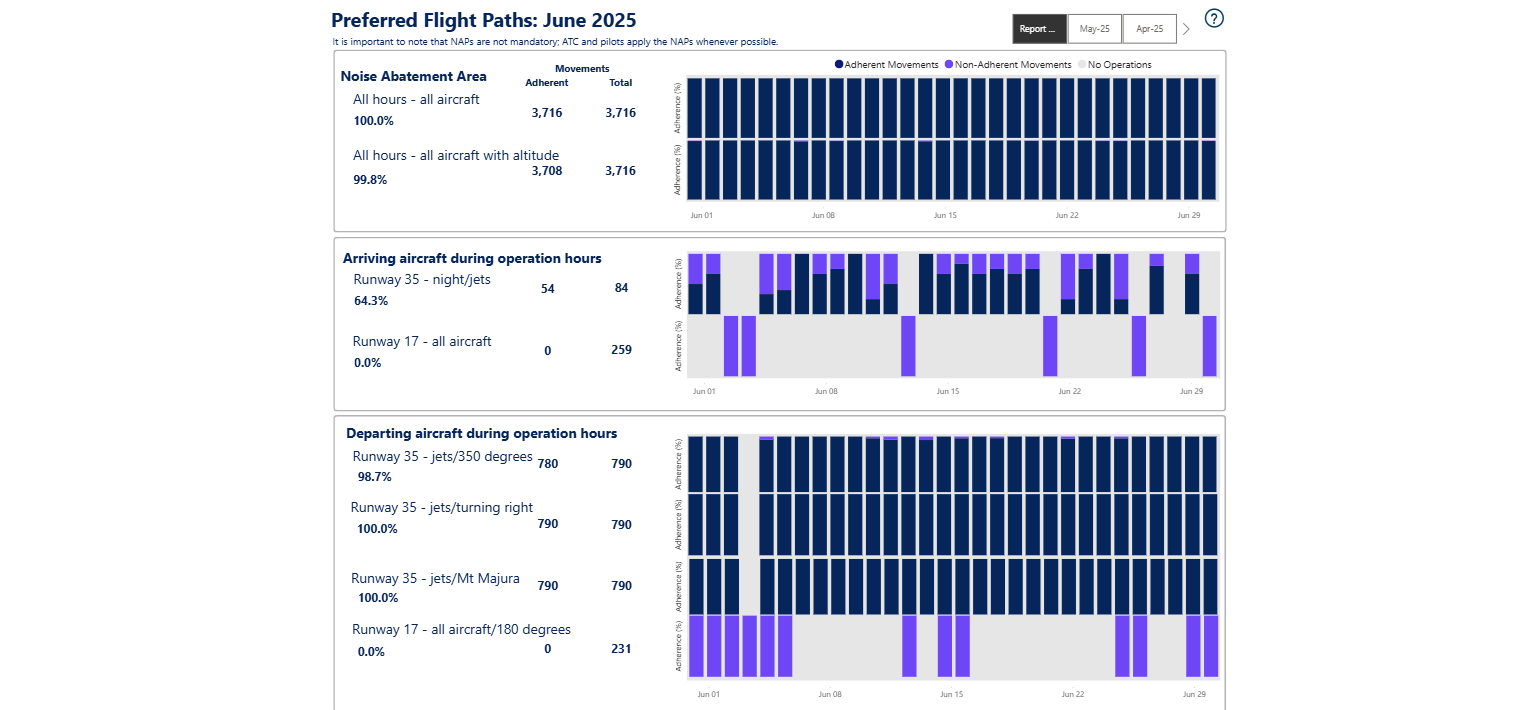
Runways 35, 17, 30 and 12

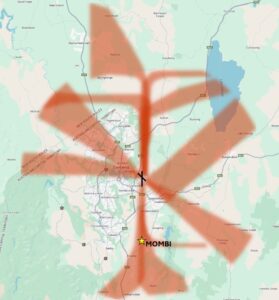
  • 2.2.a: Runway 35: At night: jets will be vectored to be on final approach no closer than MOMBI.
  • 2.2.b: Runway 17: Aircraft on right base will be vectored to be on final approach no closer than 4 DME CB.
  • 2.2.c: No specific procedures apply.
  • 2.3.a: Runway 35 or 17: IFR aircraft required to conduct a straight-in approach.
  • 2.3.b: No specific procedures apply.
  • 2.3.c: Data not available

Adherence with this procedure is reported below.

2.4 and 2.5 Departures

Runway 35 Departures

  • 2.4.a.1: Jets will usually be assigned a heading of 350° after take-off.
  • 2.4.a.2: Jets turning right must climb to at least 4,500 feet before turning.
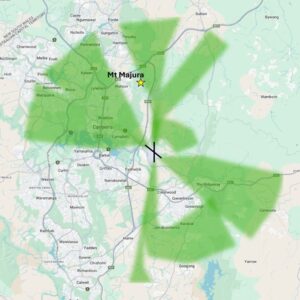
  • 2.4.a.3: Jets turning left must pass Mt Majura before starting the turn.
  • 2.5.a.1: Jets will usually be assigned a heading of 353° (SID).
  • 2.5.a.2: Jets must climb to at least 5,000 feet before turning.

Adherence with this procedure is reported below.

Runway 17 and 30 Departures

  • 2.4.b: Runway 17: Heading of 180 degrees until clear of Noise Abatement Area.
  • 2.5.b: Runway 17: Follow SID.

Adherence with this procedure is reported below.

NAPs not currently reported on

Reporting options are currently under review for the following NAPs, where data is not currently available.

  • 2.2.d: Pilot requirement for landing runway 12 during tower hours.
  • 2.3.c: Pilot requirement for landing runway 12 outside tower hours.
  • 2.4.c: Pilot requirement for departure runway 30 during tower hours.
  • 2.4.d: Pilot requirement for departure runway 12 during tower hours.
  • 2.5.c: Pilot requirement for departure runway 30 outside tower hours.

The report below provides the percentage adherence against the NAP criteria for preferred flight paths.

The report is best viewed in full screen mode.

Note: Due to rounding, percentage values may not sum to exactly 100.0%. Minor discrepancies of up to ±1% are expected and do not indicate any errors in the underlying absolute figures, which remain accurate and unaffected.
Sydney Airport operational statistics (LTOP Reporting)

Use our interactive tool, below, to explore monthly statistics about Sydney Airport.

We recommend you view this tool in full screen mode.

To access older reports, visit our Archived Sydney Airport Operational Statistics Reports page.