Gold Coast Airport Noise Abatement Procedure Overview

A Noise Abatement Procedure (NAP) is a procedure designed to reduce the impact of aircraft noise on the community.

Airservices Australia has the following NAP in place at Gold Coast Airport:

Reporting is now available for:

1. Preferred Runway Use Report

3.1 and 3.2. Preferred Flight Paths (Arrivals and Departures)

3.1.3. Preferred Runway 14 Approach

5. Curfew

ILS Report

The following NAPs are not able to be reported on by Airservices Australia as we do not have ready access to the required data:

  1. Intersection Departures
  1. Training Flights

Additional reporting will be added to this site in 2025.

NAP reporting for this airport will be released in the fourth week of the month for the previous month.

It is important to note that NAPs are not mandatory; Air Traffic Control (ATC) and pilots apply the NAPs whenever possible. ATC and pilots will determine when critical operational requirements override the use of NAPs.

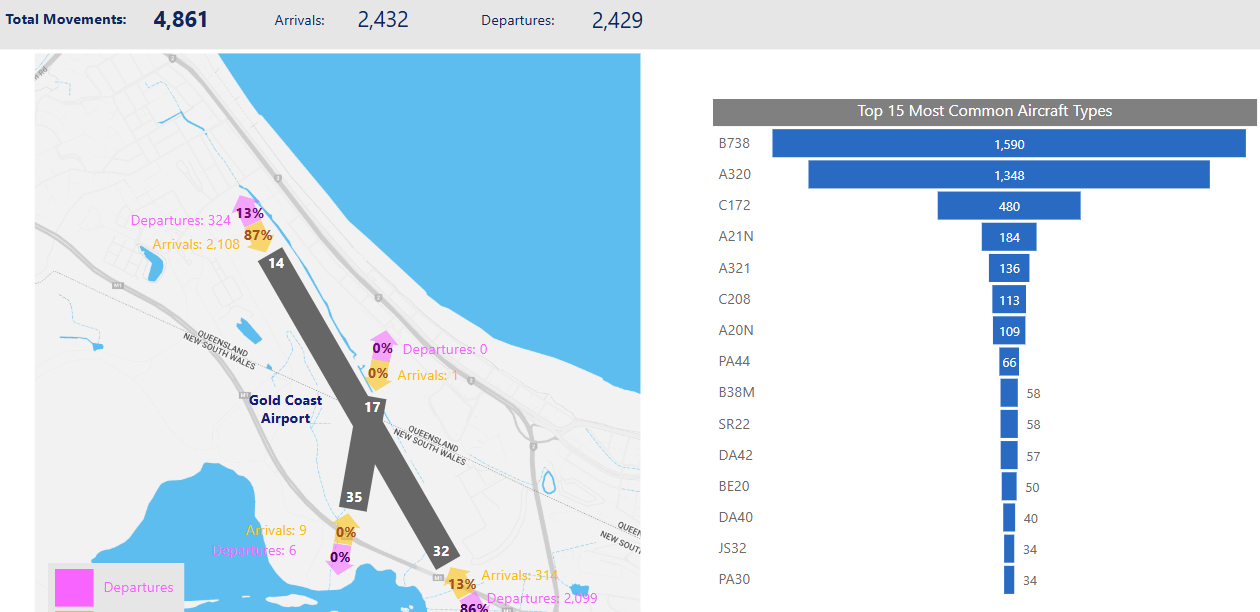
The overview below provides monthly movement numbers, runway end usage, and the types of aircraft operating at Gold Coast airport.

Note: Due to rounding, percentage values may not sum to exactly 100.0%. Minor discrepancies of up to ±1% are expected and do not indicate any errors in the underlying absolute figures, which remain accurate and unaffected.
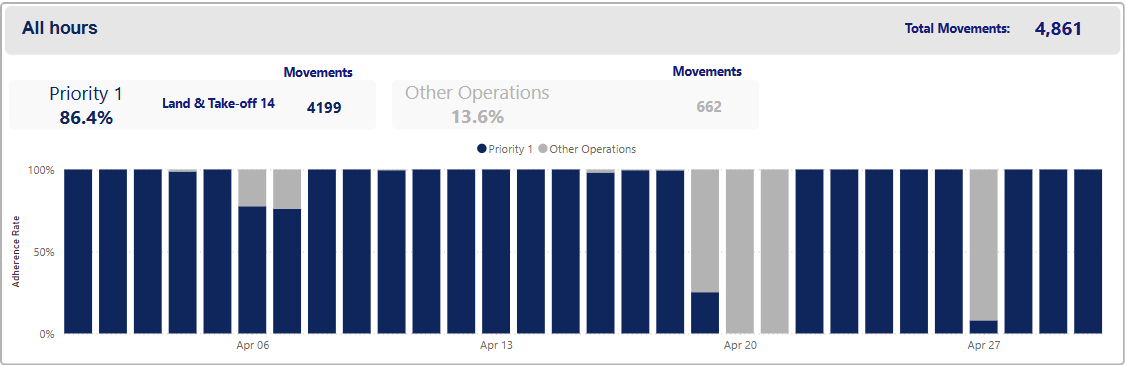
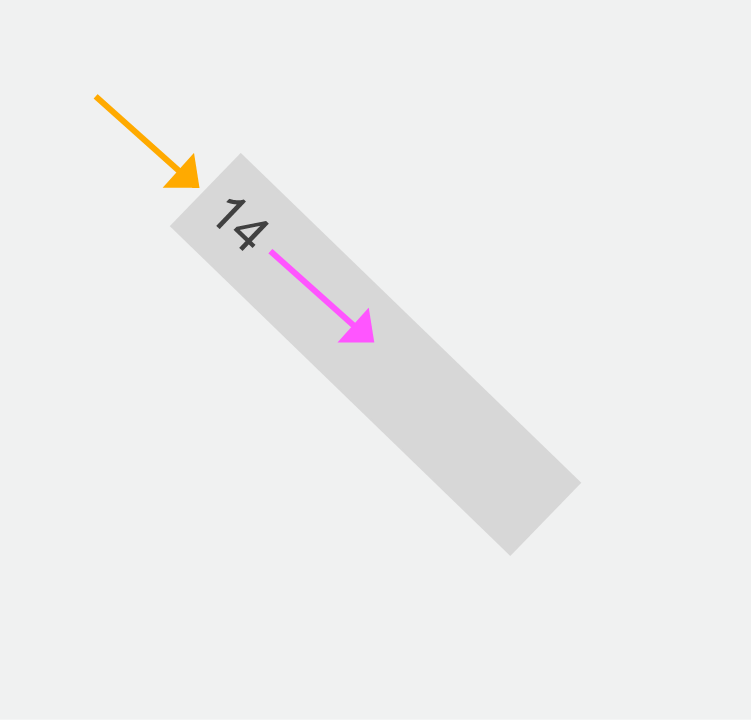
Gold Coast Airport NAP 1: Preferred Runway Use

The NAP lists the preferred runways as:

Priority 1:

Arriving Runway 14 , departing Runway 14

The report below provides the percentage use for each operating mode during daytime and night-time periods for each month (hover over each day in the column graph and the mode, the number of movements and the percentage use on that day will appear). “Other Operations” refers to modes used when preferred modes are not available, due to things like runway works, adverse weather and emergency situations.

The report is best viewed in full screen mode.

Note: Due to rounding, percentage values may not sum to exactly 100.0%. Minor discrepancies of up to ±0.1% are expected and do not indicate any errors in the underlying absolute figures, which remain accurate and unaffected.

There is no reporting for 6 and 7 March 2025 due to the suspension of flights as a result of Tropical Cyclone Alfred.

Cairns Airport Noise Abatement Procedure Overview

A Noise Abatement Procedure (NAP) is a procedure designed to reduce the impact of aircraft noise on the community.

Reporting is now available for:

  1. Preferred Runway Use
  2. Preferred Flight Paths

The following NAPs are not able to be reported on by Airservices Australia as we do not have ready access to the required data:

  1. Training flights
  2. Other restrictions

NAP reporting for this airport will be released in the third week of the month for the previous month.

It is important to note that NAPs are not mandatory; Air Traffic Control (ATC) and pilots apply the NAPs whenever possible. ATC and pilots will determine when critical operational requirements override the use of NAPs.

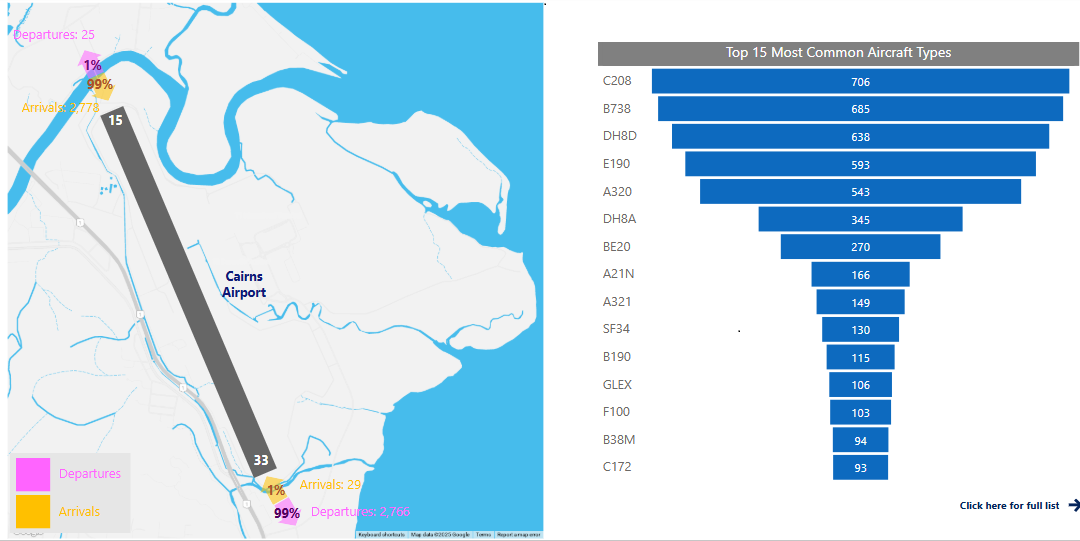
The overview below provides monthly movement numbers, runway end usage, and the types of aircraft operating at Cairns airport.

Note: Due to rounding, percentage values may not sum to exactly 100.0%. Minor discrepancies of up to ±1% are expected and do not indicate any errors in the underlying absolute figures, which remain accurate and unaffecte

Cairns Airport NAP 1: Preferred Runway Use

The NAP lists the preferred runways as:

Priority 1:
Arriving Runway 15 , departing Runway 15

NAP 1.2 (departure from runway 15) includes jet noise abatement departure procedures and restrictions on intersection departures at night (11pm to 6am local time). Airservices Australia is not currently able to report on these NAPs as the required data is not available.

The report below provides the percentage use of each operating mode during daytime and night-time periods for each month (hover over each day in the column graph and the mode, the number of movements and the percentage use on that day will appear). “Other Operations” refers to modes used when preferred modes are not available, due to things like runway works, adverse weather and emergency situations.

The report is best viewed in full screen mode.

Note: Due to rounding, percentage values may not sum to exactly 100.0%. Minor discrepancies of up to ±0.1% are expected and do not indicate any errors in the underlying absolute figures, which remain accurate and unaffected.
Sunshine Coast Noise Abatement Procedure Overview

A Noise Abatement Procedure (NAP) is a procedure designed to reduce the impact of aircraft noise on the community.

Airservices Australia has the following NAP in place at Sunshine Coast Airport:

Reporting is now available for:

  1. Preferred Runway Use
  2. Preferred Flight Paths

The following NAPs are not able to be reported on by Airservices Australia as we do not have ready access to the required data.

  1. Training flight
  2. Other restrictions

NAP reporting for this airport will be released in the third week of the month for the previous month.

It is important to note that NAPs are not mandatory; Air Traffic Control (ATC) and pilots apply the NAPs whenever possible. ATC and Pilots will determine when critical operational requirements override the use of NAPs.

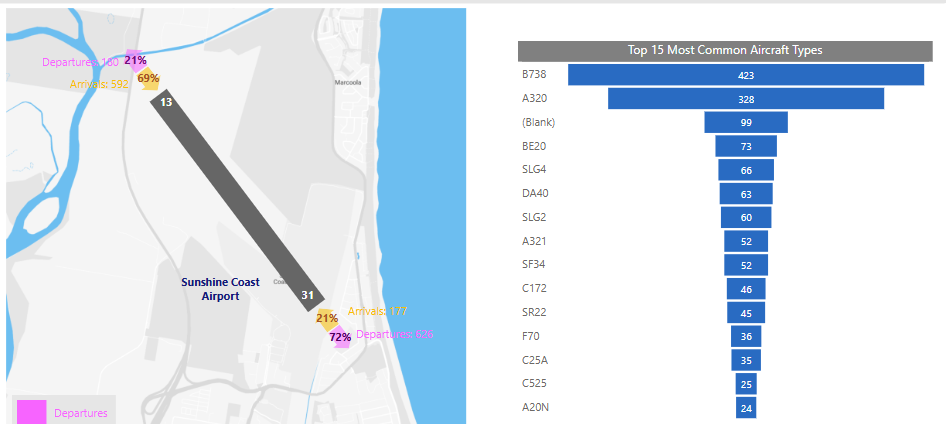
The overview below provides monthly movement numbers, runway end usage, and the types of aircraft operating at Sunshine Coast airport. Note that the percentages shown at each end of the runway represent the proportion of arrivals or departures using that direction.

Note: Due to rounding, percentage values may not sum to exactly 100.0%. Minor discrepancies of up to ±1% are expected and do not indicate any errors in the underlying absolute figures, which remain accurate and unaffected.
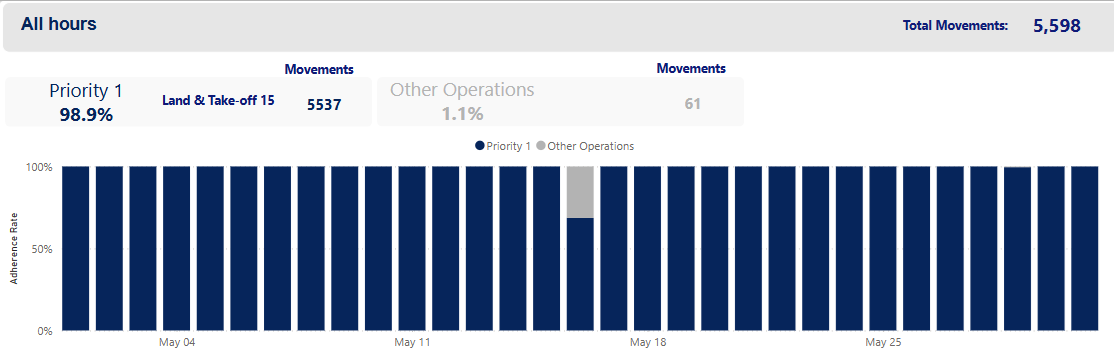
Sunshine Coast Airport NAP 1: Preferred Runway Use

The NAP lists the preferred runways as:

Priority 1:

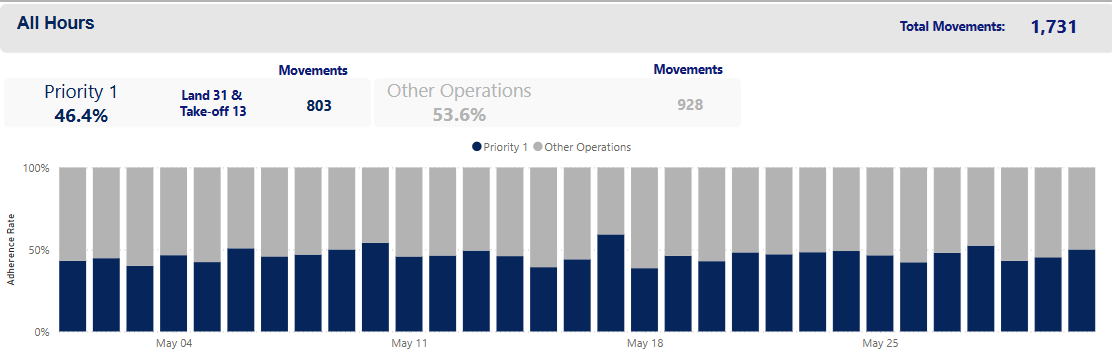
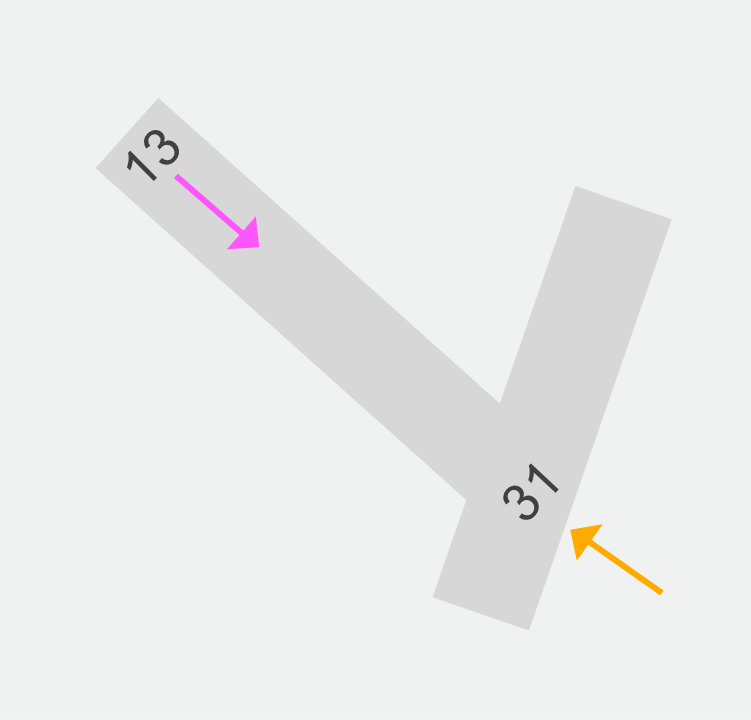
Arriving Runway 31 , departing Runway 13

The report below provides the percentage of each operating mode during daytime and night-time periods for each month. Other Operations refer to modes used when preferred modes are not available, due to things like runway works, adverse weather and emergency situations.

The report is best viewed in full screen mode.

Note: Due to rounding, percentage values may not sum to exactly 100.0%. Minor discrepancies of up to ±0.1% are expected and do not indicate any errors in the underlying absolute figures, which remain accurate and unaffected.
Gold Coast Airport NAP 5: Curfew

Airport curfew

An airport curfew is a legislated restriction on aircraft operations at a federally-leased airport during a specified time period.

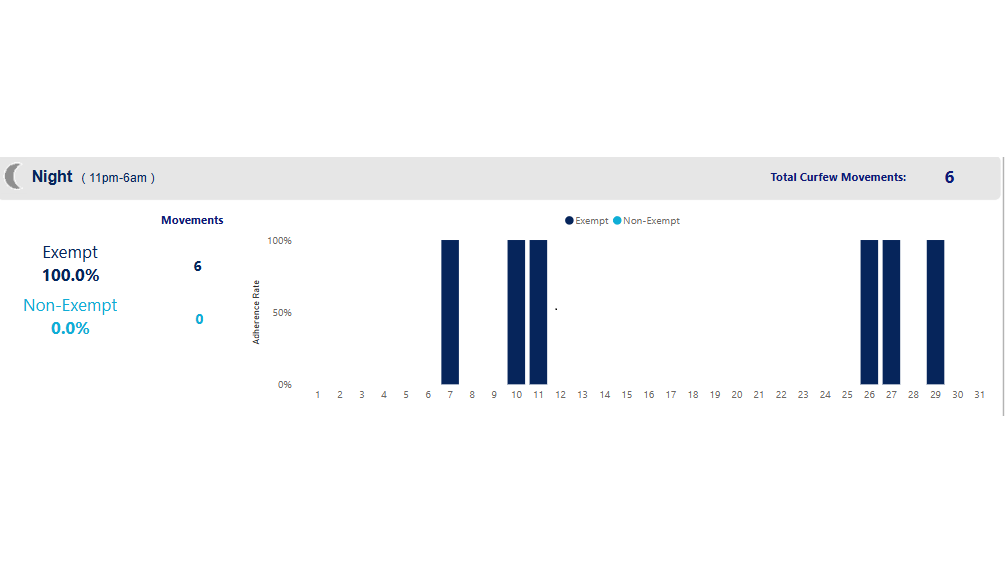
Gold Coast Airport is operational 24 hours a day, however, there is a curfew in place which restricts operations in and out of Gold Coast Airport during the hours of 11pm to 6am. During daylight saving time the airport curfew operates on Queensland time so New South Wales residents will see aircraft movements until 12 am instead of 11 pm.

While most aircraft operations are prohibited during this period, emergency aircraft, some small jets, propeller-driven aircraft and freight movements are allowed. The curfew limits what aircraft can land and take-off and, in some cases, the runways that can be used.

Curfew movements at Gold Coast Airport are small in number – on average less than one per night.

Curfews are legally enforceable and regulated by the Department of Infrastructure, Transport, Regional Development, Communications, Sport and the Arts, who can make a determination of a curfew violation and prosecute an airline or aircraft operator for breaching a curfew.

The report is best viewed in full screen mode.

Note: Due to rounding, percentage values may not sum to exactly 100.0%. Minor discrepancies of up to ±1% are expected and do not indicate any errors in the underlying absolute figures, which remain accurate and unaffected.
Note: Non-permitted movements are those that do not meet standard exemption criteria; however, this does not necessarily indicate non-compliance, as dispensations or other approvals may have been granted outside of standard classifications. Curfew dispensations can be found here: Curfew Dispensation Reports.